Market Snapshot
Key Takeaways
Market Overview & Analysis
Report Summary
The global construction equipment rental market comprises the temporary hire of earthmoving, material handling, aerial work platform, roadbuilding, concrete, power and HVAC, and specialty construction equipment to contractors, industrial customers, and other end users. This study segments the market by equipment type, rental duration, and end user, with a 2025 base year, historical coverage from 2021 to 2025, and forecasts to 2030. Market size is stated as rental and ancillary service revenue in United States dollars, excluding equipment manufacturer sales revenue, which this report's companion equipment-market coverage tracks separately. Regional figures underlying this global estimate are compiled first in local currency using the most authoritative available national or regional industry association benchmark, then converted to a constant-currency global roll-up with foreign-exchange assumptions stated explicitly.
Rental company revenue in this market spans several distinct components beyond the core rental fee itself: ancillary charges including delivery, fuel, damage waiver, and consumables typically add a meaningful increment to core rental revenue, while used-equipment sales, generated as rental companies retire aging fleet units, represent a further, related, distinct revenue stream that this report tracks separately from core rental and ancillary revenue. Specialty rental categories, including aerial work platforms, trench safety equipment, and power and pump solutions, increasingly represent a disproportionate share of revenue growth relative to their fleet size, reflecting both premium pricing for specialised equipment and faster underlying demand growth in these categories specifically. Several of the largest rental providers now report specialty rental as a distinct segment in their own financial disclosures, reflecting the category's growing strategic importance rather than treating it as a minor addition to general equipment rental.
Fleet utilisation, measured both as time utilisation, the share of days a given unit is rented out, and dollar utilisation, rental revenue relative to fleet original equipment cost, is the operating metric rental companies and investors watch most closely, since it captures both how efficiently a company deploys its capital-intensive fleet and how effectively it prices that fleet's availability. Large national rental providers have generally sustained stronger utilisation and pricing discipline than smaller independent operators in recent periods, a divergence that is reinforcing the ongoing shift toward large-provider market share across this market's major regions. Fleet age is a related metric rental companies manage closely, since older equipment typically carries higher maintenance cost and lower customer appeal, creating a continuous replacement cycle that in turn generates the used-equipment sales revenue this report tracks as a distinct component.
Market Dynamics
Key Drivers
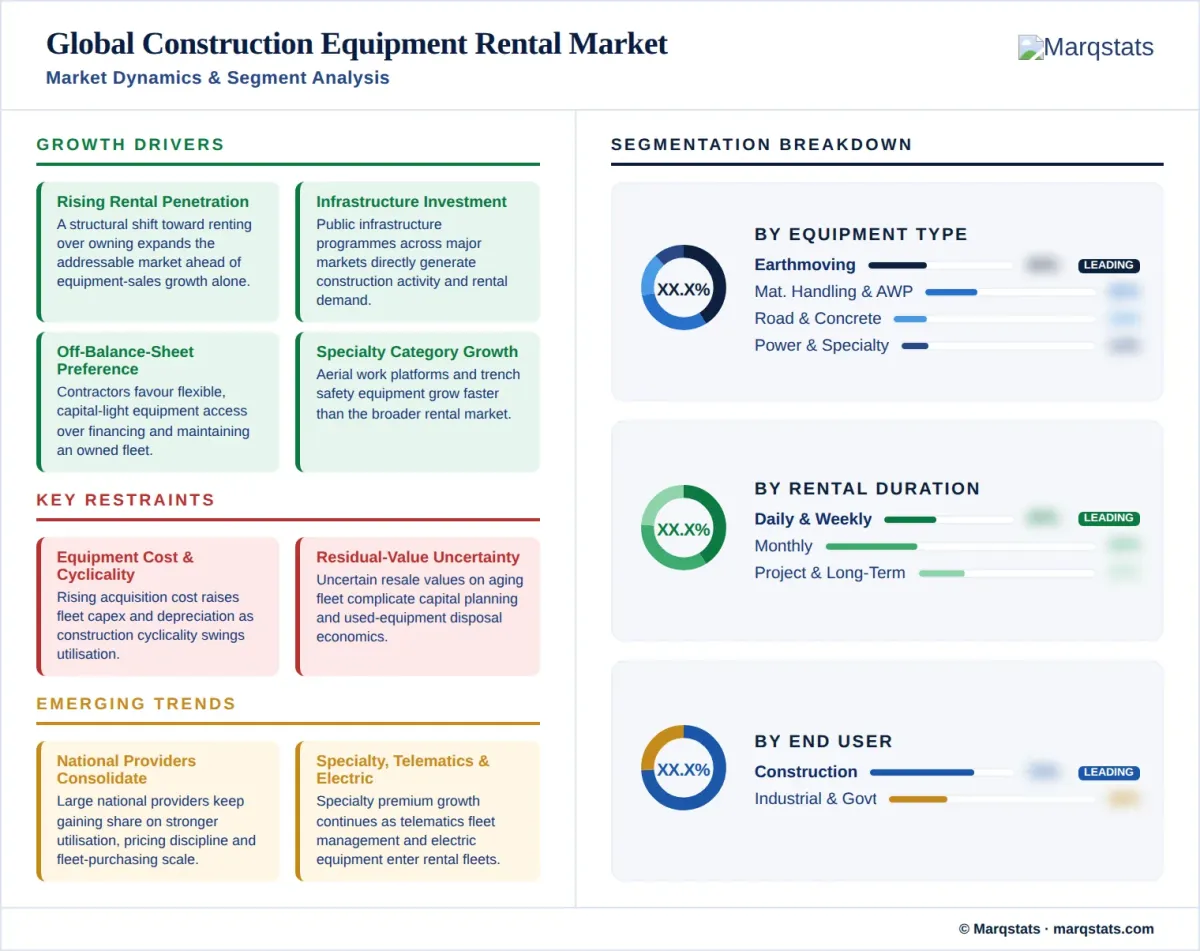
- Rising rental penetration of total construction equipment usage is structurally expanding the addressable market ahead of equipment sales growth alone.
- Infrastructure investment programmes across major markets are directly generating construction activity and associated equipment rental demand.
- Contractors' preference for flexible, off-balance-sheet equipment access over direct ownership continues favouring rental over purchase decisions.
- Growth in specialty rental categories, including aerial work platforms and trench safety equipment, is outpacing broader market growth.
- Digital rental platforms and telematics-enabled fleet management are improving utilisation and expanding rental companies' addressable customer reach.
Key Restraints
- Rising equipment acquisition costs directly increase rental companies' fleet capital expenditure and depreciation burden.
- Construction activity cyclicality directly affects rental demand and fleet utilisation across most equipment categories.
- Residual value uncertainty for aging fleet complicates rental company capital planning and used-equipment disposal economics.
Key Trends
- Large national rental providers continue gaining share relative to smaller regional and independent operators.
- Specialty rental categories are expanding faster than the broader market, supported by premium pricing and rising technical complexity.
- Telematics and fleet-management technology adoption continues expanding, improving utilisation tracking and predictive maintenance.
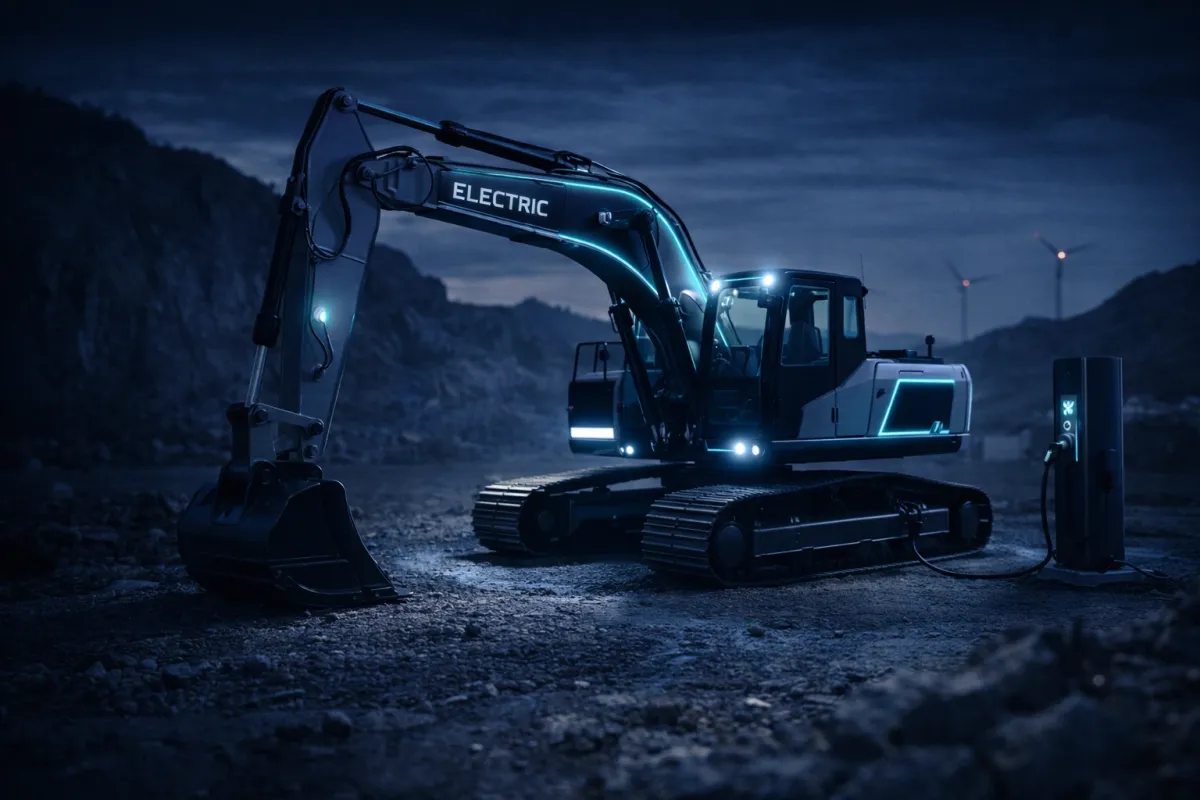
- Electric and hybrid equipment is entering rental fleets, supported by customer sustainability commitments and select regulatory requirements.
Market Segmentation
Earthmoving equipment, including excavators, loaders, and bulldozers, represents the largest equipment-type category by rental revenue, reflecting both the scale of demand for this equipment category across construction projects and its typically higher per-unit rental value relative to smaller tools and specialty categories. Fleet age management is particularly important within this category given the high capital cost per unit, with rental companies typically targeting a specific replacement cycle that balances maintenance cost against residual value at disposal.
Material handling equipment and aerial work platforms together represent a substantial secondary category, with aerial work platforms specifically among the fastest-growing rental categories as workplace safety requirements and project complexity increasingly favour rental access to specialised lift equipment over direct ownership. Boom lifts and scissor lifts represent the largest sub-categories within aerial work platforms, with demand closely tied to commercial and industrial construction activity where working-at-height access is a routine project requirement.
Roadbuilding and concrete equipment serve infrastructure-specific project needs, while specialty categories, including power and HVAC equipment, pumps, trench safety systems, and general tools, round out the remaining equipment-type demand, collectively representing the fastest-growing segment of this market given their premium pricing and rising technical specification requirements. Trench safety equipment specifically has grown in importance as workplace safety regulation has tightened in several major markets, requiring specialised shoring and shielding systems that most contractors find more economical to rent than to own given their intermittent, project-specific use pattern.
Daily and weekly rental serves short-duration project needs and unplanned equipment requirements, typically commanding the highest per-day rate given the fixed costs of equipment delivery, pickup, and servicing a rental company incurs regardless of rental length. This duration category also carries the highest transaction volume of the three, reflecting frequent turnover as equipment moves between different customers and job sites, which in turn requires rental companies to maintain more extensive local branch networks than the other two duration categories demand.
Monthly rental serves project phases requiring sustained equipment access without the multi-month or multi-year commitment a long-term contract implies, representing a common middle-ground duration for construction projects with moderately predictable equipment needs. Rate structures in this category typically offer a meaningful discount relative to the equivalent daily rate extended across a full month, reflecting the improved utilisation certainty a monthly commitment provides the rental company.
Project and long-term rental, spanning the duration of a specific construction project or an extended multi-month or multi-year contract, typically commands the lowest per-day rate in exchange for guaranteed utilisation, making this duration category particularly attractive to rental companies seeking to maximise fleet dollar utilisation. Large infrastructure projects are the most common source of demand within this category, since their multi-year timelines and substantial, predictable equipment needs make long-term rental contracts administratively simpler for both contractor and rental provider than repeated short-term bookings.
Construction contractors represent the largest end-user category by revenue, spanning residential, commercial, and infrastructure project types, with demand closely tracking overall construction activity and project pipeline across each region this report covers. Larger contractors increasingly negotiate national or regional account relationships with major rental providers, securing preferential pricing and guaranteed equipment availability in exchange for consolidating their rental spend with a single provider rather than sourcing equipment project by project. Smaller contractors, by contrast, more commonly source equipment from local independent operators or general rental branches without the volume commitment a national account requires.
Industrial customers, government and infrastructure agencies, and other end users including events organisers and utilities collectively represent a smaller, meaningful secondary demand base, often characterised by different rental duration patterns and equipment specifications than mainstream construction contractor demand. Government and infrastructure agency demand in particular tends to follow multi-year public works budget cycles rather than the more variable, project-by-project pattern typical of private construction contractor demand.
By Geography
North America
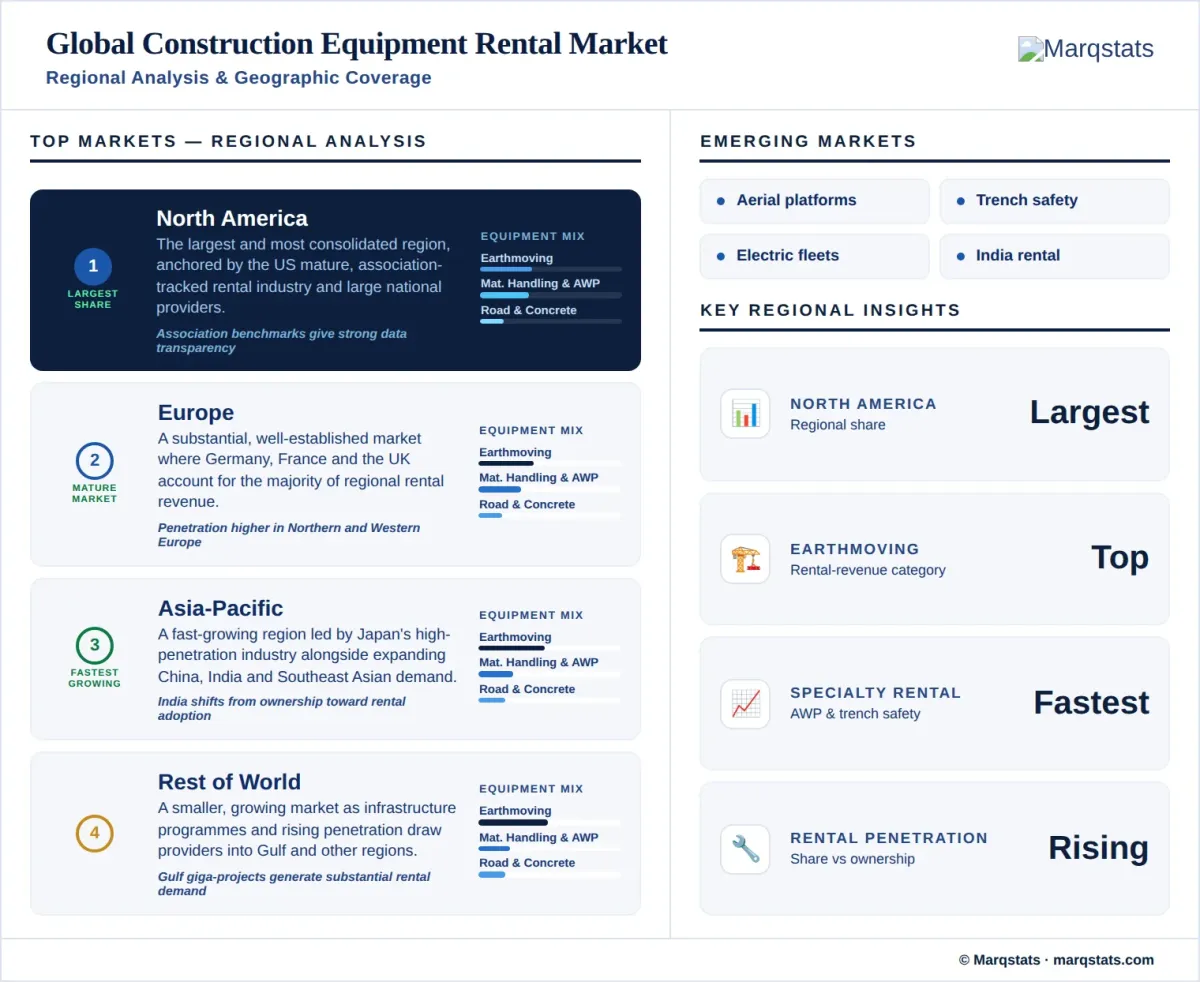
North America holds the largest regional share, anchored by the United States' mature, association-tracked rental industry and reinforced by Canada's smaller, steadily growing market. The region's rental industry is the most consolidated globally, with large national providers accounting for a substantial and growing share of total rental revenue. The American Rental Association's annual industry forecast provides the region with a rare degree of transparency, giving both operators and market observers a consistent, publicly available benchmark that most other regions' rental industries lack. This transparency, combined with the scale of the largest listed North American providers, gives this report's regional sizing an unusually strong evidentiary basis relative to the other three regions covered.
Europe
Europe represents a substantial, well-established rental market, combining a mature construction rental base with a meaningful non-construction rental component that European industry association reporting typically tracks alongside pure construction equipment demand. Regional rental penetration varies considerably by country within Europe, with Northern and Western European markets generally showing higher penetration rates than Southern and Eastern European markets, where equipment ownership remains comparatively more common among smaller contractors. Germany, France, and the United Kingdom together account for a substantial majority of the region's rental revenue, reflecting both their larger construction sectors and the earlier maturity of rental as a mainstream equipment-access model in these specific markets.
Asia-Pacific
Asia-Pacific represents a fast-growing region, with Japan's mature, high-penetration rental industry anchored by several large domestic providers, alongside rapidly expanding rental demand in China, India, and Southeast Asian markets tied to sustained infrastructure investment. India's rental market in particular is transitioning from a historically ownership-dominated equipment culture toward growing rental adoption, supported by both large domestic rental specialists and international providers establishing regional operations. Japan's rental industry stands out globally for its exceptionally high rental penetration rate, reflecting both limited domestic construction-site storage space and a long-established cultural and business preference for rental over ownership among Japanese contractors.
Rest of World
Latin America, the Middle East, and Africa represent a smaller, growing market, with demand shaped by infrastructure investment programmes and gradually rising rental penetration as contractors in these regions increasingly favour rental over the capital commitment direct equipment ownership requires. Major Gulf infrastructure and giga-project programmes have generated substantial rental demand in the Middle East specifically, drawing both international rental providers and specialist local operators into the region to serve this project-linked demand.
How Competition Is Evolving
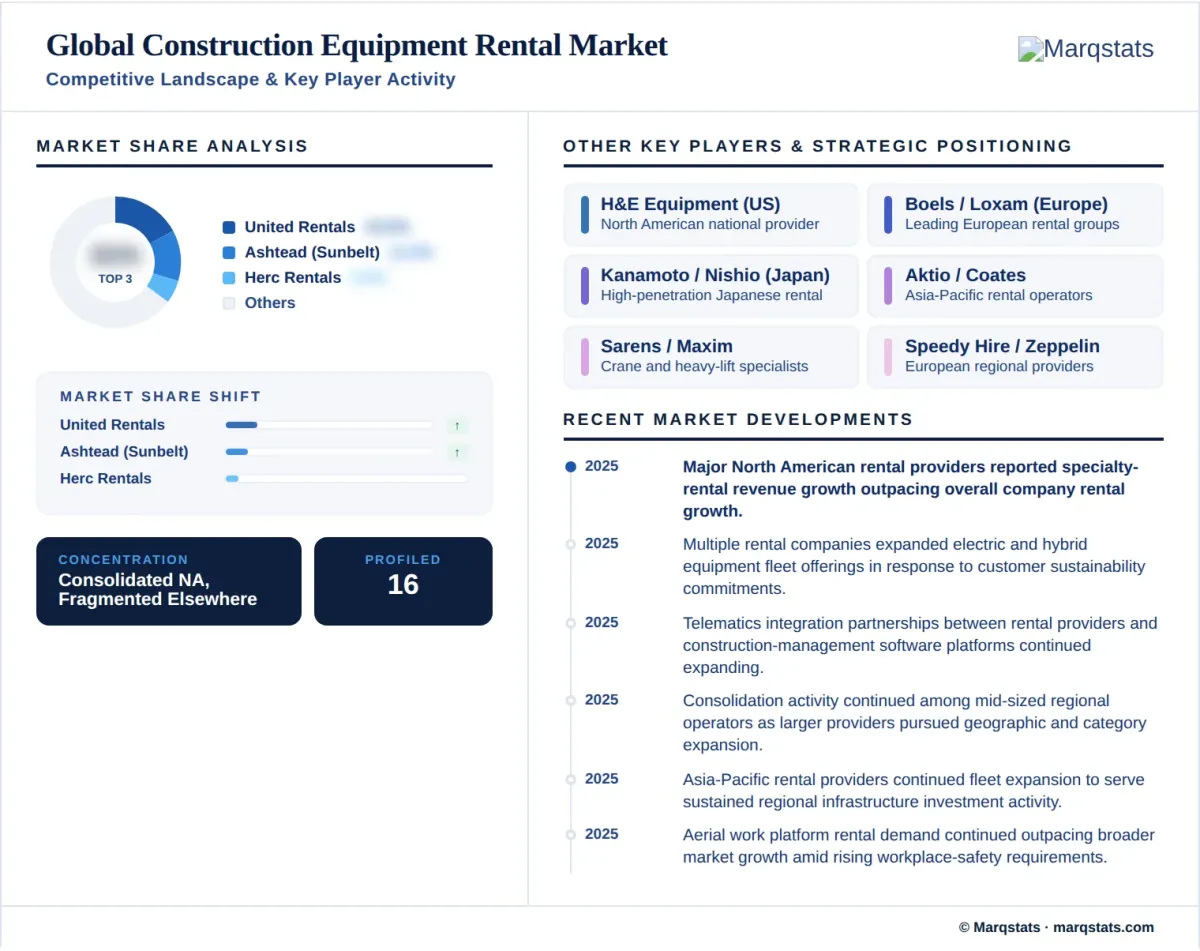
The market is moderately concentrated in North America, where large national providers hold substantial and growing share, and more fragmented in other regions, where a broader mix of large multinational operators, regional specialists, and independent providers compete. Consolidation has been a persistent feature of this industry, as larger providers acquire regional and specialty operators to expand geographic coverage and equipment category breadth. Scale advantages in fleet purchasing, since larger providers can negotiate better terms with equipment manufacturers than smaller independents, reinforce this consolidation trend by giving acquiring companies a structural cost advantage over the operators they absorb.
Competitive strategy centers on fleet scale and specialty category breadth, since customers increasingly favour providers able to serve both general equipment and specialised category needs from a single relationship, alongside digital platform investment and branch network density that directly affect delivery speed and customer convenience. Fleet age and technology adoption, including telematics-enabled equipment and emerging electric and hybrid options, are becoming an increasingly important competitive differentiator as customers weigh both cost and sustainability considerations in provider selection. National account relationships with large contractors represent a further competitive battleground, since these multi-site, multi-year agreements typically lock in a substantial revenue base that competitors can only displace at contract renewal.
Companies Covered
The report profiles 16+ companies with full strategy and financials analysis, including:
Recent Market Activity
Table of Contents
Coverage & Segmentation
This report provides a comprehensive assessment of the global construction equipment rental market across a 2025 base year, historical data from 2021 to 2025, and forecasts spanning 2026 to 2030. Market size is stated as rental and ancillary service revenue in United States dollars. Segmentation covers three dimensions: equipment type, rental duration, and end user, alongside regional analysis spanning North America, Europe, Asia-Pacific, and the rest of world.
The scope covers rental service revenue for earthmoving, material handling, aerial work platform, roadbuilding, concrete, power and HVAC, and specialty construction equipment, including associated ancillary service charges. The study excludes equipment manufacturer sales revenue, which Marqstats covers separately in its Global Construction Equipment Market report, and used-equipment sales revenue generated from rental fleet disposal, which this report tracks as a distinct revenue stream separate from core rental and ancillary income. General tool rental serving non-construction customers is included only where regional industry association reporting does not practically allow separation from construction-specific equipment rental; this practice is noted explicitly wherever it applies. Peer-to-peer and informal equipment rental arrangements outside licensed rental company channels are also excluded, since these transactions are not reliably captured in the association and company disclosures this report's methodology relies on. Country-level detail beyond the four-region split covered here is available under customization, alongside deeper cuts by equipment type, rental duration, or end-user segment.