Market Snapshot
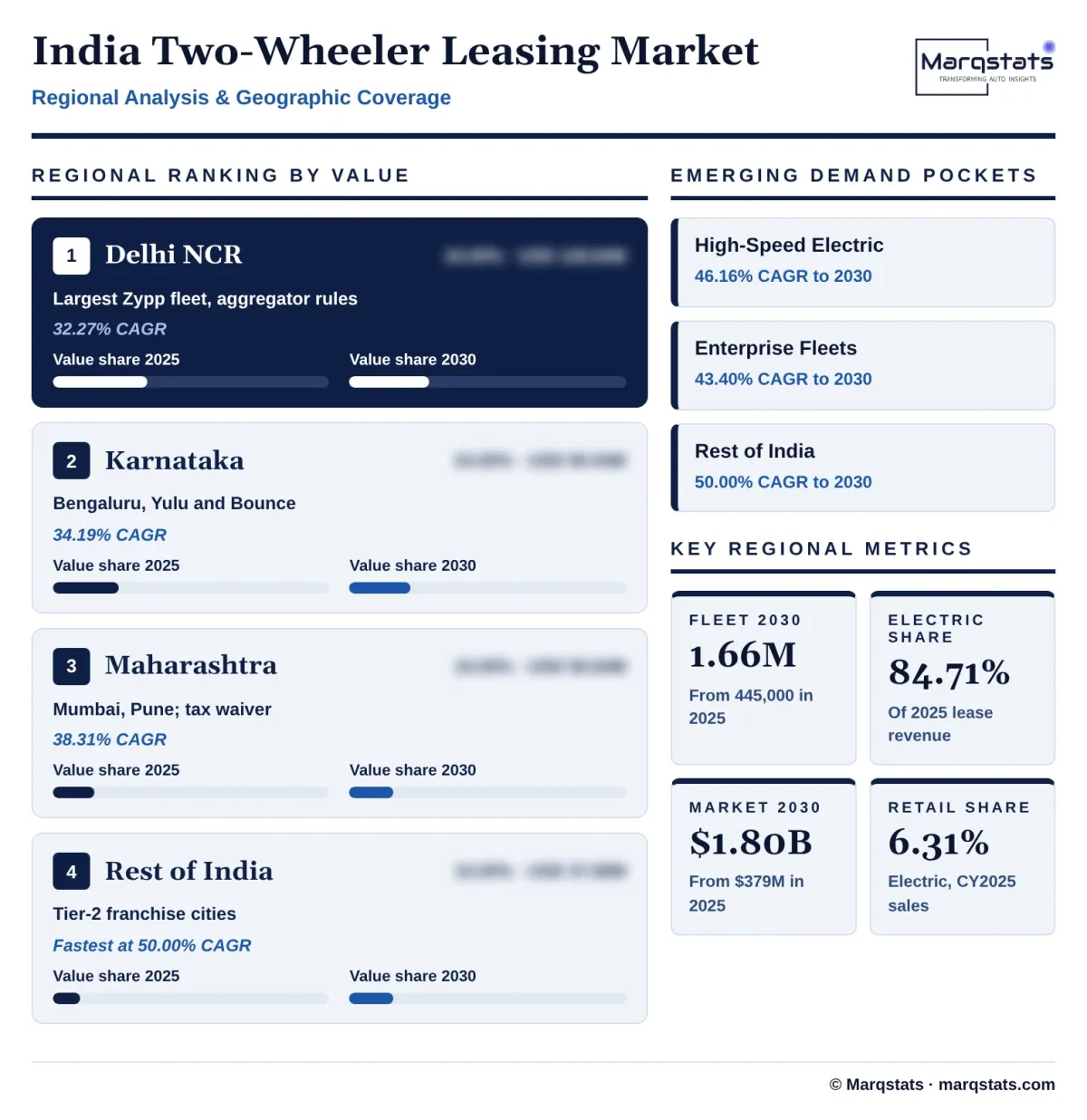
The India two-wheeler leasing market size is estimated at USD 378.93 million in 2025 and is projected to reach USD 1,798.37 million by 2030, growing at a CAGR of 36.54% over 2026 – 2030. The average leased fleet grows from about 445,000 to 1,657,000 vehicles, and electric two-wheelers earn 84.71% of 2025 lease revenue.
Marqstats defines the market as the rental, lease, subscription and rent-to-own instalment revenue earned in India by operators that keep title to two-wheelers while a rider or company pays to use them. Revenue includes bundled battery swapping, maintenance, insurance and telematics. Loan disbursements, outright vehicle sales, hourly tourist rentals, per-trip shared rides and standalone swap plans bought by vehicle owners are excluded.
High-speed electric scooters and motorcycles account for 58.50% of 2025 value, gig delivery and ride-hailing riders for 72.00% and short-tenure rentals for 64.00%. Delhi NCR is the largest region at 34.00% of value, while the Rest of India, led by Jaipur, Lucknow, Pune and other Tier-2 cities, grows fastest at 50.00% a year.
Key Takeaways
Market Overview & Analysis
Report Summary
Marqstats sizes the India two-wheeler leasing market as the revenue earned by operators that own scooters and motorcycles and charge riders or companies to use them. It counts daily, weekly and monthly rentals paid by gig delivery and ride-hailing riders, fixed-term operating leases signed by logistics and e-commerce companies, monthly subscriptions taken by commuters and students, and rent-to-own instalments where the operator keeps title until the last payment. Revenue is measured in US dollars and Indian rupees at the 2025 average rate of INR 87.00 per US dollar, net of goods and services tax.
The market exists because India has millions of riders who earn money on two-wheelers but cannot or will not buy one. FADA reported 20,295,650 two-wheeler retail sales in calendar 2025, up 7.24%, of which 1,279,951 were electric, up 11.36%. Quick-commerce, food delivery and parcel platforms need riders on the road at short notice, and a rental at a few hundred rupees a day lets a new rider start work the same week. EVeez, for example, sells weekly electric scooter plans starting at INR 1,100, and said in July 2025 that 55% of its riders were first-time gig workers.
The organised market is young and concentrated in a few operators and cities. Zypp Electric reported revenue of about INR 455 crore in FY25, up 50% from INR 302 crore, with more than 22,000 electric vehicles, of which over 12,000 ran in Delhi NCR, over 5,000 in Bengaluru and 2,400 in Mumbai. Yulu raised USD 93 million in August 2026 to quadruple its fleet to 200,000 vehicles within two years, and Indofast Energy reported more than 90,000 vehicles onboarded to its swap network by the end of FY26.
The market measures revenue for using the vehicle, not the money lent to buy one. Bank and non-banking financial company loans for two-wheeler purchases are counted in the Marqstats India Two-Wheeler Finance study, and battery swap subscriptions bought by owners of their own vehicles belong to the live India EV Battery Swapping report. The electric part of this market is the same revenue pool as the live India Electric Two-Wheeler Fleet report, USD 0.32 billion in 2025 and USD 1.75 billion in 2030 at 40.39%, and the two figures should not be added.
The market grew from an estimated USD 278.62 million in 2024 to USD 378.93 million in 2025, about INR 3,296.69 crore, as electric fleet revenue rose about 47%. That pace is consistent with Zypp Electric revenue rising 50% in FY25 and Yulu reporting a sevenfold rise in revenue between FY2023 and FY2026. Petrol leasing declined slightly as platforms in Delhi and Bengaluru steered new riders towards electric rentals.
India Two-Wheeler Leasing Market Size and Forecast
The India two-wheeler leasing market grows from USD 378.93 million in 2025 to USD 1,798.37 million in 2030, a CAGR of 36.54%, or from about INR 3,296.69 crore to INR 15,645.82 crore. Fleet growth contributes most of the increase: the average leased fleet rises at 30.07% a year, from about 445,000 to 1,657,000 vehicles, and revenue per vehicle rises as full-size scooters with swappable batteries replace low-speed models in delivery work.
The 2025 value is built bottom-up from fleet and realised rent. Marqstats estimates about 215,000 high-speed electric two-wheelers earning about INR 7,476 a month each, including bundled swapping, maintenance and insurance, about 160,000 low-speed electric models earning INR 4,500 a month and about 70,000 petrol two-wheelers earning INR 6,000 a month. Realised rent is below list prices of INR 300 to 600 a day for high-speed rentals because vehicles sit idle between riders and on weekly rest days.
The electric slice is set to the live India Electric Two-Wheeler Fleet report, at USD 321.00 million in 2025 and USD 1,750.55 million in 2030, a 40.39% CAGR, and Marqstats checks it against operator disclosures. Zypp Electric, Yulu, Bounce, EVeez, Alt Mobility, e-Sprinto and Hala Mobility together account for well over 100,000 electric vehicles, and the live report puts low-speed vehicles in commercial use at about 160,000. The balance is a long tail of franchise and neighbourhood operators running from three to fifty vehicles each.
Marqstats expects high-speed electric fleets to grow from 215,000 to about 1,190,000 vehicles by 2030 and their monthly realisation to rise to about INR 9,009, low-speed fleets to grow to 415,000 at INR 4,750, and petrol fleets to fall to 52,000 at INR 6,667. The forecast rests on stated operator plans: Yulu targets 200,000 vehicles within two years of August 2026, Indofast Energy targets 232,000 vehicles on its network in FY27 and Indofast Energy and Hala Mobility target 100,000 by March 2028.
Marqstats tracks four indicators to monitor the forecast: monthly electric two-wheeler registrations in the commercial category on the VAHAN dashboard, fleet and funding announcements from the leading operators, the number of swap stations reported by Indofast Energy, Battery Smart and SUN Mobility, and onboarding rules for delivery and bike-taxi fleets in Delhi, Karnataka, Maharashtra and Telangana.
Market Dynamics
Key Drivers
Five forces push Indian two-wheeler leasing revenue up faster than vehicle sales.
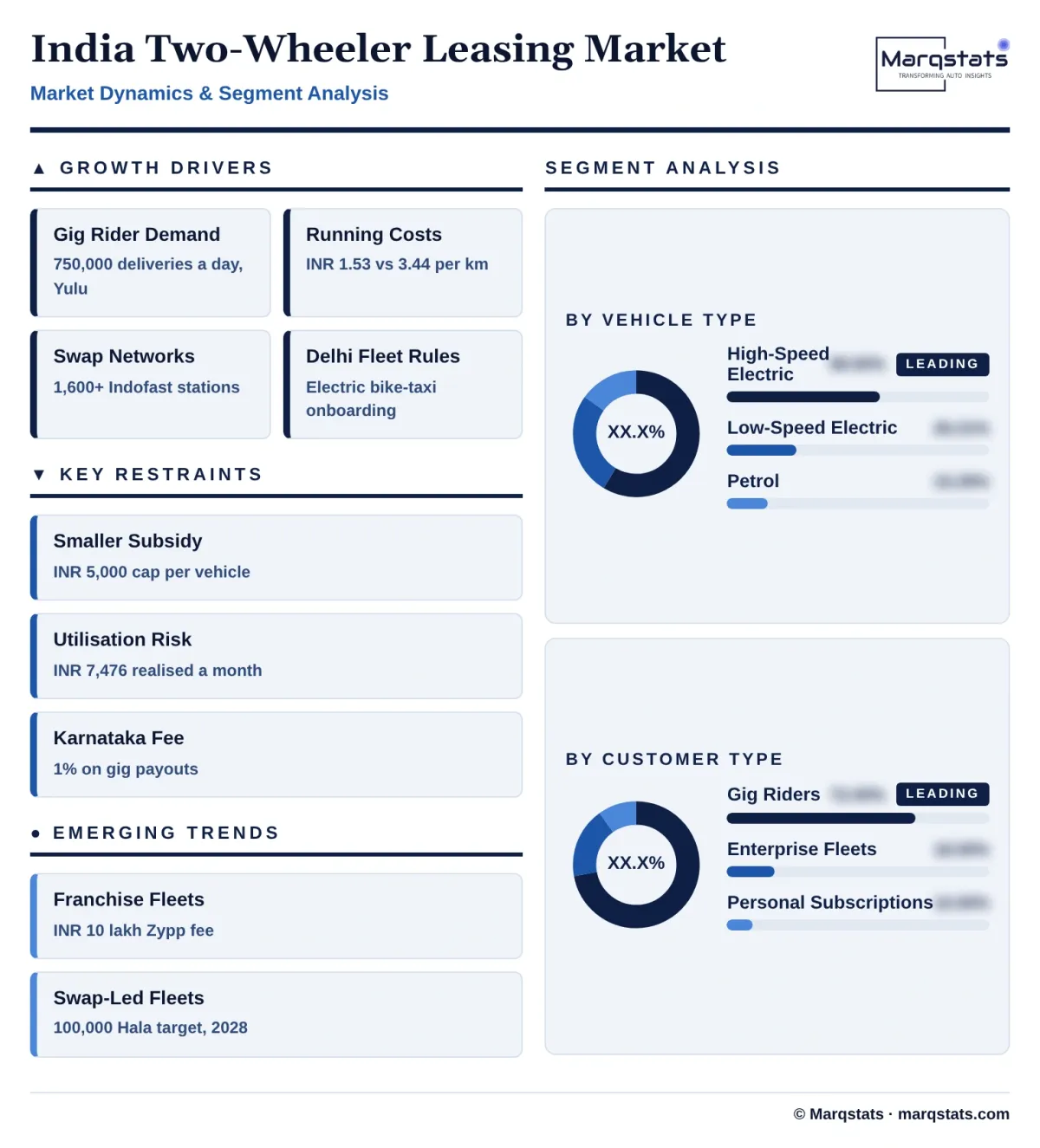
- Gig platforms need vehicles on demand. Quick-commerce, food delivery and parcel networks recruit riders faster than riders can buy vehicles, and rental plans fill the gap. Yulu says its fleet supports more than 750,000 deliveries a day, and EVeez reported in July 2025 that 55% of its riders were new to gig work and 45% were switching from petrol two-wheelers.
- Electric running costs favour renting. Delivery riders cover 80 to 120 kilometres a day, and the live India Electric Two-Wheeler Fleet report puts operating cost at INR 1.53 a kilometre for an electric two-wheeler against INR 3.44 for a petrol one. At 2,800 kilometres a month that gap is worth more than INR 5,000 to a rider, which pays for most of a weekly rental.
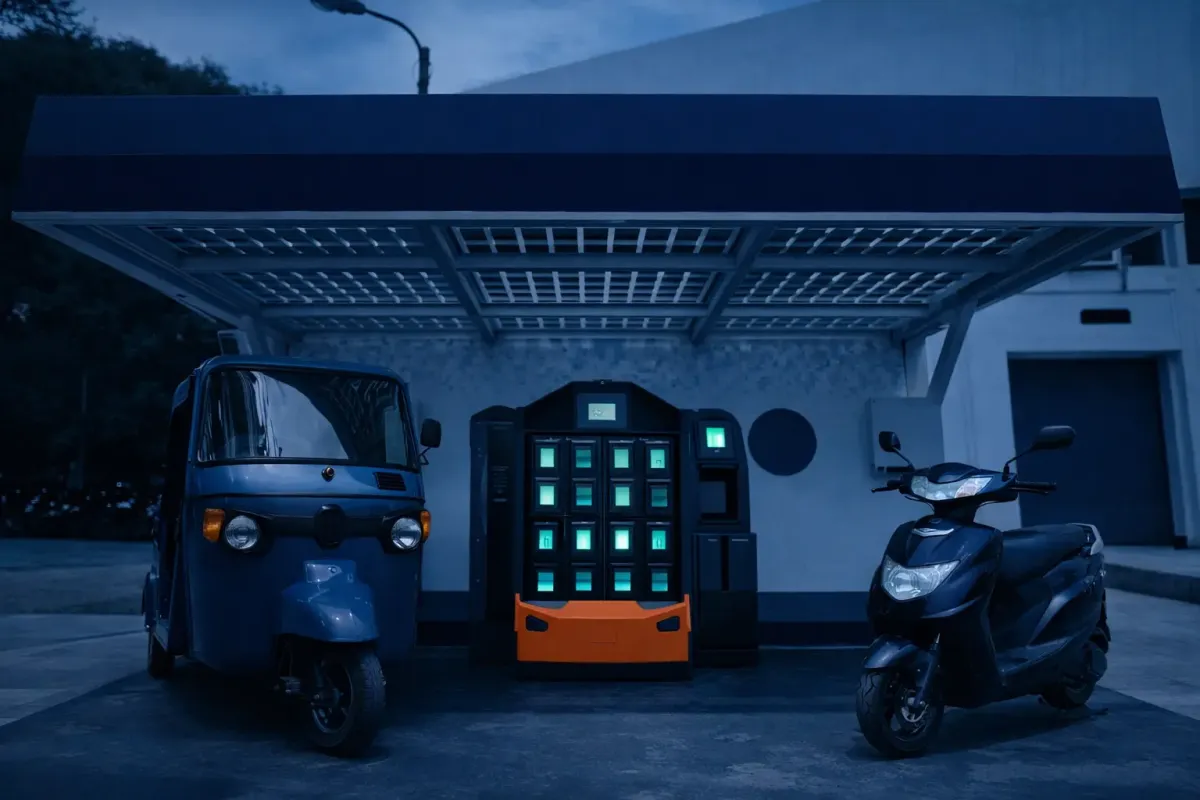
- Swap networks remove the charging problem. Indofast Energy reported more than 1,600 swap stations in 23 cities and more than 90,000 vehicles onboarded by the end of FY26, and Battery Smart was reported in July 2026 to run more than 1,600 stations in more than 70 cities. A two-minute swap keeps a rented scooter working through a double shift.
- Delhi rules push fleets to electric. The Delhi Motor Vehicle Aggregator and Delivery Service Provider Scheme, 2023, notified in November 2023, requires delivery service providers to electrify 10% of new two- and three-wheelers within six months and their fleets fully within five years, and allows bike-taxi aggregators to onboard only electric vehicles.
- Capital is flowing to fleet operators. Yulu raised USD 93 million in August 2026, USD 63 million in equity and USD 30 million in debt, Bounce raised INR 36 crore from Accel and B Capital in March 2026, EVeez raised USD 5.4 million in July 2025, and Zypp Electric appointed bankers in June 2026 for an initial public offering of up to USD 200 million.
Key Restraints
Four constraints decide how quickly that revenue turns into profit for lessors.
- Purchase subsidies are shrinking. The Ministry of Heavy Industries extended PM E-DRIVE support for registered electric two-wheelers to 31 March 2028 in August 2026, but at INR 2,500 per kWh capped at INR 5,000 a vehicle, half the earlier INR 5,000 per kWh and INR 10,000 cap, so each new fleet scooter costs the lessor more.
- Fleet economics depend on utilisation. A scooter that sits unrented for a week earns nothing while its loan and insurance continue, and list rentals of INR 300 to 600 a day translate into a realised INR 7,476 a month on Marqstats estimates. Operators with weak rider demand or poor recovery of vehicles from defaulting riders lose money quickly.
- Rider costs are rising. Karnataka notified a 1% welfare fee on payouts to platform gig workers under the Karnataka Platform Based Gig Workers (Social Security and Welfare) Act, 2025, effective 13 February 2026. The fee is paid by platforms, not deducted from riders, but it raises platform costs in the second-largest leasing state and adds pressure on delivery pay rates, which set what riders can pay in rent.
- Debt is expensive for young lessors. Operators fund vehicles with venture debt and impact lenders, such as Battery Smart's facility of more than USD 13 million from responsAbility in July 2026, and the cost of that capital limits how far rents can fall.
Key Trends
Four shifts are changing who owns the vehicles and how riders pay for them.
- Franchise ownership spreads the capital load. Zypp Electric charges a franchise fee of about INR 10 lakh and targets 50 franchise partners, and Yulu runs eight franchise-operated regional markets, so investors own vehicles while the platform runs riders, contracts and maintenance.
- Swap providers become fleet partners. Indofast Energy works with e-Sprinto on 20,000 electric two-wheelers and with Hala Mobility on 15,000 vehicles reached in under a year, targeting 40,000 by March 2027 and 100,000 by March 2028.
- Low-speed fleets give way to full-size scooters. Yulu announced in August 2026 that it would enter the full-size electric scooter segment, and delivery work is moving to registered vehicles that can carry heavier loads over longer shifts.
- Operators prepare for public markets. Zypp Electric is preparing an initial public offering, Yulu has spoken of a listing, and Battery Smart was reported to be preparing a draft prospectus, which pushes the industry towards audited fleet and utilisation disclosure.
Strategic Implications
- For fleet operators, the next stage of growth is outside Delhi NCR and Bengaluru, where the Rest of India grows at 50.00% a year on Marqstats estimates. Franchise models that let local investors own vehicles while the platform supplies riders and swap access are the quickest way to reach Tier-2 cities without carrying all the assets.
- For two-wheeler makers such as Bajaj Auto, TVS Motor Company and Hero MotoCorp, fleets are a distinct customer. The roughly 375,000 leased electric two-wheelers equal 29.30% of 2025 electric retail sales, and fleet buyers want reinforced frames, swappable batteries, telematics and fixed-price service contracts more than styling.
- For platforms such as Swiggy, Zomato, Blinkit and Zepto, rental partners are part of rider supply. Platforms that guarantee rental partners a minimum number of active riders, or share data on rider earnings, lower vacancy and rents for their own fleets.
- For lenders and impact investors, lease receivables backed by telematics and remote immobilisation are a new asset class. Pricing should rest on utilisation and recovery data, not only on the credit history of riders who often have none.
- For swap providers, fleet contracts give guaranteed volume. Indofast Energy and Battery Smart each run more than 1,600 stations, and bundled swap and rental plans tie riders to one network, so providers that sign leading fleet operators early lock in station utilisation.
Market Segmentation
High-speed electric scooters and motorcycles, registered with an RTO and above 25 km/h, earn USD 221.69 million in 2025, 58.50% of the market, and grow at 46.16% a year to USD 1,478.65 million and 82.22% by 2030. Marqstats estimates about 215,000 vehicles in 2025, mainly fleet versions from TVS Motor Company, Bajaj Auto, Hero MotoCorp, Ather Energy and specialist makers such as e-Sprinto, usually rented with swappable batteries.
Low-speed electric two-wheelers, limited to 25 km/h and exempt from registration, earn USD 99.31 million in 2025, 26.21% of the market, and grow at 22.32% a year to USD 271.90 million. About 160,000 are in commercial use, led by Yulu DeX vehicles built with Bajaj Auto, rented for short dark-store runs where low cost matters more than speed. Their share falls to 15.12% as fleets move to registered scooters.
Petrol scooters and motorcycles rented or leased to riders and companies earn USD 57.93 million in 2025, 15.29% of the market, and decline at -3.76% a year to USD 47.82 million by 2030. About 70,000 are on lease, mostly through neighbourhood rental operators and corporate field-force leases in cities where swap networks are thin.
Gig delivery and ride-hailing riders account for USD 272.83 million in 2025, 72.00% of value, and grow at 35.38% a year to USD 1,240.88 million and 69.00% by 2030. Riders rent through programmes linked to Swiggy, Zomato, Blinkit, Zepto, Rapido and parcel networks, paying daily or weekly so their rent tracks their earnings.
Enterprise and logistics fleets account for USD 68.21 million in 2025, 18.00% of value, and grow fastest, at 43.40% a year, to USD 413.63 million and 23.00% by 2030. E-commerce, courier, pharmacy and dark-store operators lease fleets for 12 to 36 months from lessors such as Alt Mobility and Chartered Bikes and employ or contract their own riders.
Personal subscriptions account for USD 37.89 million in 2025, 10.00% of value, and grow at 30.58% a year to USD 143.86 million, falling to 8.00% of value. Commuters, students and people new to a city pay monthly for a scooter instead of buying one, but higher acquisition costs and vehicle recovery risk keep this segment small.
Short-tenure rentals, paid daily, weekly or monthly with no fixed end date, account for USD 242.52 million in 2025, 64.00% of value, and grow at 33.41% a year to USD 1,025.07 million and 57.00% by 2030. They are the entry product for new gig riders and carry the highest rent per day and the highest vacancy.
Long-term operating leases of 12 to 36 months account for USD 75.79 million in 2025, 20.00% of value, and grow at 42.77% a year to USD 449.59 million and 25.00% by 2030. The lessor keeps title, residual value and maintenance, and the customer is usually a company rather than an individual rider.
Rent-to-own contracts, where title passes to the rider after the final instalment, account for USD 60.62 million in 2025, 16.00% of value, and grow at 39.80% a year to USD 323.71 million and 18.00% by 2030. They suit riders who plan to stay in gig work and want to own the vehicle in 18 to 36 months.
By Geography
Delhi NCR
Delhi NCR accounts for 34.00% of 2025 value, USD 128.84 million, and grows at 32.27% a year to USD 521.53 million and 29.00% by 2030. It holds the largest fleets of Zypp Electric and other operators, and the Delhi aggregator scheme makes electric rentals the default for new delivery and bike-taxi riders. Many fleet vehicles are registered in Gurugram, Noida or Ghaziabad and run in Delhi, so Marqstats allocates value to the region rather than to individual states.
Karnataka
Karnataka accounts for 24.00% of 2025 value, USD 90.94 million, and grows at 34.19% a year to USD 395.64 million. Bengaluru is the home market of Yulu and Bounce and one of the densest quick-commerce cities in India, and the 1% welfare fee on gig payouts from February 2026 is the first state levy of its kind that fleet operators must factor into rider pricing.
Maharashtra
Maharashtra accounts for 15.00% of 2025 value, USD 56.84 million, and grows at 38.31% a year to USD 287.74 million and 16.00% by 2030. Mumbai and Pune were late to fleet leasing, with Zypp Electric reaching 2,400 active vehicles in Mumbai in FY25, and the state waiver of motor vehicle tax on electric vehicles to March 2030 lowers holding costs for lessors.
Telangana
Telangana accounts for 10.00% of 2025 value, USD 37.89 million, and grows at 36.54% a year to USD 179.84 million. Hyderabad is an early market for Indofast Energy and Hala Mobility, and road tax and registration fee waivers on electric vehicles support fleet buying.
Tamil Nadu
Tamil Nadu accounts for 7.00% of 2025 value, USD 26.53 million, and grows at 36.54% a year to USD 125.89 million. Chennai delivery fleets draw on the state's scooter manufacturing base, including TVS Motor Company and Ather Energy, and Indofast Energy and Hala Mobility list Chennai among their next cities.
Rest of India
The Rest of India accounts for 10.00% of 2025 value, USD 37.89 million, and grows fastest, at 50.00% a year, to USD 287.73 million and 16.00% by 2030. Jaipur, Lucknow, Ahmedabad, Kolkata, Indore and other Tier-2 cities are where franchise operators, EVeez with its target of 30 cities, and quick-commerce dark stores are expanding.
How Competition Is Evolving
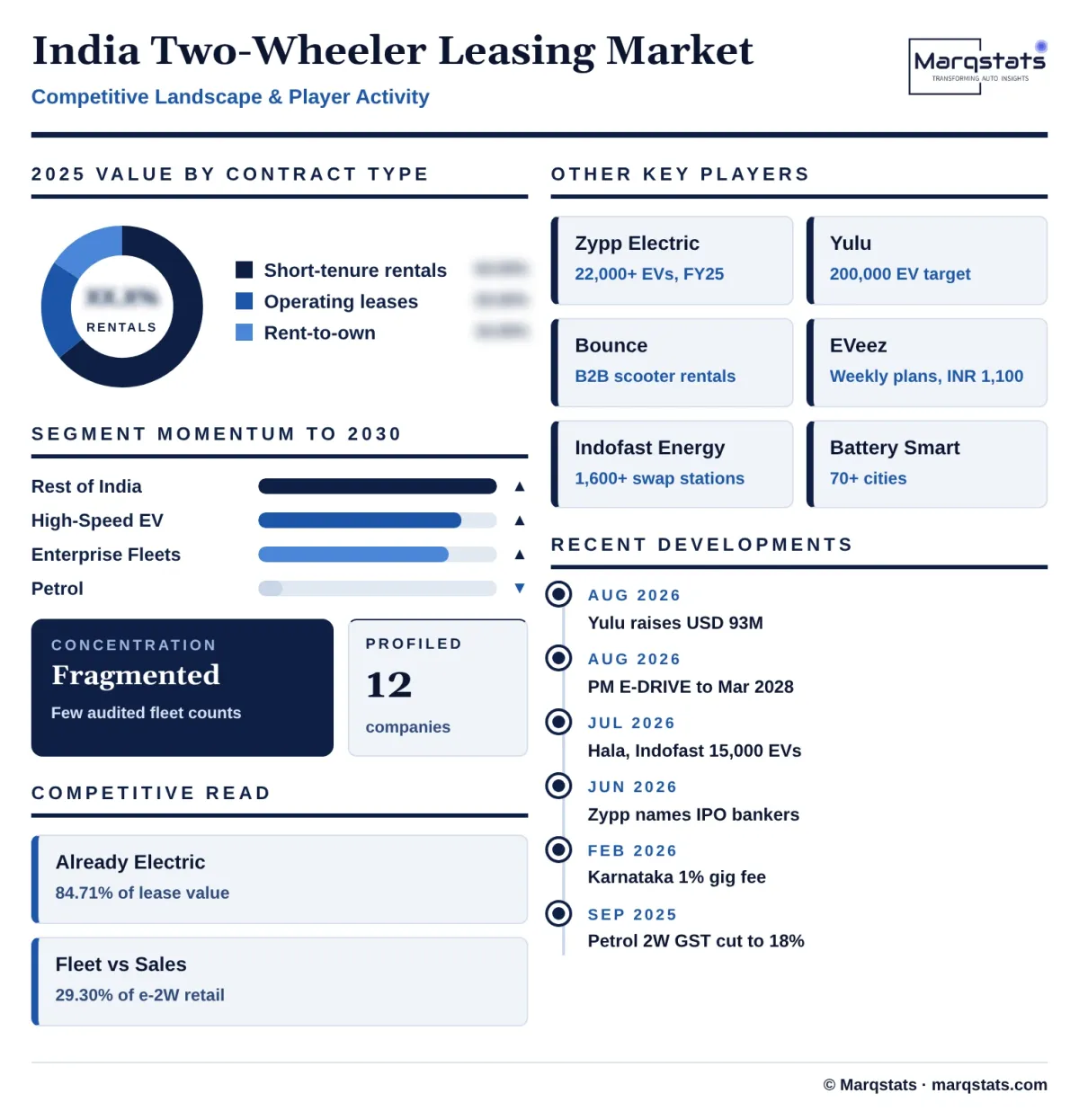
The market is fragmented. A handful of venture-funded operators run organised fleets of tens of thousands of vehicles each, while a long tail of franchise owners and neighbourhood rental shops run from three to fifty vehicles. Few operators report audited fleet counts, so Marqstats describes competition by layer and by named, dated actions instead.
Dedicated fleet operators form the first layer. Zypp Electric reported more than 22,000 electric vehicles and INR 455 crore of revenue in FY25 and was EBITDA profitable in FY25 and FY26, Yulu targets 200,000 vehicles within two years of its August 2026 funding, Bounce runs B2B scooter rentals for delivery fleets, EVeez offers weekly plans from INR 1,100 and Alt Mobility leases fleets to logistics companies.
Swap networks form the second layer and increasingly co-own the rider relationship. Indofast Energy, a joint venture of IndianOil and SUN Mobility, works with e-Sprinto and Hala Mobility on fleet deployments, and Battery Smart serves more than 100,000 drivers, mainly of three-wheelers. Bundled swap and rental plans make the swap provider the rider's main contact.
Vehicle makers and platforms form the third layer. Bajaj Auto is an investor in Yulu and builds its vehicles, TVS Motor Company, Hero MotoCorp and Ather Energy supply fleet scooters, and Swiggy, Zomato, Blinkit and Zepto steer riders to rental partners. Competition is shifting from rent per day to vehicle uptime, swap access and rider supply in new cities.
Companies Covered
Companies covered in the report include:
Recent Market Activity
Table of Contents
Coverage & Segmentation
The study covers the India two-wheeler leasing market, with 2025 as the base year, 2021 – 2025 as the historical period and 2026 – 2030 as the forecast period. It measures rental, lease, subscription and rent-to-own instalment revenue earned by operators that keep title to the vehicle, segmented by vehicle type, customer type, contract type and region. Values are net of goods and services tax and are converted at the 2025 average of INR 87.00 per US dollar.
Excluded are bank and non-banking financial company loans for two-wheeler purchases, which belong to the Marqstats India Two-Wheeler Finance study and do not overlap with this market; outright vehicle sales; hourly or daily tourist rentals; per-trip shared rides; and standalone battery swap plans bought by vehicle owners. The electric segments reproduce the live India Electric Two-Wheeler Fleet report and must not be added to it. The live India Two-Wheeler market report measures vehicle sales and is a different measure.