Market Snapshot
Key Takeaways
Market Overview & Analysis
Report Summary
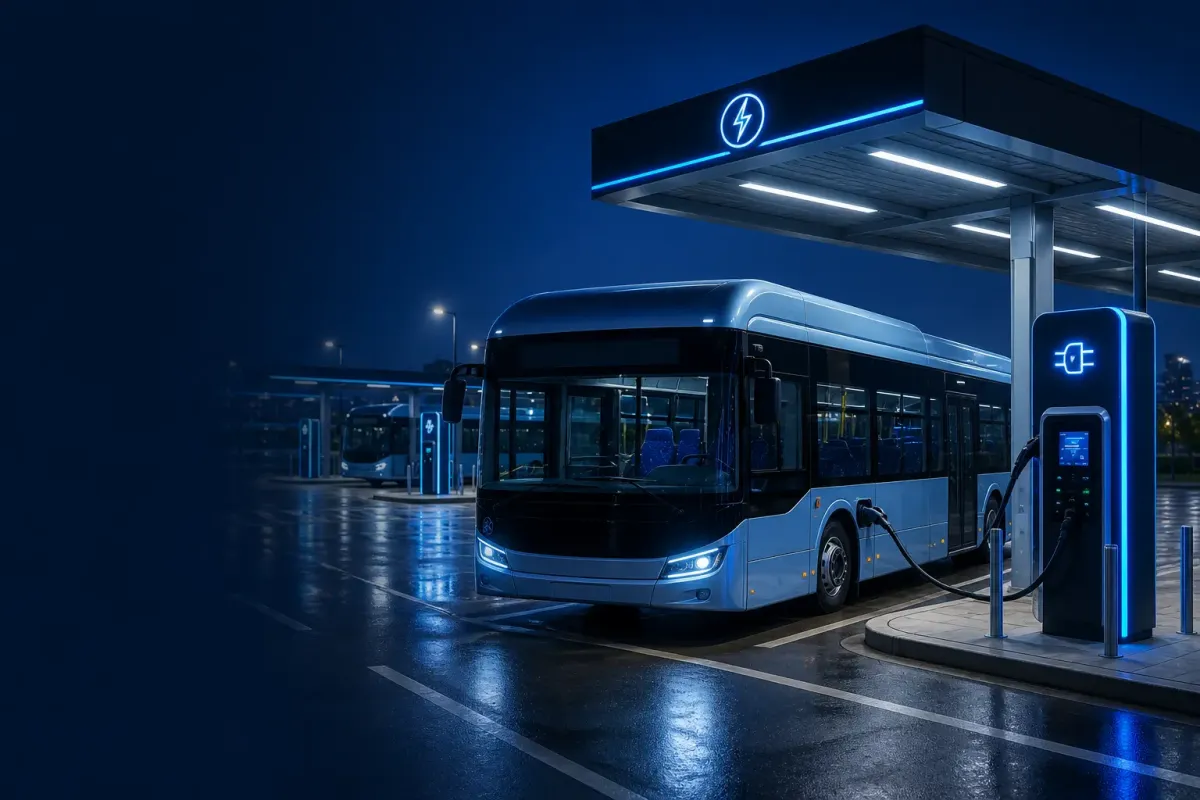
The India electric bus depot charging infrastructure market comprises the hardware, electrical systems, software, and services that recharge electric buses at depots operated by state transport undertakings and private operators. The 2025 market of USD 210 million spans plug-in DC chargers, pantograph systems, power transformers and switchgear, behind-the-meter substations, grid connections, cabling and civil works, charging-management and energy software, and solar and battery-storage integration, along with the engineering and maintenance services that deploy and sustain them. The market is defined by depot-based charging value, distinct from en-route public charging and from the buses themselves.
India's electric bus programme is uniquely depot-centric. Buses run scheduled urban and intercity routes and return to depots between duty cycles, so overnight and shift charging at the depot is the operational default, and central policy is designed around it. The PM-eBus Sewa scheme, approved in August 2023 with a total outlay of INR 57,613 crore and central support of INR 20,000 crore, funds depot development and behind-the-meter power infrastructure at 100% central assistance, and by July 2025 more than 7,293 buses had been sanctioned with over INR 1,062 crore approved for depot and behind-the-meter power. This makes depot charging infrastructure a directly funded line item rather than a residual cost.
The gross-cost-contract model structures most of the market. Under it, a private operator finances the buses and the charging infrastructure and operates and maintains the fleet across the contract term, receiving a per-kilometre fee while the state transport undertaking retains fare revenue and provides depot land and, in some cases, minimum depot infrastructure. Convergence Energy Services Limited, a Government of India entity under the Ministry of Power, aggregates demand across cities and standardizes contracts, and its tenders extend beyond vehicle supply to depot electrification, charging infrastructure, and civil works. In January 2026 the entity issued a single tender for 6,230 buses spanning PM E-DRIVE cities and Delhi, with depot electrification and allied infrastructure within scope. Operation support of around INR 24 per kilometre for standard twelve-metre buses and a dedicated payment-security mechanism underpin operator bankability, making the per-kilometre economics of the contract the foundation on which depot charging investment is financed.
Charging technology at depots is standardizing on plug-in DC. India has adopted CCS2 for new bus charging, with legacy GB/T connectors remaining on earlier fleets such as several BYD-based operators. Depot chargers typically operate between 120 kW and 240 kW, with multi-gun dispensers serving several buses in sequence overnight, and suppliers including Exicom, Tata Power, and others have deployed high-power chargers at depots such as those of the Delhi Transport Corporation. Pantograph charging exists in selected deployments, while overnight plug-in DC remains the dominant depot format, balancing charger cost against the long dwell times available at base.
Behind-the-meter power is the decisive cost and schedule variable. A depot charging dozens of buses simultaneously requires high-tension grid connections, dedicated transformers, substations, switchgear, and cabling, and the coordination of distribution utilities determines the pace of electrification. Central funding of behind-the-meter infrastructure under PM-eBus Sewa recognizes this, yet execution depends on depot land availability, grid capacity, and utility connection timelines. Energy-management software, load balancing, and increasingly on-site solar and battery storage manage peak demand and reduce grid stress, expanding the market beyond the charger toward the full depot electrical system. India's electric bus transition is increasingly described as one that will be won at the depot, where reliable overnight charging, fault detection before breakdown, and full duty-cycle completion determine whether fleets meet their scheduled service, making depot electrical reliability as important as the buses themselves.
Market Dynamics
Key Drivers
- PM-eBus Sewa funds depot upgradation and behind-the-meter power infrastructure at 100% central assistance for 10,000 buses across 169 cities.
- PM E-DRIVE allocates support for 14,028 electric buses in nine major cities, sustaining depot charging demand through 2026 and beyond.
- Demand aggregation by Convergence Energy Services Limited standardizes contracts and lowers procurement cost across states and cities.
- The gross-cost-contract model shifts charging-infrastructure financing to private operators, accelerating depot electrification without full state capital outlay.
- CCS2 standardization and high-power depot chargers improve interoperability and shorten overnight charging windows for large fleets.
- Rising urban air-quality pressure and state electrification targets expand state-transport-undertaking e-bus fleets and depot requirements.
Key Restraints
- Depot land availability and grid-connection timelines constrain the pace of behind-the-meter power and charging build-out.
- Distribution-utility coordination for high-tension connections, transformers, and substations adds cost and schedule risk to depot electrification.
- Payment-security concerns under gross-cost contracts affect operator bankability, addressed by the scheme payment-security mechanism yet still material.
- Uneven state and city institutional capacity slows depot land acquisition, tendering, and contract management in smaller cities.
Key Trends
- On-site solar and battery-energy storage co-locate with depots to manage peak demand, reduce grid stress, and lower energy cost.
- Smart charging-management software with scheduling and load balancing optimizes overnight charging across large depot fleets.
- Depot digitalization pairs charging with fleet telematics, predictive maintenance, and duty-cycle assurance to protect uptime.
- Charging-as-a-service and behind-the-meter power partnerships separate depot electrification from bus supply in some contracts.
Market Segmentation
Plug-in DC overnight charging is the dominant depot format, matching the long dwell times of buses that return to base between duty cycles. Multi-gun DC dispensers of 120 kW to 240 kW recharge several buses in sequence overnight and between shifts, and CCS2 is the standard for new deployments. The format balances charger cost against available charging time and anchors the vast majority of India's depot charging value throughout the forecast period.
Opportunity and fast charging supplements overnight charging where duty cycles are long or fleets are large relative to depot dwell time, using higher-power DC chargers for rapid top-ups between trips at depots and terminals. The format carries higher per-charger power and value and grows as intensive urban routes and intercity operations expand, though it remains secondary to overnight depot charging in India.
Pantograph charging, using overhead or roof-mounted connections for automated high-power charging, exists in selected Indian deployments and terminal locations. It suits high-frequency routes and reduces manual plug-in handling, yet higher infrastructure cost and the prevalence of overnight depot charging limit its share. Pantograph systems remain a specialized segment concentrated in specific fleet and terminal applications.
Chargers up to 120 kW serve smaller buses, midi and mini electric buses, and depots with ample overnight dwell time, offering the lowest per-charger cost. The band supports the growing deployment of nine-metre and smaller buses in tier-two and tier-three cities under PM-eBus Sewa, and anchors the high-volume, lower-value end of the depot market.
The 120 kW to 240 kW band is the workhorse of Indian bus depot charging, matching standard twelve-metre buses and typical overnight and shift charging windows. Multi-gun dispensers in this range recharge several buses in sequence, and the band represents the largest share of installed depot charging capacity and value across state-transport and operator fleets.
Chargers above 240 kW serve high-utilization routes, intercity operations, and opportunity charging where rapid turnaround is required, carrying the highest per-charger power, grid, and civil content. The band grows as fleet sizes rise and duty cycles intensify, and it concentrates the highest-value depot charging investment despite representing a minority of installed chargers.
Charging hardware — DC dispensers, power cabinets, and pantograph systems — is the most visible component, supplied by domestic and international manufacturers including Exicom, Servotech, Delta, ABB, and others. Hardware carries a substantial share of depot value, though its proportion falls as behind-the-meter power and civil content rises at large depots serving many buses simultaneously.
Behind-the-meter power — high-tension grid connections, transformers, substations, switchgear, and cabling — is frequently a larger commercial opportunity than the charger at large depots, and receives 100% central assistance under PM-eBus Sewa. This component scales with the number of buses charging simultaneously and with depot power capacity, and distribution-utility coordination for connections and substations is the single largest cost and schedule variable in depot electrification.
Civil works, charging-management and energy software, and on-site solar and battery-energy storage complete the depot value stack. Civil and installation deploy the charging yard, software optimizes overnight scheduling and load balancing, and solar and storage manage peak demand and grid stress. This group grows as depots scale and as digital, solar-integrated depots serve state transport undertakings and mobility-as-a-service operators managing large city bus fleets.
The gross-cost-contract model is the dominant structure, under which a private operator finances buses and depot charging infrastructure, operates and maintains the fleet, and receives a per-kilometre fee while the state transport undertaking retains fare revenue and provides depot land. This model concentrates charging-infrastructure investment with OEM operators and their charging partners and underpins the majority of India's depot charging deployment.
State-transport-undertaking-owned deployment, under outright purchase or capital-support models, places depot charging infrastructure directly with the transport body, funded through central and state assistance. This model applies where undertakings retain fleet and infrastructure ownership, and behind-the-meter power funding under PM-eBus Sewa supports depot electrification in both owned and contracted structures.
Charging-as-a-service and behind-the-meter power partnerships separate depot electrification from bus supply, with specialized providers financing, building, and operating depot charging and power infrastructure for a service fee. The model grows as depot electrification complexity rises and as operators and undertakings seek to transfer grid, civil, and energy-management risk to dedicated infrastructure partners.
By Geography
Delhi-NCR
Delhi-NCR is the largest regional market, anchored by one of India's most aggressive city bus electrification programmes across the Delhi Transport Corporation and the Delhi Electric Vehicle Interconnector fleet. Large depot electrification, high bus density, and early high-power charger deployment — including 200 kW chargers commissioned at Delhi Transport Corporation depots — define the market, and the January 2026 Convergence Energy Services Limited tender allocated 3,330 buses to Delhi alongside PM E-DRIVE cities. Depot land constraints in a dense urban area and distribution-utility coordination shape the pace of build-out.
Karnataka & Southern States
Karnataka and the southern states form a large and fast-developing market, led by the Bangalore Metropolitan Transport Corporation and extending across Telangana, Tamil Nadu, Andhra Pradesh, and Kerala. Strong state electrification targets, active state-transport-undertaking tenders, and dense urban routes drive depot charging demand, and southern cities feature prominently in PM-eBus Sewa and PM E-DRIVE allocations. The region combines high fleet ambition with developing depot and grid capacity, and southern state transport undertakings have historically been among the most operationally capable in India, giving them an advantage in managing complex depot electrification and gross-cost contracts.
Western & Northern States
Western and northern states, including Gujarat, Uttar Pradesh, Rajasthan, and Madhya Pradesh, are the fastest-growing regional cluster under PM-eBus Sewa's focus on tier-two and tier-three cities lacking organized bus services. Many of these cities begin from a low base and require new depot electrification and behind-the-meter power, and the Convergence Energy Services Limited tender covering cities such as Ahmedabad reflects the western expansion. Institutional capacity and depot readiness in smaller cities shape the pace of deployment.
Maharashtra
Maharashtra is a major market anchored by the Brihanmumbai Electric Supply and Transport undertaking in Mumbai and by fleets in Pune, Nagpur, and other cities. High urban bus utilization, strong electrification commitments, and inclusion in Convergence Energy Services Limited tenders covering Mumbai and Pune drive depot charging demand, while dense-city depot land and grid coordination influence build-out. Maharashtra combines large legacy fleets with active electric-bus conversion.
Eastern & North-Eastern States
Eastern and north-eastern states, including West Bengal, Odisha, Assam, and neighbouring states, form an emerging market advancing from a smaller base. Electric-bus deployment concentrates in state capitals and larger cities under PM-eBus Sewa, and depot electrification builds gradually as fleets expand. The region is a developing growth pool as central schemes extend organized bus services and depot charging into eastern and north-eastern cities.
How Competition Is Evolving
The India electric bus depot charging infrastructure market is moderately concentrated, structured around electric-bus manufacturers and operators that finance charging under gross-cost contracts, charging-equipment manufacturers, and power and engineering providers. Under the dominant gross-cost-contract model, electric-bus makers and operators — including Tata Motors, Olectra Greentech, JBM Auto, Switch Mobility, PMI Electro Mobility, and Ashok Leyland — finance and deploy depot charging alongside the buses, making the bus operator a central charging-infrastructure customer and, frequently, the party contracting depot electrification. Convergence Energy Services Limited anchors demand aggregation and contracting on behalf of states and cities.
Charging-equipment manufacturers supply the depot hardware. Exicom, which deployed high-power chargers at Delhi Transport Corporation depots and supplies buses from Tata Motors, JBM, and Ashok Leyland, competes with Servotech, Delta Electronics India, ABB India, Mass-Tech Controls, and Siemens, alongside charge-point operators and power companies including Tata Power and CESL. These suppliers provide DC dispensers, power cabinets, and depot charging systems, and increasingly integrate energy-management software, load balancing, and behind-the-meter power capability into depot solutions.
Power, engineering, and energy providers complete the market. Behind-the-meter power infrastructure — transformers, substations, and grid connections — draws in distribution utilities, engineering contractors, and power companies, while energy-management, solar, and storage integration adds software and clean-power specialists. Competition is measured through depot charging deployments, gross-cost-contract wins, installed charging capacity, behind-the-meter power capability, and service-network depth rather than a settled market-share table, and demand aggregation by Convergence Energy Services Limited and central scheme funding shape competitive positioning through 2030.
Companies Covered
The report profiles 20++ companies with full strategy and financials analysis, including:
Recent Market Activity
Table of Contents
Coverage & Segmentation
This report provides a comprehensive analysis of the India electric bus depot charging infrastructure market covering the historical period 2021 to 2025 and the forecast period 2026 to 2030, with 2025 as the base year. The study defines the market as annual infrastructure value for charging electric buses at operator and state-transport depots, spanning plug-in DC chargers, pantograph systems, power transformers, behind-the-meter substations, grid connections, cabling and civil works, charging-management and energy software, and solar and battery-storage integration, along with installation and maintenance services. En-route and public opportunity charging, private car and two- and three-wheeler charging, battery swapping, and the electric buses themselves are excluded and treated as adjacent markets.
The study segments the market by charging type, charger power rating, infrastructure component, and business model, and examines regional demand across Delhi-NCR, Karnataka and the southern states, the western and northern states, Maharashtra, and the eastern and north-eastern states, alongside policy, deployment models, and grid coordination. Market sizing is built bottom-up from electric-bus deployment under central and state schemes, depot charging infrastructure value per bus across hardware, behind-the-meter power, civil, software, and storage, and depot upgradation and behind-the-meter power funding, and figures are presented in value terms. Because comprehensive public revenue data do not exist for this narrowly defined market, figures are transparently estimate-based and triangulated. The competitive section profiles 20 bus makers, operators, charging manufacturers, and power providers.