
A Fee Designed to Make Non-Compliance the Expensive Option
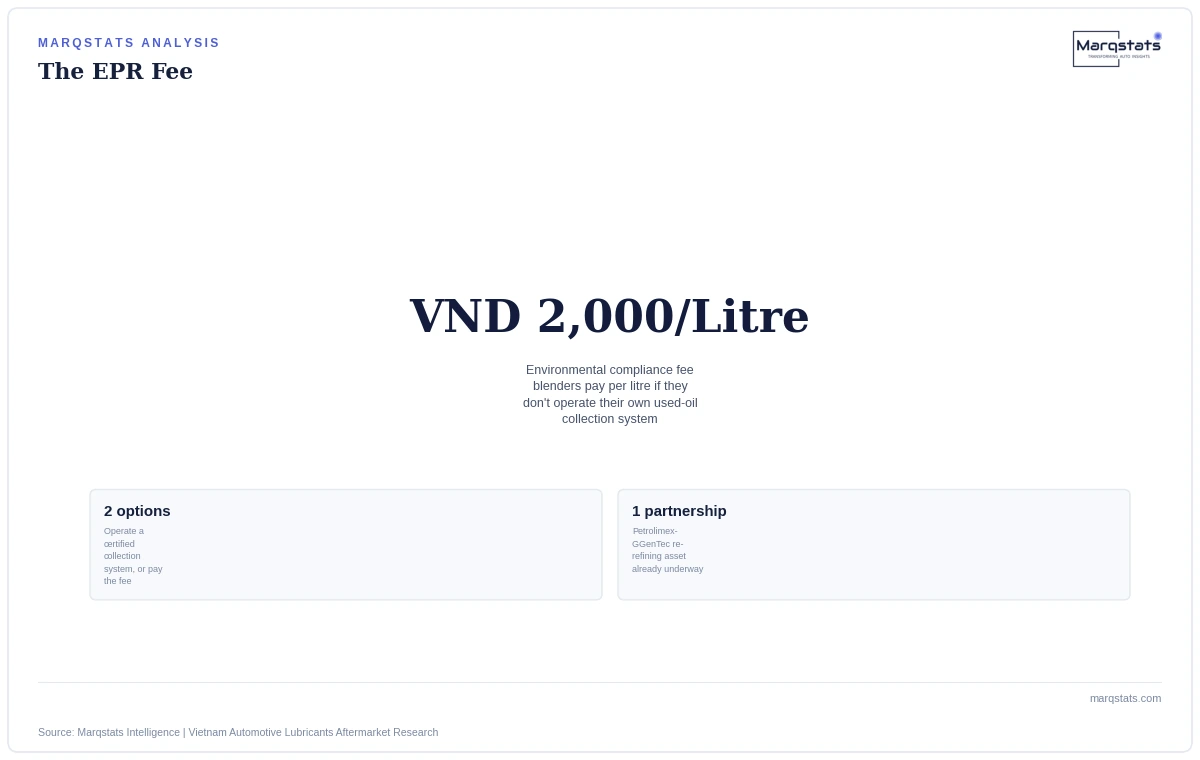
Most Extended Producer Responsibility rules ask companies to comply or face a penalty somewhere down the line. Vietnam's version, under Law No. 72/2020/QH14 and Decree No. 08/2022/ND-CP, does something more direct: it prices non-compliance into the cost of doing business from day one. Lubricant blenders and importers face a binary choice. Either operate a certified collection and recycling system for used crankcase oil themselves, or pay an environmental compliance fee of roughly VND 2,000 per litre into the Vietnam Environment Protection Fund.
The Number That Makes the Choice Obvious
At national aftermarket volumes running into the hundreds of millions of litres a year, a per-litre fee stops being a rounding error and starts being a genuine line item. For a blender selling at meaningful scale, that fee compounds fast enough that building or partnering into a collection-and-recycling system becomes the cheaper long-term option, not the more virtuous one. The regulation was written to make the economics point in one direction, and it's working.
Petrolimex Isn't Waiting to Be Told Twice
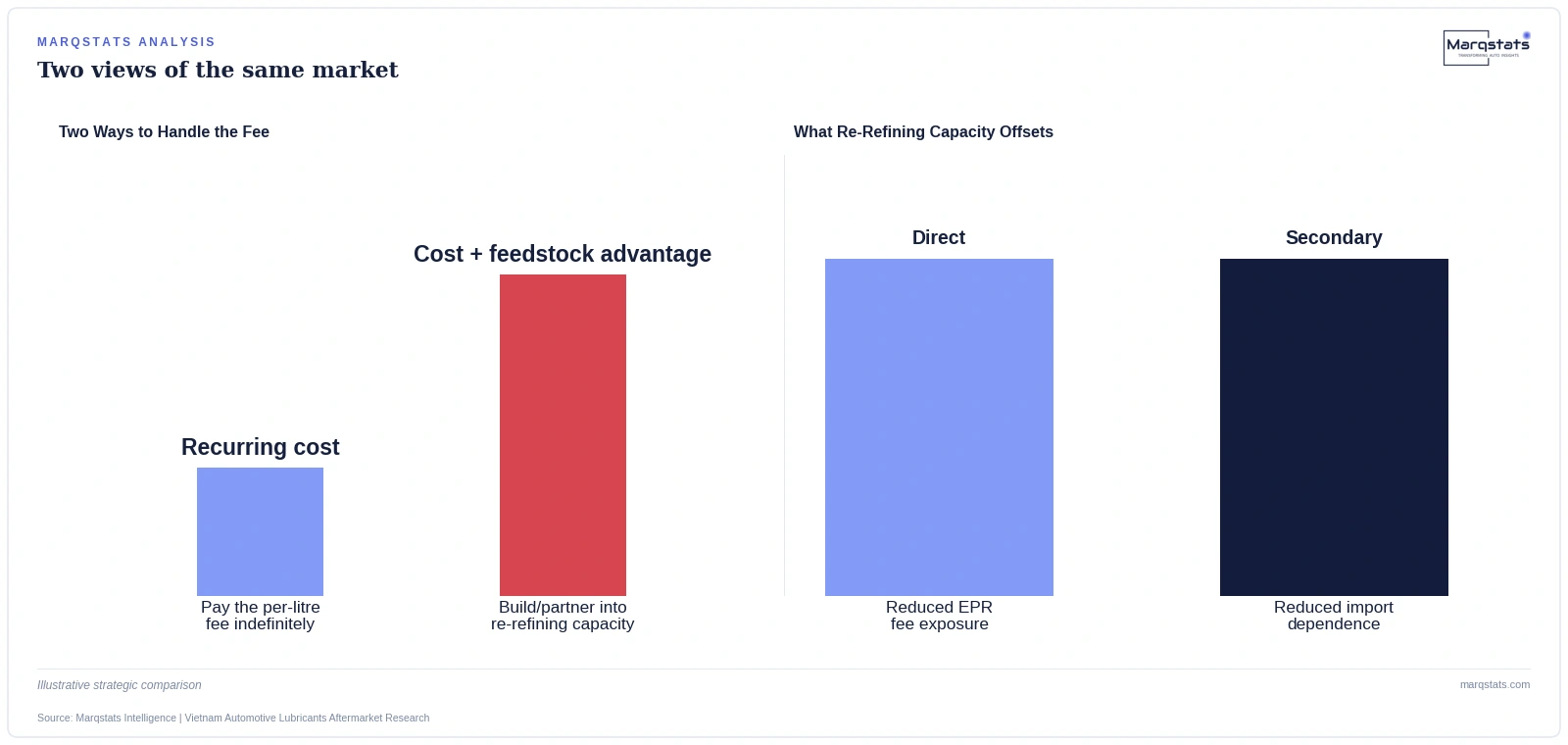
Petrolimex, Vietnam's largest fuel and lubricant distributor, has already partnered with GGenTec to construct re-refining assets that process waste oil back into usable base stocks. That is a meaningfully different move than simply paying the fee: it converts a regulatory cost centre into a feedstock supply chain, one that reduces Petrolimex's own exposure to Vietnam's near-total dependence on imported Group II and Group III base stocks in the process. A litre of oil that comes back through re-refining is a litre that doesn't need to be imported from South Korea, Singapore, Taiwan or Japan.
The Second-Order Effect on Commercial Fleets
The fee structure has a downstream effect its drafters likely intended: it gives commercial fleet operators a direct financial reason to adopt extended-drain synthetic formulations. Fewer oil changes per vehicle per year means fewer litres subject to the compliance fee, which means synthetic oil's higher upfront cost gets partially offset by lower cumulative EPR exposure, on top of the reduced labour and downtime costs fleets already factor in.
What This Means for Blenders Still Deciding
The practical takeaway: any blender operating at real scale in Vietnam should be running the same calculation Petrolimex already has, comparing the compounding cost of the per-litre fee against the capital cost of collection-and-recycling infrastructure, ideally in partnership with an established waste-management or re-refining operator rather than building from scratch. The companies that treat this as an investment decision now will hold both a cost advantage and a feedstock advantage over competitors still simply writing the fee into their cost of goods sold.