A Concentration That's Hard to Overstate
This isn't just a demand-side observation. It's the single variable that determines whether a specific high-voltage service investment in a specific location actually pays back within a reasonable timeframe, which makes it worth understanding in real, concrete terms rather than as a vague sense that "EVs are popular on the coasts."
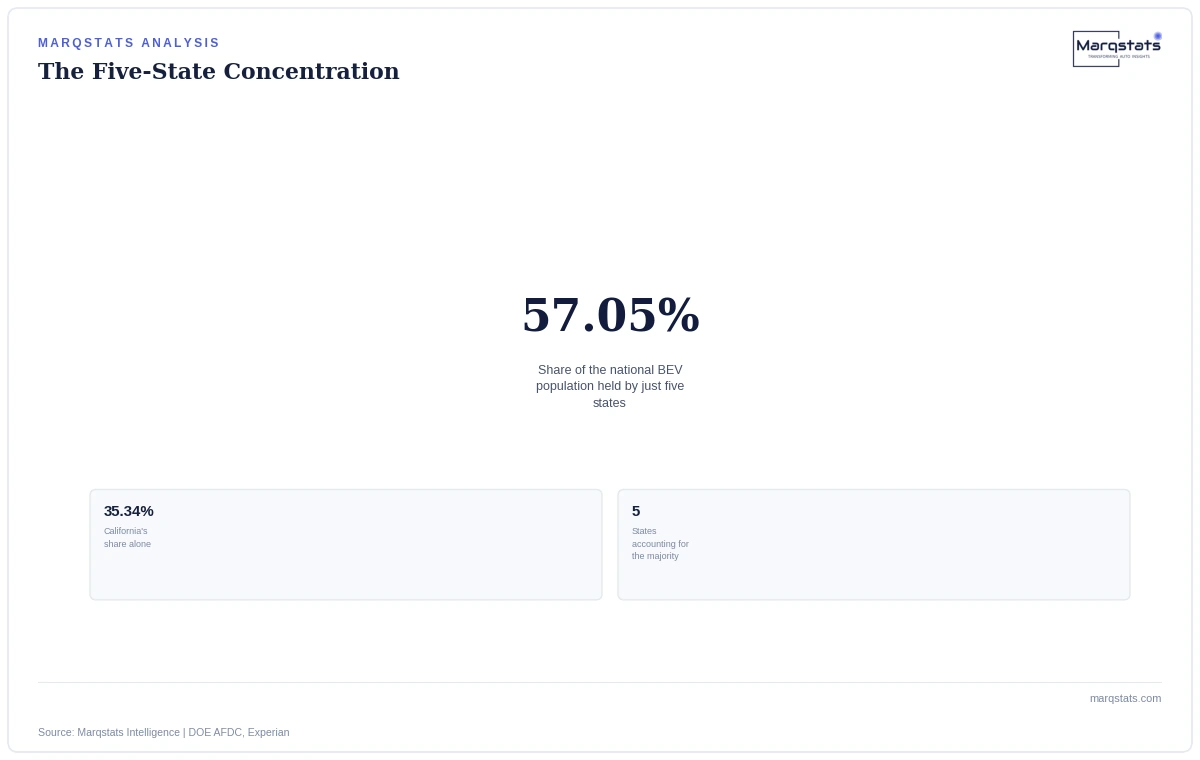
Five states — California, Florida, Texas, Washington and New Jersey — account for just over 57% of the entire national BEV population. California alone holds over a third of every registered electric vehicle in the country.
Why This Matters More for EV Repair Than for Most Retail
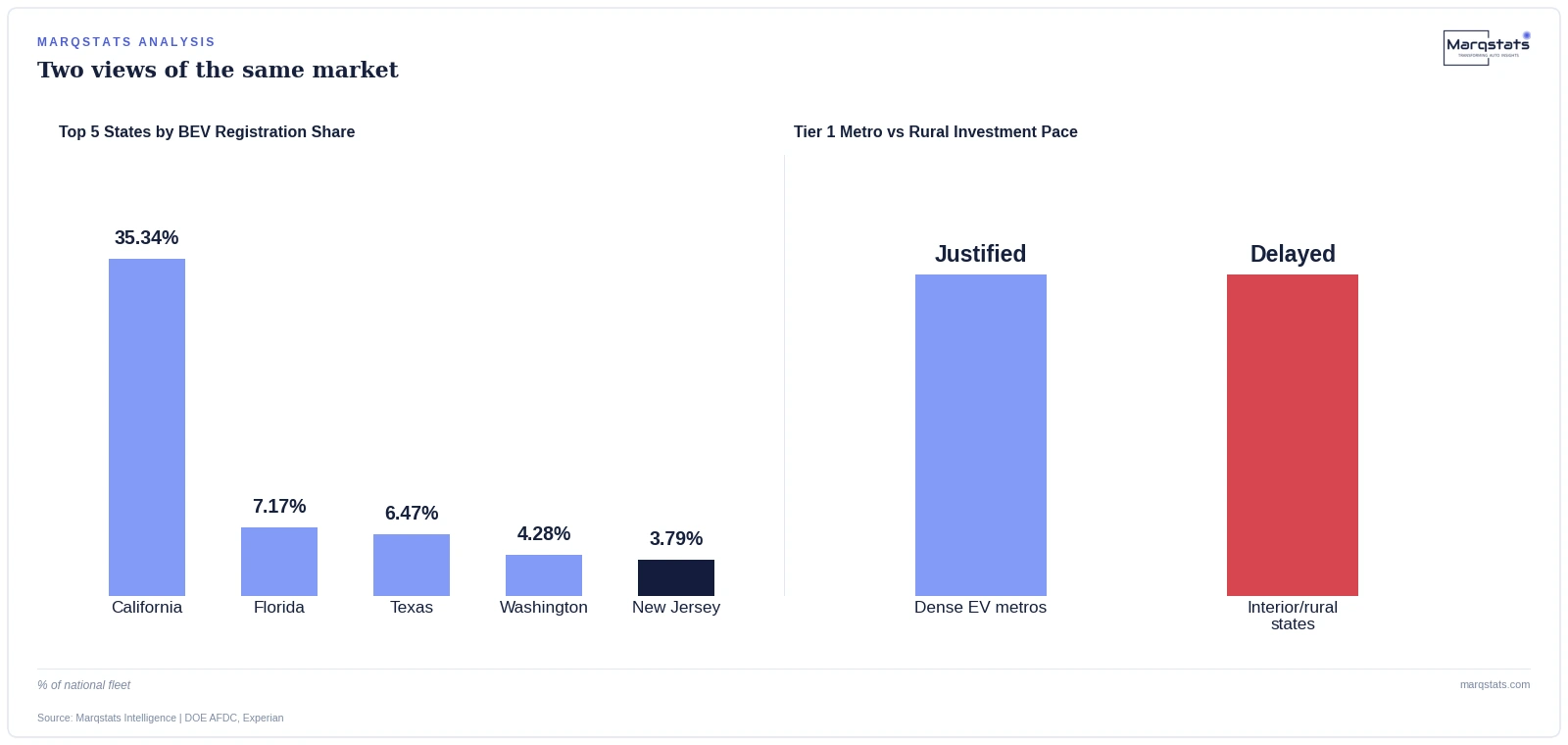
Most retail businesses can succeed with modest local demand spread across a wide footprint. High-voltage EV service specifically can't, because the capital investment required — 30,000 to 70,000 dollars per bay for insulated equipment, battery drop tables and safety gear — needs a genuinely dense local EV population to pay back in a reasonable timeframe.
What This Looks Like in Practice
Tier 1 metropolitan centers across the Pacific West and Mid-Atlantic sustain profitable standalone EV service facilities specifically because local vehicle density supports the volume needed to justify the tooling investment. Interior and rural states, with genuinely sparse EV populations by comparison, see that same capital investment delayed indefinitely — not because demand doesn't exist at all, but because it doesn't yet exist at a density that makes the investment case work.
A Named Comparison: Why This Differs From Gas Station Economics
A conventional gas station or basic auto repair shop can operate profitably on relatively thin, evenly distributed demand, since the capital investment required to open one is comparatively modest. High-voltage EV service inverts that math specifically because the upfront tooling cost is large enough that it demands genuine geographic concentration to make sense — a fundamentally different site-selection calculation than most automotive retail has historically required.
The States Just Outside the Top Five
New York, Illinois, Georgia, Colorado and Arizona each hold meaningful but individually smaller shares of the national fleet, together representing a genuine second tier of expansion opportunity for operators who have already saturated the top five markets and are looking for the next most defensible geographic bet, alongside emerging growth pockets in states like Ohio and Nevada that are only now beginning to build meaningful EV density.
What This Means for Anyone Planning EV Service Expansion
The practical lesson for independent operators and franchise groups alike: geographic expansion planning for high-voltage EV service should weight local vehicle density far more heavily than traditional automotive retail site-selection models typically do, given how directly the underlying capital economics depend on it.