A Rule That's Held for a Century
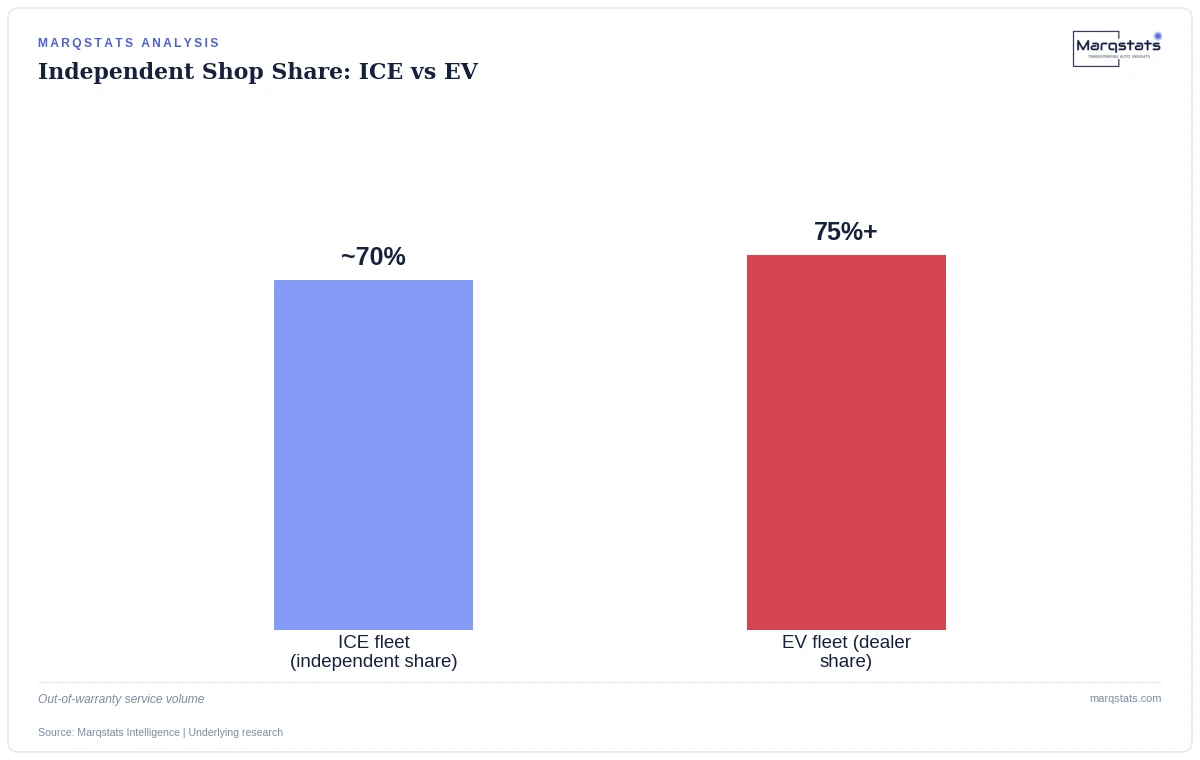
Independent repair shops have long dominated out-of-warranty automotive service in the United States. Lower labor rates, convenient locations, and a mature aftermarket parts supply chain have made independents the default choice once a vehicle ages past factory coverage. Across the broader internal combustion fleet today, independents still command roughly 70% of that out-of-warranty volume.
For electric vehicles specifically, that relationship doesn't just weaken. It inverts completely.
The Numbers Behind the Reversal
Franchised dealerships capture over 75% of total EV service, maintenance and diagnostic spending. That's not a modest tilt toward dealers. It's a wholesale reversal of a pattern that has defined American car ownership economics for generations.
Two Forces, Working Together
The reversal traces to two mechanisms reinforcing each other. Statutory 8-year, 100,000-mile high-voltage battery warranty requirements keep the overwhelming majority of today's EV fleet inside factory coverage windows, since most registered EVs were built within the past 36 to 48 months. Owners return to dealerships specifically to protect that warranty.
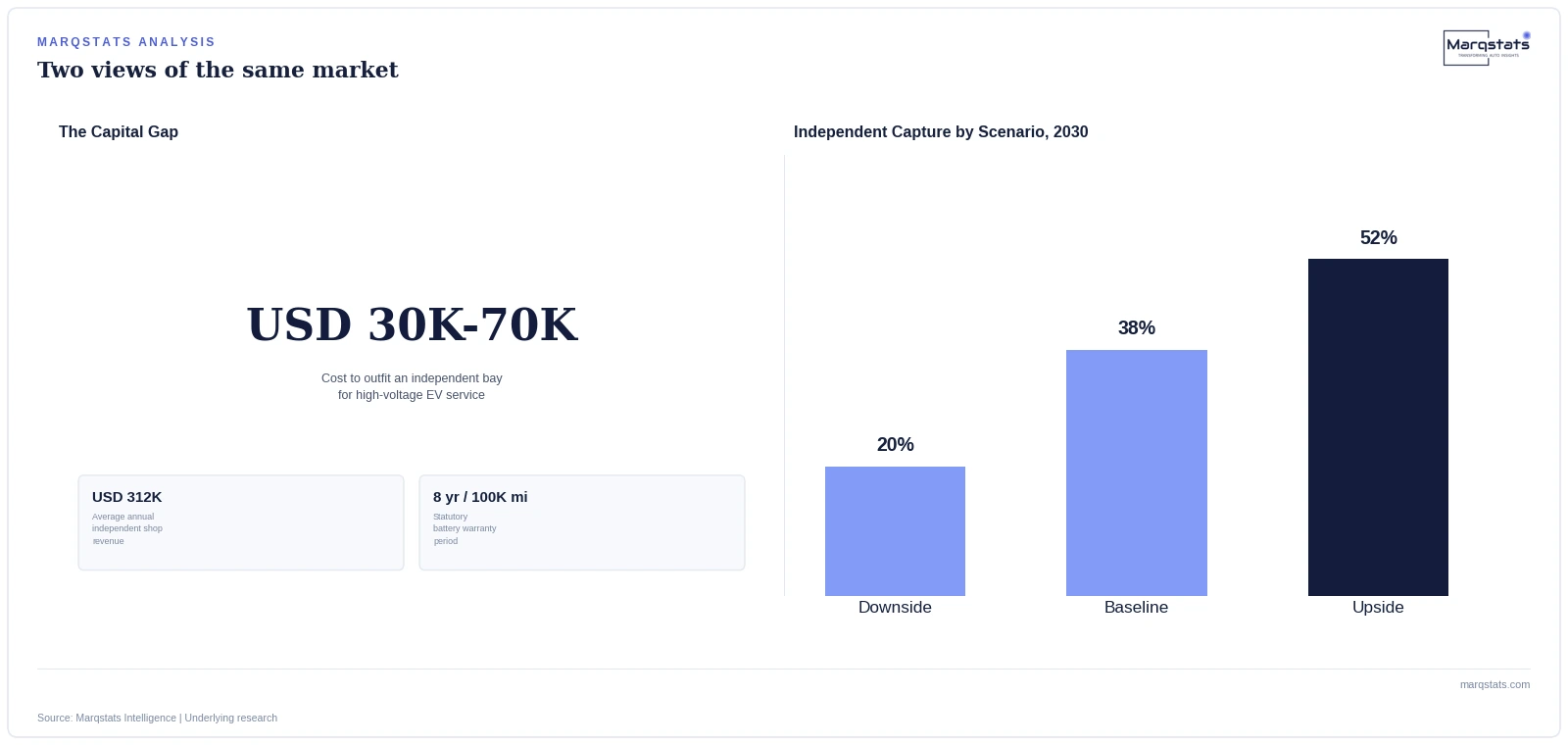
At the same time, the capital cost of competing shuts most independents out entirely: outfitting a standard two-bay facility for high-voltage EV service runs 30,000 to 70,000 dollars, against an average independent shop's revenue of roughly 312,000 dollars annually. That's a genuinely uncertain bet outside the densest EV markets.
Why This Won't Simply Reverse Itself Over Time
It might seem reasonable to assume this is a temporary, early-market condition that resolves as the EV fleet matures. The underlying research's own scenario data suggests otherwise: even under the most independent-favorable Upside scenario the analysis presents, independent capture only reaches 52% by 2030 — parity, not dominance. Under the Baseline trajectory, it's 38%. The warranty-and-capital dynamic is structural, not merely a symptom of an immature market.
A Named Comparison: How Tesla Makes the Inversion Even Sharper
Tesla adds a further wrinkle entirely outside this dealer-versus-independent framework: it operates no franchised dealer network at all, controlling diagnostics, service software, mobile repair vans and company-owned collision centers directly. Tesla's own accrued warranty liabilities grew from 1.546 billion dollars at year-end 2023 to 2.475 billion dollars by year-end 2025 — a genuinely enormous and growing pool of service demand that never touches the traditional dealer-versus-independent question at all.
The Scale of Capital This Represents Industry-Wide
Multiply that 30,000 to 70,000 dollar per-bay figure across the roughly 230,000 independent repair shops estimated to operate nationwide, and the genuine industry-wide capital requirement to meaningfully shift this channel balance becomes clear -- this isn't a gap that closes through a handful of early-adopter shops investing ahead of the curve.
What This Means for Anyone Planning Around This Market
The practical takeaway: independent shop investment decisions in this specific market should be planned around a genuinely different channel structure than the rest of the automotive aftermarket, not treated as a smaller version of the same ICE-repair playbook that has worked for decades.