
Collection Compliance Is Not the Problem
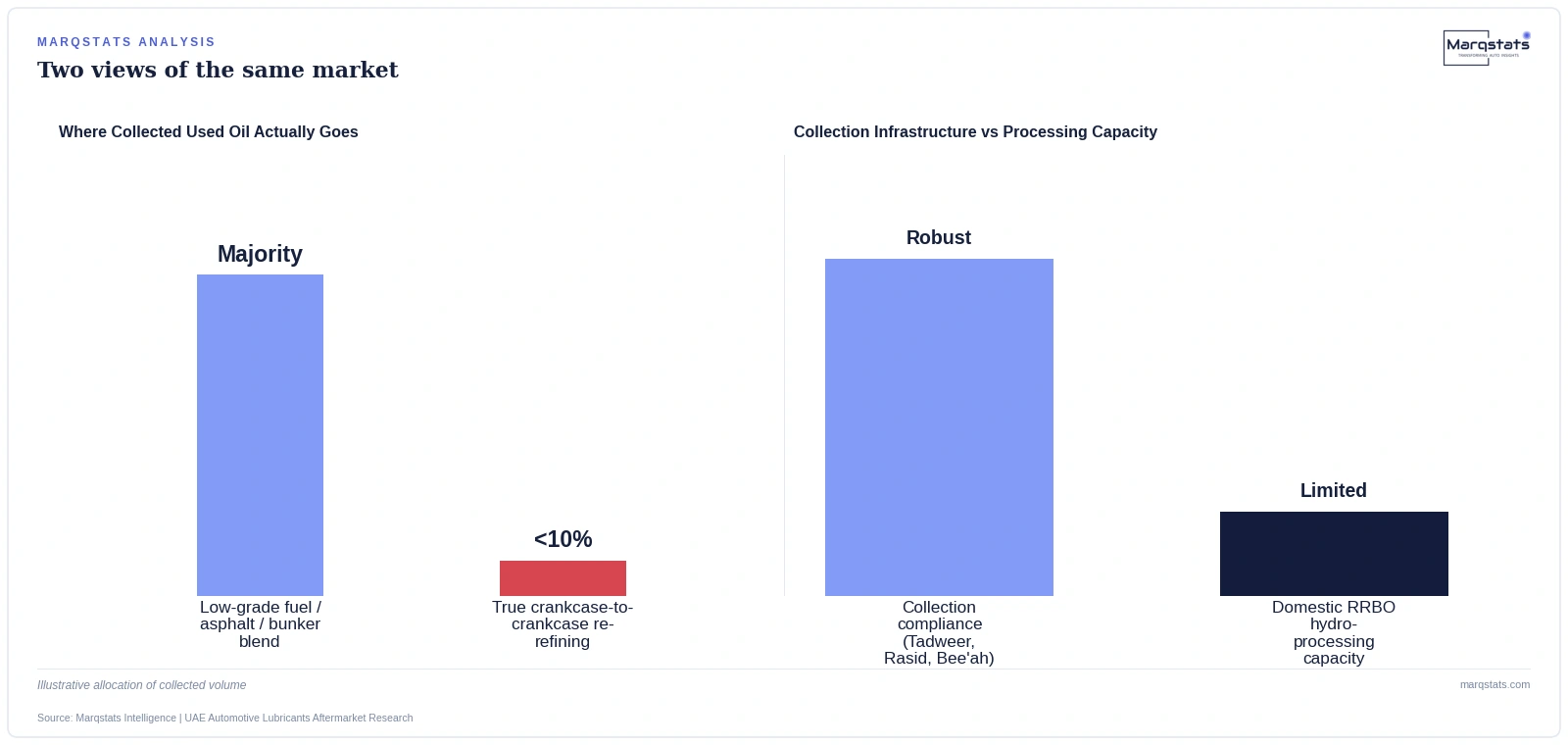
The UAE has built genuinely robust infrastructure to keep used engine oil out of storm drains, industrial furnaces, and open land. Federal Law No. 12 of 2018 assigns clear extended producer and generator responsibility for spent lubricants. Abu Dhabi's Tadweer Group requires workshops to hand waste oil exclusively to licensed transporters. Dubai Municipality's digital 'Rasid' platform GPS-tracks collection vehicles in real time to prevent unauthorized dumping. Bee'ah Group manages collection concessions across Sharjah and the Northern Emirates. On paper, and largely in practice, the collection side of this system works.
What Happens After Collection Is a Different Story
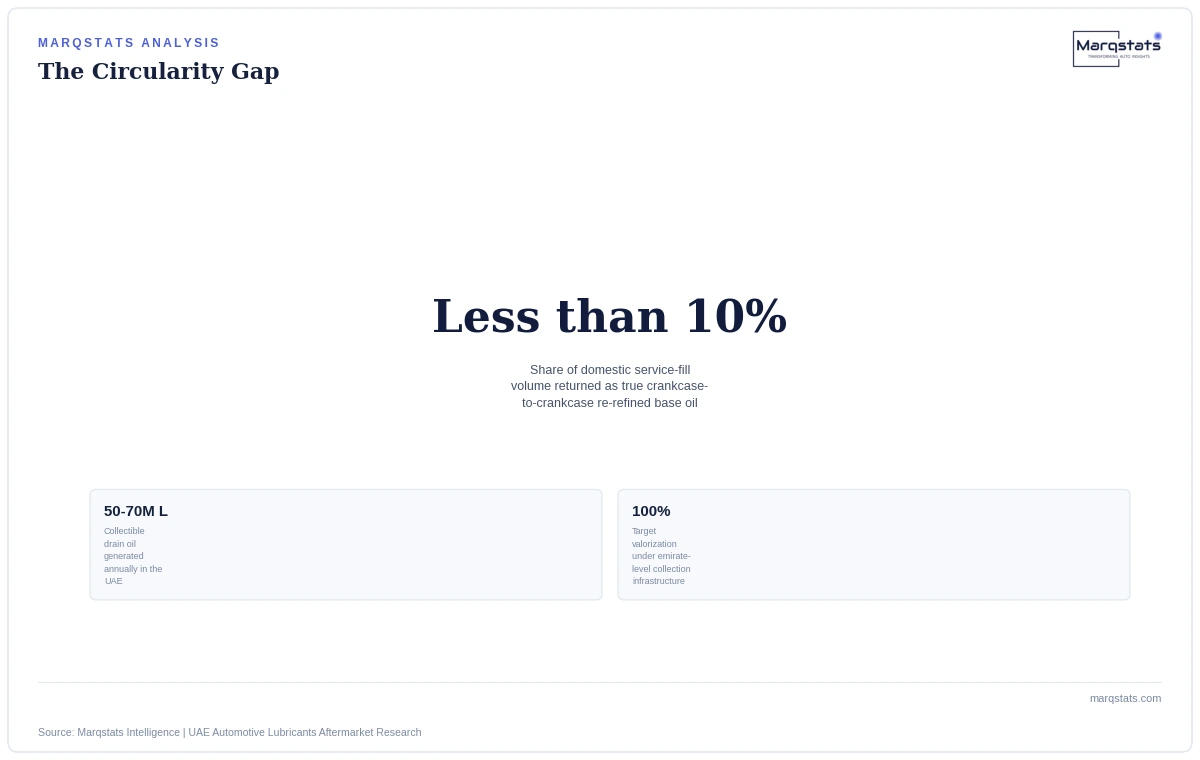
The UAE generates an estimated 50 to 70 million litres of collectible drain oil annually. Collection infrastructure captures a meaningful share of it. But domestic processing is constrained by a shortage of high-tier hydro-processing facilities capable of producing API Group II or Group III equivalent base stocks, the quality level needed to go back into a new engine oil formulation. Instead, a substantial volume of collected spent oil is processed through basic cracking or acid-clay filtration into low-grade industrial burner fuel, asphalt fluxing oil, or marine bunker blending components. Advanced hydro-processing capacity remains concentrated outside the region.
Why This Matters More as Regulation Tightens
This gap is not just an environmental footnote. As federal procurement guidelines increasingly incorporate circular-economy metrics, and as blenders face growing pressure to source regenerated base stock rather than virgin material, the UAE's limited domestic RRBO capacity becomes a genuine supply-chain constraint, not just a missed sustainability opportunity. A market that collects its used oil diligently but cannot process most of it back into lubricant-grade feedstock is exporting the value of that oil, and importing whatever regenerated base stock its blenders eventually need from elsewhere.
The Investment Case Sitting in Plain Sight
The practical takeaway: this is a specific, identifiable infrastructure gap, not a diffuse policy problem. Whoever builds the first UAE-based Group II/III-capable RRBO hydro-processing facility, in partnership with the collection systems Tadweer, Dubai Municipality and Bee'ah already operate, captures a supply chain that currently runs collection compliance right up to the point where the value gets exported as low-grade fuel instead of high-value feedstock. The collection side of the puzzle is already solved. The processing side is where the opportunity sits.