
Two Numbers From the Same Country, the Same Months
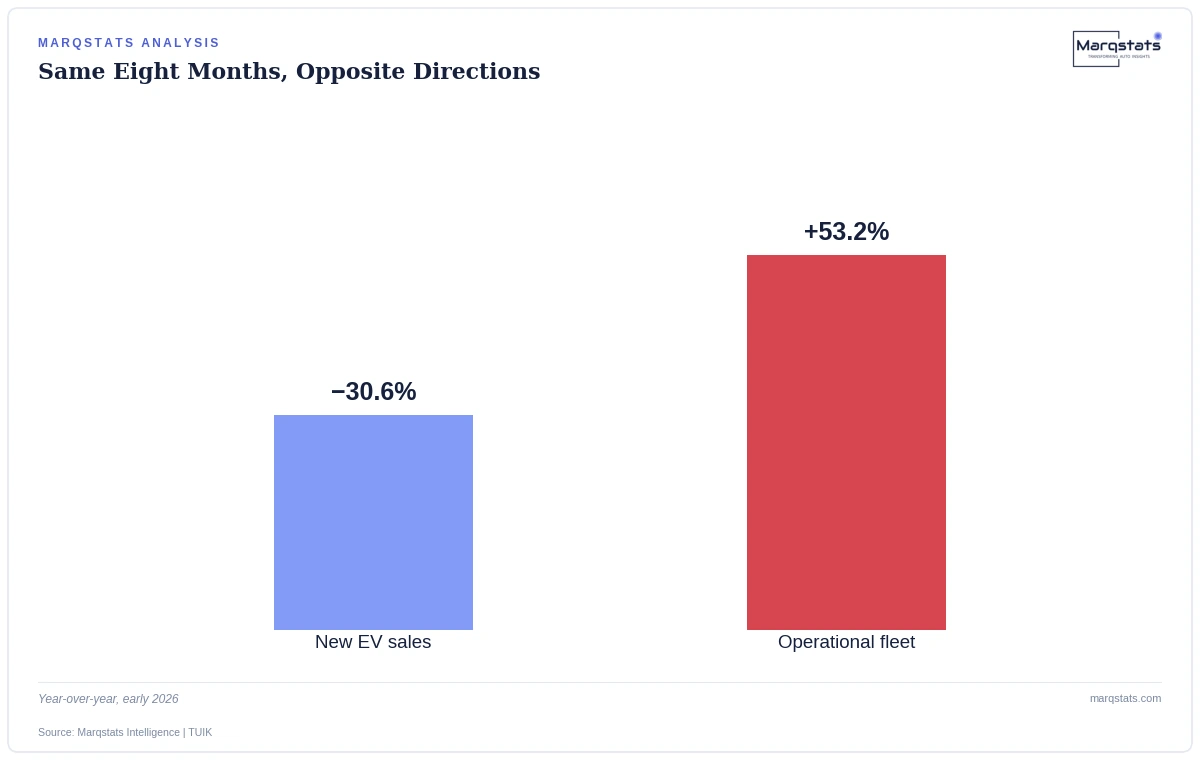
In the first eight months of 2026, new electric vehicle sales in Turkey fell 30.6% compared to the same period a year earlier. That's a genuinely sharp contraction — the kind of number that would normally make anyone watching the EV aftermarket nervous.
Over that exact same eight-month window, Turkey's operational BEV fleet grew 53.2%.
How Both Numbers Can Be True
The reconciliation is straightforward once you separate what each statistic actually measures. New-vehicle sales count transactions in a single window. Fleet size counts every vehicle sold in every prior window that hasn't been scrapped or exported. A sharp slowdown in one eight-month period barely dents a multi-year accumulation running into the hundreds of thousands of vehicles.
Why This Matters More for Maintenance Than for Sales
Here's the part that matters specifically for the aftermarket: every vehicle in that accumulated fleet, whether it was sold in a record year or a weak one, still needs its cabin filter changed, its brake fluid tested, its tires replaced on schedule. The maintenance market doesn't care when a car was purchased. It cares how many cars are currently on the road.
What Caused the Sales Slowdown in the First Place
The sales contraction itself has identifiable causes: tightening monetary conditions, Special Consumption Tax (OTV) increases, and import tariff adjustments on non-EU vehicles all compressed new-vehicle purchasing power during this specific window. These are genuine, real-world macroeconomic pressures — they're just pressures that act on the sales flow, not on the accumulated fleet stock that actually drives aftermarket demand.
A Named Comparison: Why This Pattern Recurs in Maturing EV Markets
This specific divergence — fleet growth persisting through a sales slowdown — tends to show up specifically in markets where the EV fleet has already reached meaningful scale. In an genuinely nascent market, a sales collapse would show up in fleet numbers almost immediately, since there's little accumulated stock to buffer against it. Turkey's fleet had already crossed the scale threshold where new-sales volatility becomes a secondary variable, not the primary one, for aftermarket forecasting purposes.
The Scale of the Buffer This Represents
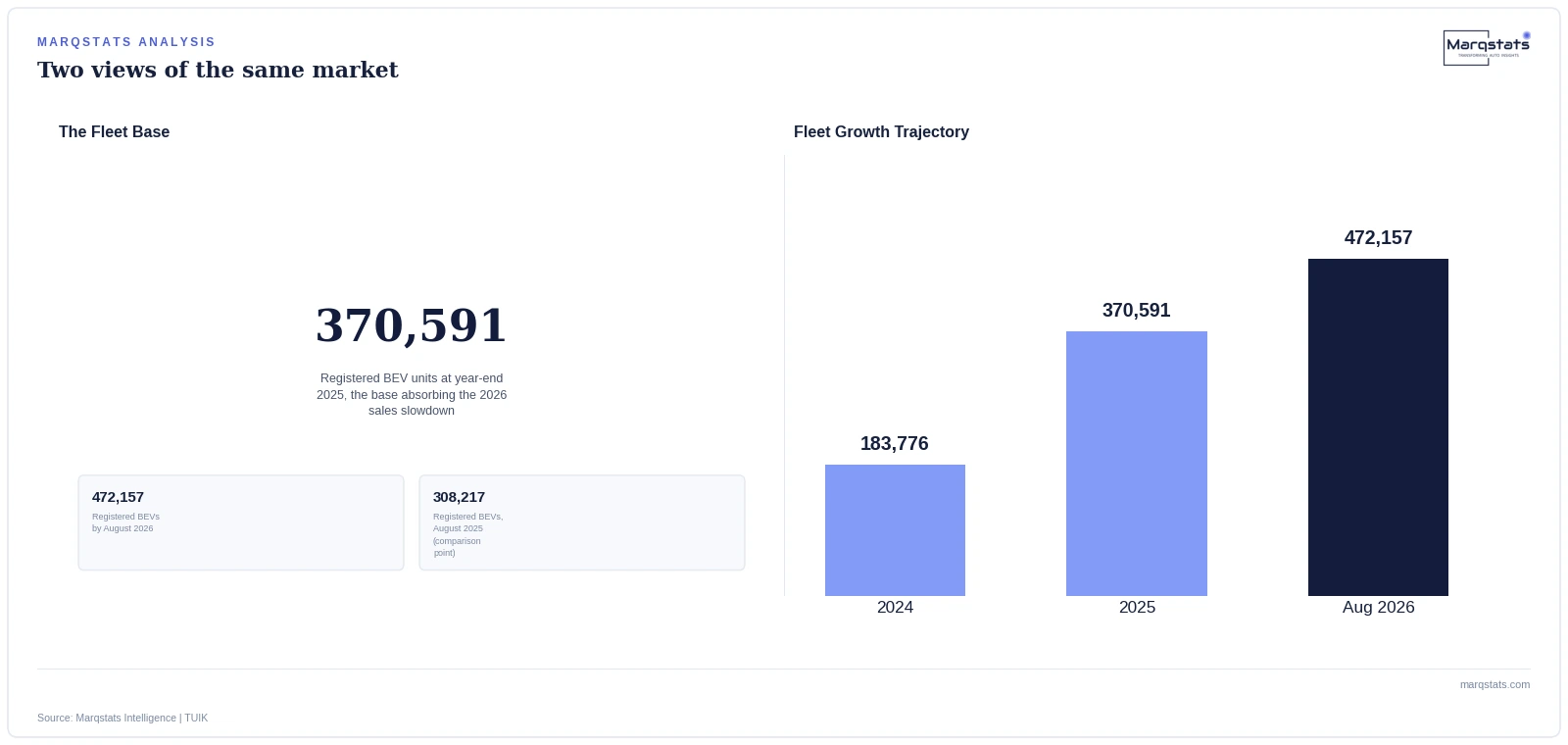
Put real numbers against this: Turkey's operational fleet crossed 370,000 units by year-end 2025, a base large enough that even a genuinely severe eight-month sales contraction can only shift the growth rate, not reverse the underlying trajectory. A market this size has effectively built its own shock absorber against short-term sales volatility.
What This Means for Anyone Forecasting This Market
The practical rule: when evaluating Turkey's EV maintenance market specifically, weight operational fleet trajectory far more heavily than any single period's new-sales headline. The sales number tells you about consumer purchasing conditions today. The fleet number tells you about the maintenance demand that already exists and keeps growing regardless.