A car-maintenance app is quietly beating the dealership at its own oil-change business
For decades, getting your car's oil changed in China meant one of two things: a trip to the franchised dealership where you bought the car, or a visit to a local, unbranded neighborhood mechanic. A third option has grown large enough to genuinely reshape that structure, and it started as a smartphone app.
What TUHU actually is
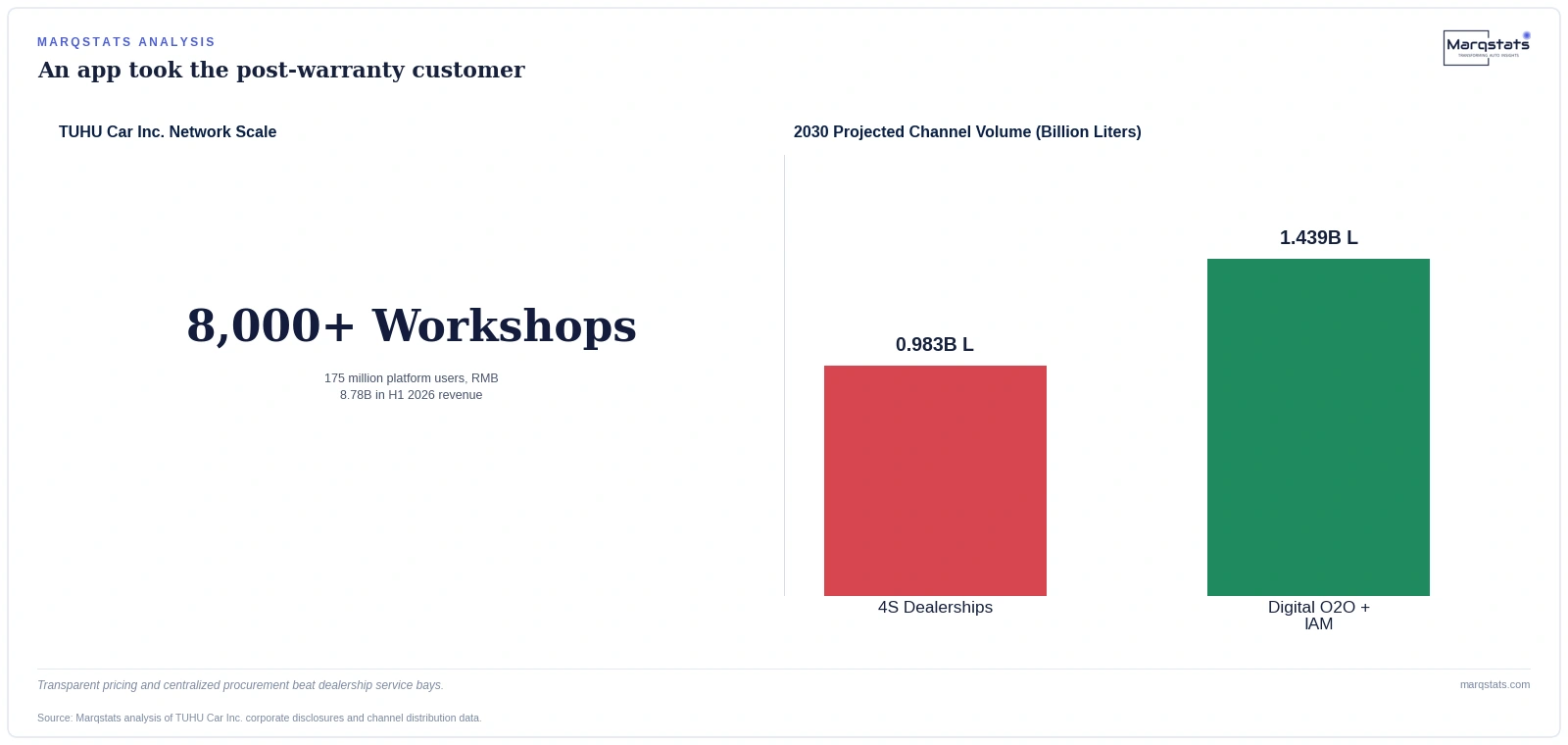
TUHU Car Inc. operates a digital online-to-offline car care platform: customers book maintenance appointments through a mobile app with transparent, upfront pricing, and the service is delivered through a network of more than 8,000 physical workshops. It's not a single chain of company-owned garages, it's a coordinated network connecting centralized digital booking and procurement with distributed physical service delivery, reaching an app user base of 175 million people.
Where TUHU's customers are actually coming from
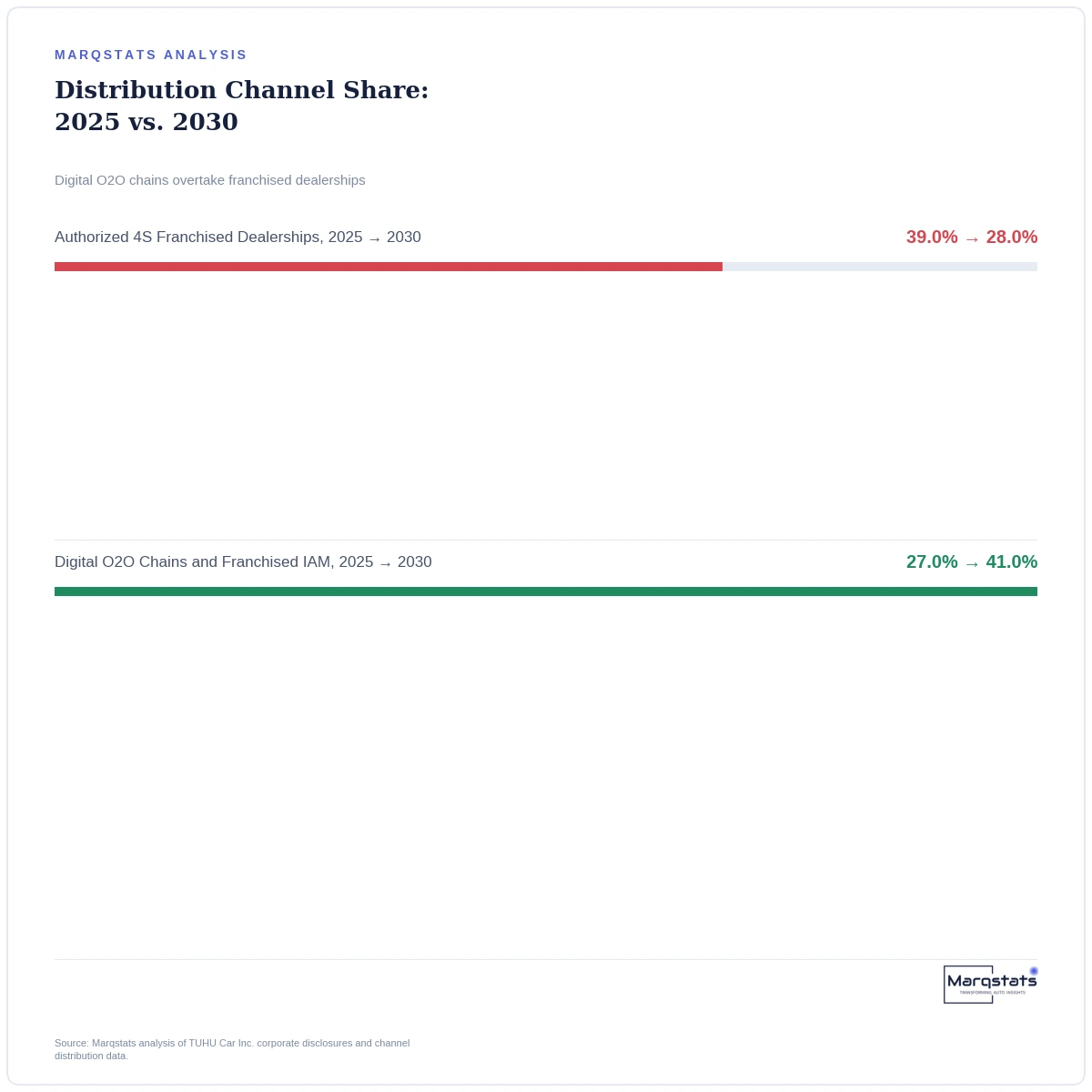
The growth isn't happening in a vacuum. It's coming specifically at the expense of the traditional franchised 4S dealership channel, the network tied directly to where a customer originally bought their car. Authorized 4S franchised dealerships are projected to see their share of China's aftermarket lubricant distribution volume contract from 39.00% in 2025 to just 28.01% by 2030. Digital O2O chains and franchised independent aftermarket workshops, the category TUHU anchors, are projected to expand from 27.01% to 41.00% over the same period, becoming the single largest distribution channel in the market.
The dealership used to own the customer relationship after the sale. An app is taking that relationship instead.
— Marqstats Analyst Team
Why customers are actually switching
The shift happens at a predictable point in vehicle ownership: once a car exits its factory warranty period, the financial incentive to return to the original dealership for routine maintenance weakens considerably. Digital chains capture exactly this post-warranty customer segment by offering centralized corporate procurement, transparent mobile application pricing, and standardized service workflows that remove much of the opacity and inconsistency associated with independent, unbranded workshops, while typically undercutting dealership service pricing.
Why this matters beyond one company's growth story
TUHU's specific scale makes it a useful, concrete example, but the underlying shift it represents extends across the industry. Multinational lubricant formulators have taken direct notice: Shell (China) Limited's exclusive release of its Shell Helix Ultra Lightning 2.0 product line specifically through the Tuhu Car Care network demonstrates that major brands are now treating digital O2O platforms as a primary distribution channel worth securing exclusive product launches for, not merely a secondary or supplementary sales outlet.
What this means for how lubricants actually reach consumers
This channel shift has a direct, practical implication for how lubricant brands need to think about distribution. A brand relationship built entirely around securing shelf space and technician recommendations inside dealership service bays increasingly misses a growing share of the actual transaction volume. Securing supply agreements and product placement directly with digital O2O platforms, bypassing several layers of traditional multi-tiered wholesale distribution in the process, is becoming a genuinely necessary complement to, rather than a replacement for, traditional dealership relationships.
The counter-argument: will dealerships simply build their own competing digital platforms and close this gap?
A fair question is whether established 4S dealership networks, facing this genuine channel pressure, will respond by building or acquiring comparable digital booking and transparent-pricing capabilities of their own, potentially closing the gap that's currently favoring independent platforms like TUHU. This is a plausible competitive response, and some dealership groups have made moves in this direction. What makes it a harder gap to close quickly, though, is that platforms like TUHU built their transparent pricing and centralized procurement model as a core structural advantage from the start, rather than layering it onto an existing, more expensive dealership cost structure and brand-specific service model, meaning even a well-executed dealership digital initiative would likely still struggle to match the platform's pricing transparency and cross-brand convenience on a like-for-like basis.
What this means for lubricant brands and dealership networks
- Lubricant brands should prioritize securing direct supply and exclusive product placement agreements with major digital O2O platforms, following Shell's model, rather than relying solely on traditional dealership channel relationships.
- 4S dealership networks should evaluate transparent, app-based booking and pricing models specifically for their post-warranty service segment, where digital platforms are capturing the most customer volume.
- Investors evaluating China's automotive aftermarket should treat digital O2O platform scale, workshop count, platform users and revenue growth, as a leading indicator of channel share shifts still ahead.
The full market picture
Marqstats' complete China automotive lubricants aftermarket analysis, including the full channel distribution breakdown, is available in the linked report below.
Related reportChina Automotive Lubricants Aftermarket Size, Share & Forecast 2026 – 2030