A Tax Rule Never Meant for Repair Shops
It's the kind of fiscal detail that would sound irrelevant to anyone servicing a car, and it's worth tracing exactly why it isn't.
Thailand's battery cell localization rule was written to protect excise tax revenue and steer manufacturing investment domestically. Nobody designed it with the aftermarket in mind. But its effect on how fast a Thai EV owner gets a replacement battery module is real, and it's worth understanding exactly how the mechanism works.
The Numbers Behind the Threshold
These specific figures trace directly to the underlying research's own regulatory analysis, not a rough estimate.
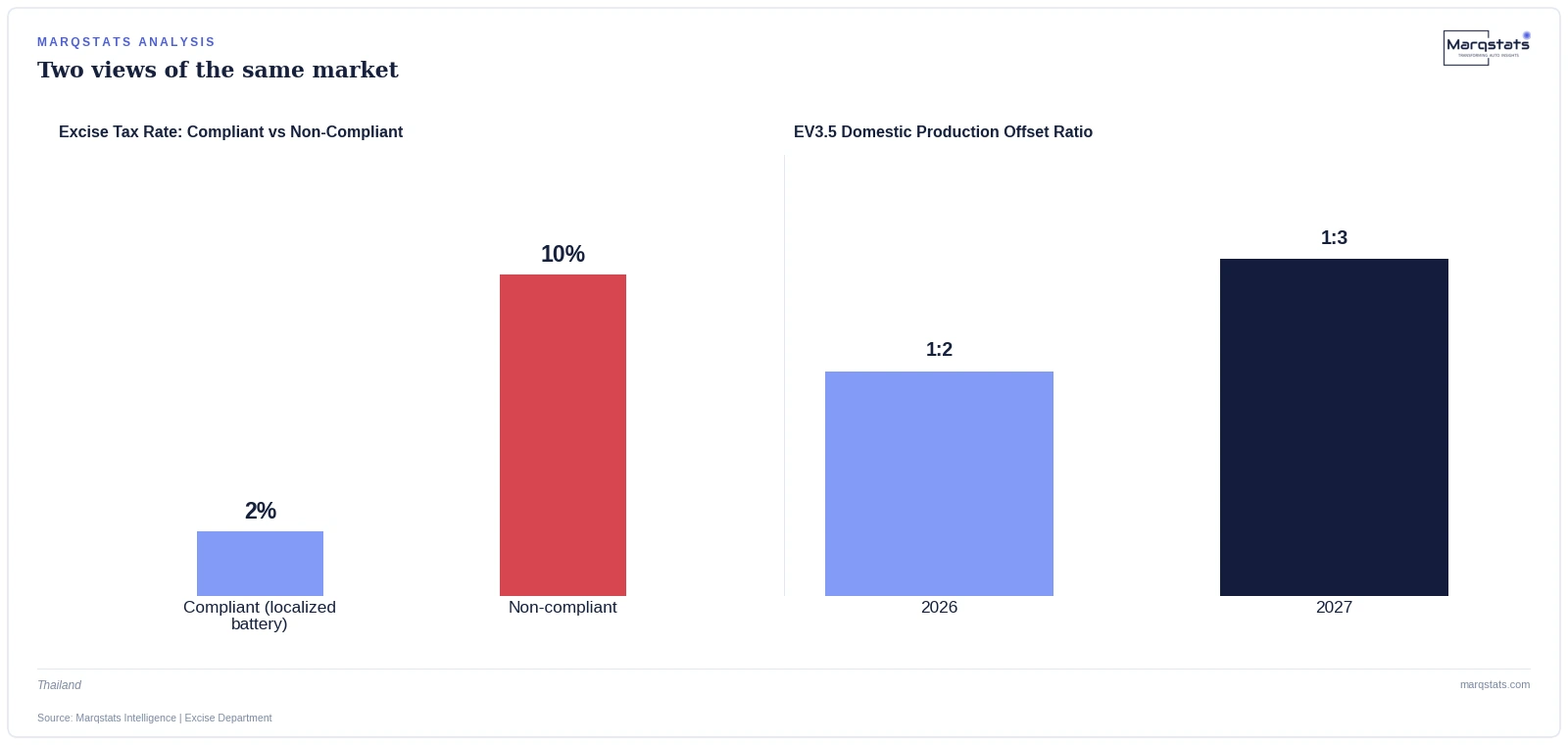
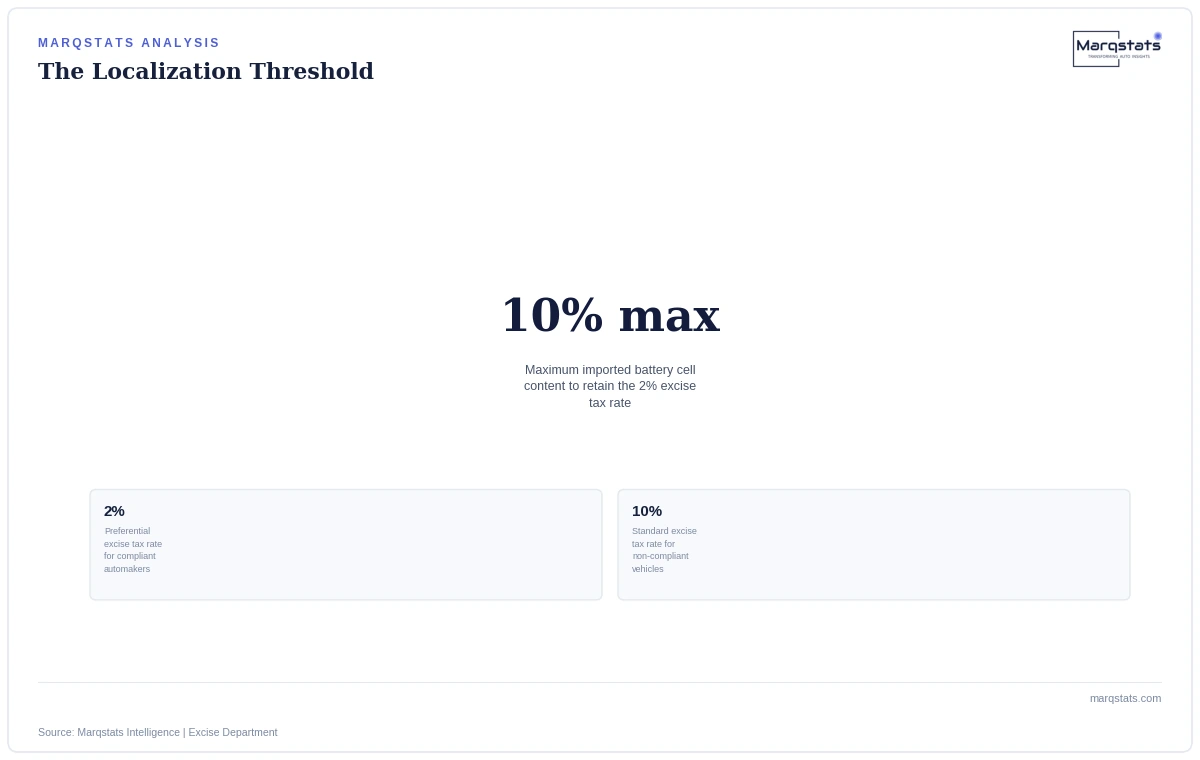
To keep the 2% excise rate that makes their vehicles price-competitive, automakers must source at least 90% of battery cell content domestically. Miss that threshold and the excise rate jumps to 10% -- a cost automakers cannot quietly absorb on already-competitive pricing.
Why Battery Makers Moved In Response
Understanding the actual causal chain changes how this policy should be read.
That single fiscal lever is why CATL, SVOLT, Gotion High-Tech, and CALB all established local battery pack assembly facilities in Thailand's Eastern Economic Corridor. This decision sits alongside the EV3.5 program's escalating domestic production offset ratios -- automakers that imported completely-built-unit vehicles during 2022-2025 must now assemble two domestic BEVs for every imported CBU in 2026, rising to three in 2027 -- creating compounding pressure toward local manufacturing across the entire supply chain, not just final assembly.
A Named Comparison: Why the Aftermarket Benefit Was Incidental
It's worth being precise about what this policy was actually designed to do, because the repair-shop benefit follows from a different intended outcome entirely.
None of this investment was aimed at improving repair turnaround times. The policy's stated goals are protecting excise revenue and building domestic manufacturing capacity. But because replacement battery modules, battery management system boards, and pack enclosure seals are now produced domestically rather than imported, collision and warranty repair wait times for Thai EV owners are structurally shorter than they would be in a market relying entirely on imported battery components.
Why This Should Matter to Workshop Investment Planning
Recognizing that domestic parts availability is policy-driven, not market-driven, changes how durable this advantage should be treated.
Workshops and fleet operators benefiting from faster parts turnaround should understand that advantage traces to a specific fiscal threshold, not to a market-driven supply chain investment that would persist regardless of policy. As long as the 10% ceiling and the escalating offset ratios remain in force, domestic battery component availability should keep expanding in step.
What This Means for Anyone Sourcing EV Parts in Thailand
The practical takeaway: workshops, fast-fit chains, and fleet operators should treat Thailand's domestic battery component supply chain as a genuine planning advantage specifically, since it traces to a durable fiscal mechanism rather than to a transient market condition.