A Fleet Size That Doesn't Match Its Revenue Line
It's the kind of mismatch that looks like a data error until the underlying mechanics are traced through.
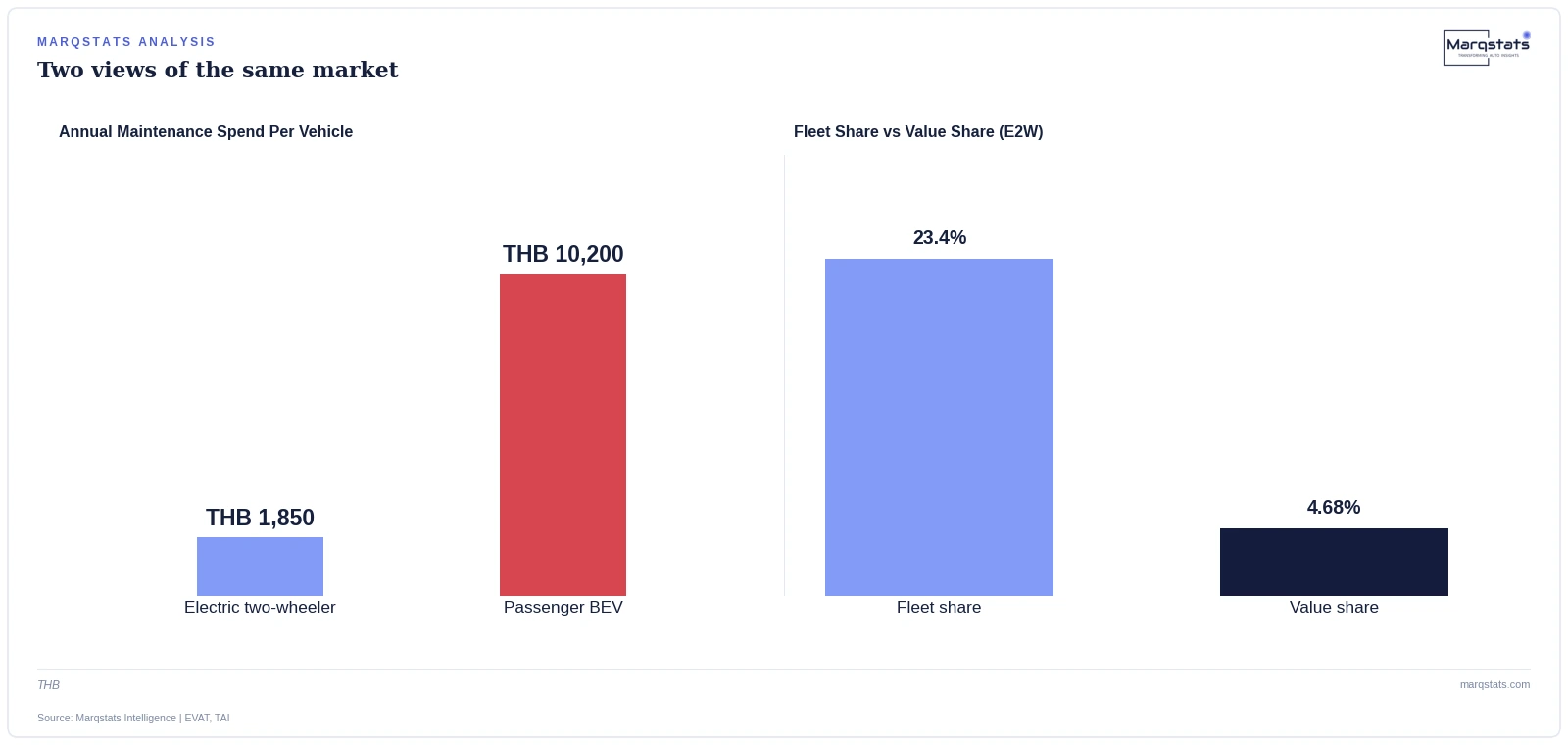
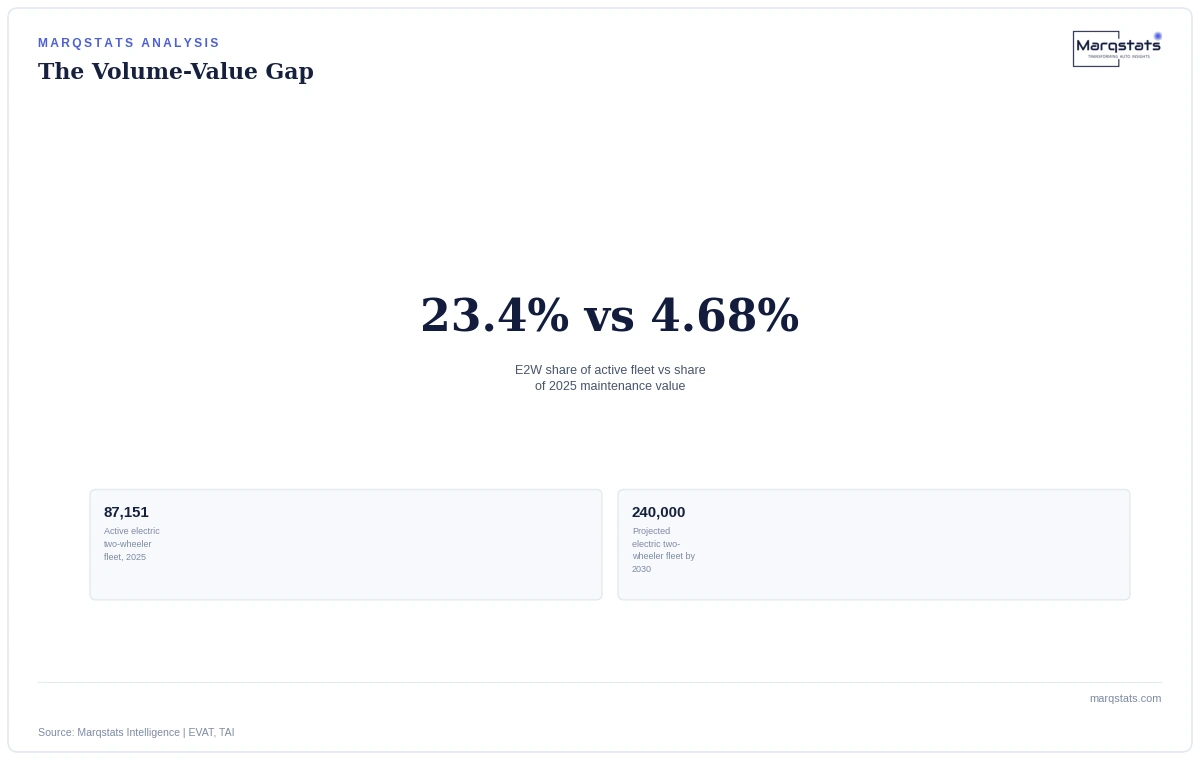
In brief: electric two-wheelers are Thailand's second-largest EV category by unit count, nearly matching plug-in hybrid passenger cars in absolute fleet size. Their share of the maintenance market is a fraction of that.
Why This Isn't a Utilization Problem
The natural assumption -- that these vehicles simply sit idle -- turns out to be exactly backwards.
Nearly as many electric two-wheelers as PHEVs. A fraction of the maintenance revenue.
— Marqstats Analyst Team
These vehicles see genuinely intense daily use, sustained by commercial battery-swapping networks serving Bangkok's food delivery and courier fleets -- Bangkok alone accounted for 46.5% of new electric motorcycle registrations in 2025, driven specifically by this rider economy. High utilization is exactly what's happening here.
Why Value and Volume Decouple on Two Wheels
The actual explanation sits in what a two-wheeler needs serviced, not how often it's ridden.
The gap comes down to per-unit service complexity, not usage intensity. A passenger BEV's annual maintenance runs to specialized tire replacement, suspension component wear, and high-voltage diagnostics on a large traction battery. An electric two-wheeler's annual maintenance is a drive belt or hub motor bearing, brake pad renewal, and a 12-volt auxiliary battery swap -- averaging THB 1,850 a year against a passenger BEV's THB 10,200. The components are simply smaller, cheaper, and faster to service.
A Named Comparison: Why This Segment Still Matters Commercially
Low value share doesn't mean this segment should be ignored -- it means it needs a different kind of business model entirely.
Rather than competing for per-repair margin the way passenger BEV servicing does, the commercial opportunity in this segment is volume and recurring relationship: battery-swapping network operators and fleet-service contracts with delivery platforms capture value through subscription-style servicing arrangements rather than one-off high-ticket repairs, a genuinely different commercial model than the rest of this market.
Why This Pattern Should Persist Through 2030
Nothing in the underlying growth drivers suggests this ratio will shift meaningfully, since the components staying cheap and the fleet staying large are both structural, not temporary.
The projected fleet growth to 240,000 units by 2030 comes with a nearly unchanged value share (4.35%), meaning the underlying research itself does not expect this volume-value gap to close as the segment matures -- it's a structural feature of the vehicle category, not a temporary market inefficiency.
What This Means for Workshops and Fleet Operators
The practical takeaway: businesses evaluating Thailand's E2W segment should build around recurring battery-swapping and fleet-service subscription models specifically, rather than expecting per-repair margins comparable to passenger BEV servicing.