Same Technology, Very Different Economics
This isn't a hypothetical comparison — it's a pattern already visible in how South Korea's registered fleet is actually composed and how its maintenance spend is actually distributed, and it has real implications for anyone planning workshop capacity, parts inventory, or fleet servicing contracts in this market.
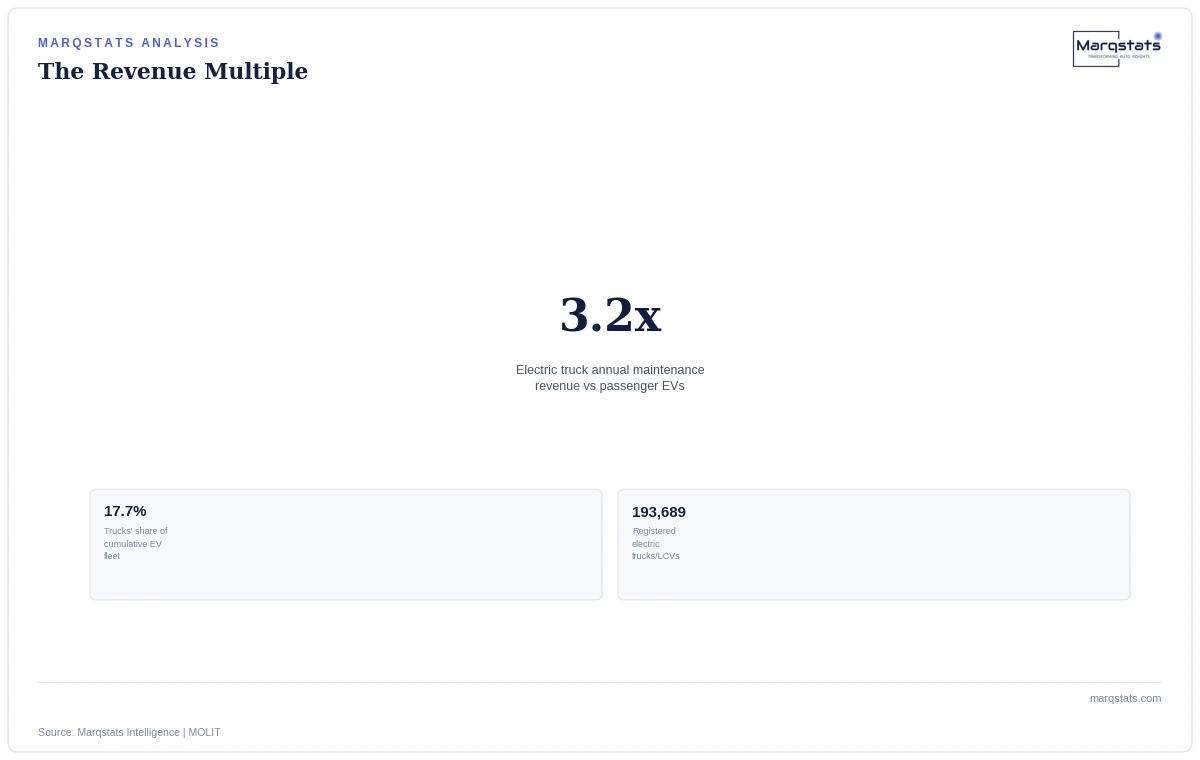
A Hyundai Porter II EV and a Hyundai Ioniq passenger model share the same fundamental technology — battery pack, electric motor, regenerative braking, high-voltage systems. One of them, though, generates 3.2 times the annual maintenance revenue of the other.
Why the Multiple Is So High
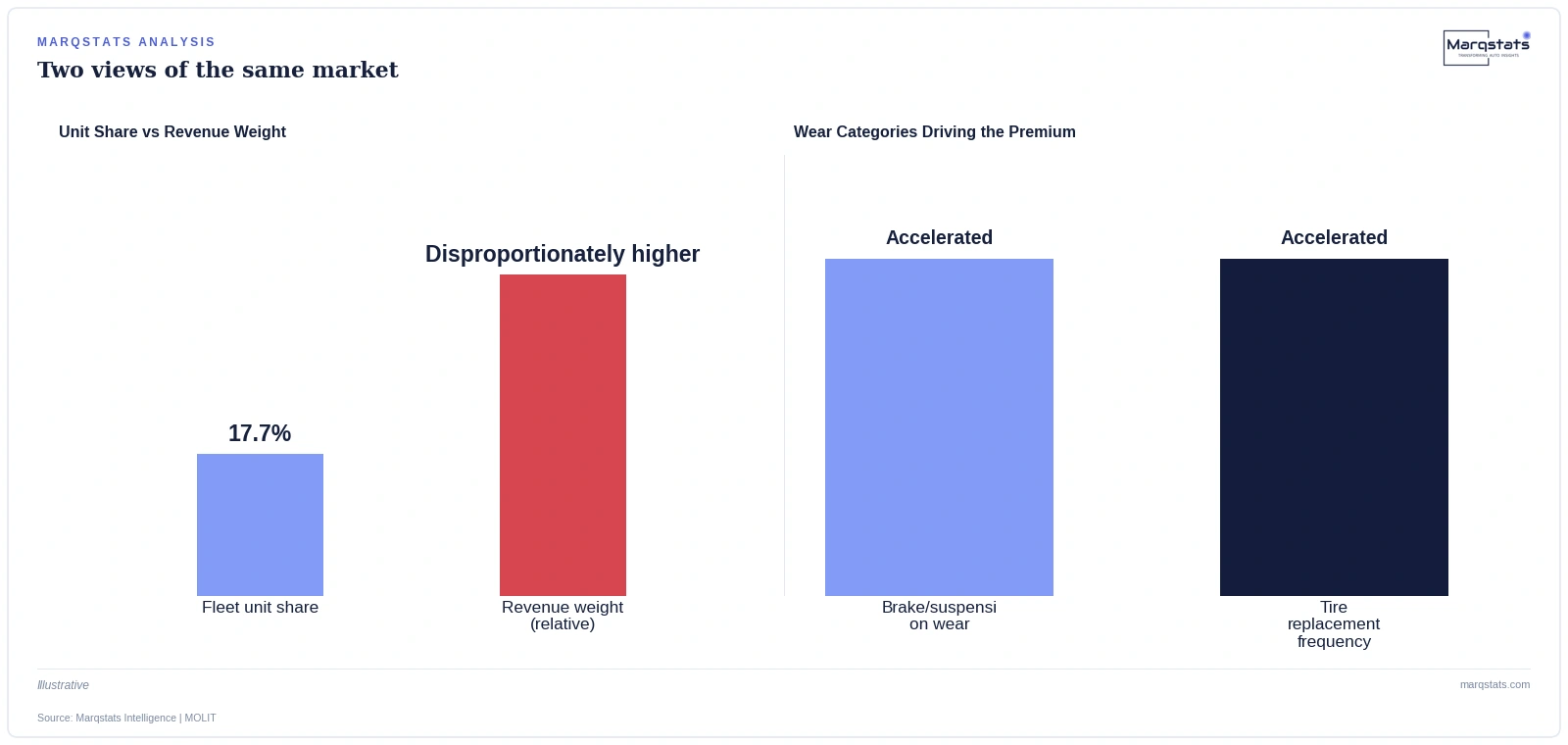
The driver isn't the vehicle's technology — it's how the vehicle actually gets used. Electric light trucks like the Hyundai Porter II EV and Kia Bongo III EV see intensive commercial usage: higher daily mileage, heavier and more frequent loads, and correspondingly faster wear on brakes, suspension components, and tires than a typical passenger EV covers in commuting use.
The Numbers Behind the Multiple
Electric trucks and LCVs represent 193,689 units, just 17.7% of South Korea's cumulative registered EV fleet. Despite that modest unit share, their maintenance revenue contribution is disproportionately large — exactly the kind of concentration that should reshape how workshops and parts suppliers think about where to prioritize capacity and inventory.
A Named Comparison: Why This Differs From ICE Commercial Trucks
Commercial usage driving higher maintenance revenue isn't unique to EVs — diesel commercial trucks have always generated more service revenue than passenger cars for similar usage-intensity reasons. What's distinctive here is the specific multiple: 3.2x is a meaningfully higher ratio than typical ICE passenger-versus-commercial maintenance spread, reflecting how EV-specific wear items — tires accelerated by instant torque, brake components interacting with regenerative systems — compound with commercial usage intensity rather than simply adding to it.
How This Compares Across the Broader Eco-Friendly Fleet
This revenue concentration becomes even more notable set against South Korea's much larger 3.95 million-unit eco-friendly vehicle parc overall, where non-plug-in hybrids alone account for 2.81 million units and 71.1% of green service bay throughput. Electric trucks are a small fraction of that broader base, yet punch dramatically above their weight in maintenance revenue terms specifically.
What This Means for Workshops and Parts Suppliers
The practical implication: a workshop or parts distributor serving South Korea's EV market should weight commercial electric truck and LCV capacity planning well beyond what that segment's 17.7% unit share alone would suggest. Fleet operators running these vehicles are already treating service-cost predictability as a genuine procurement priority — exactly the kind of customer relationship built around dedicated maintenance contracts, not walk-in service.