
A Cost Comparison Most Coverage Overlooks
It's easy to focus on premium passenger EVs and commercial bus fleets and miss the vehicle category that actually moves the most South Africans daily.
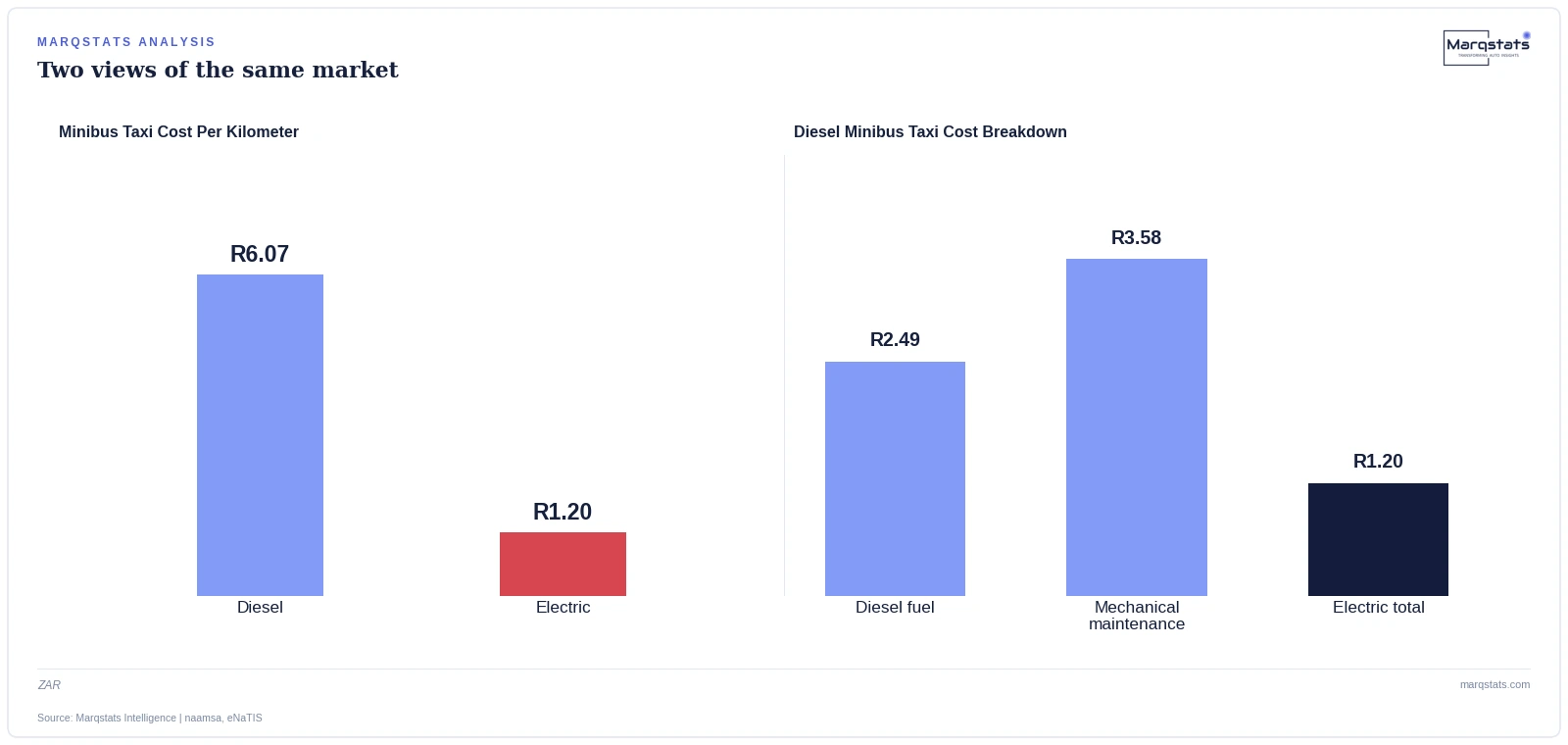
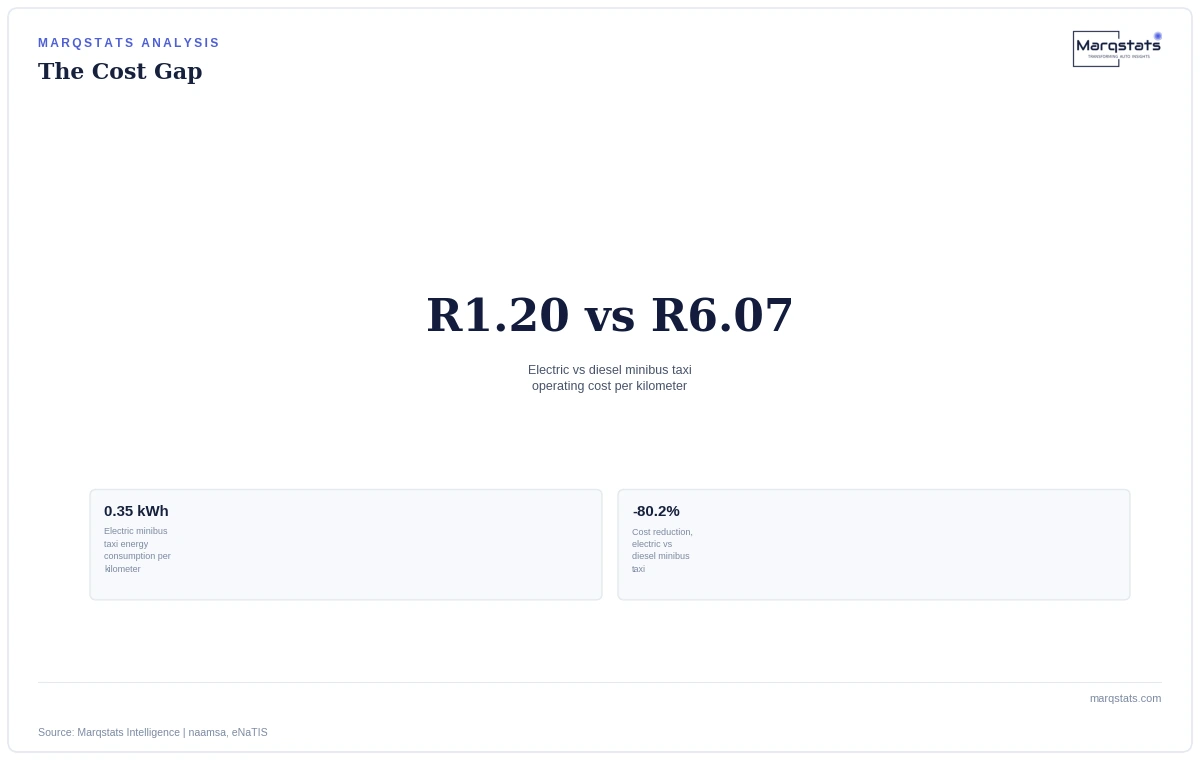
In brief: operational modeling shows an electric minibus taxi running at approximately R1.20 per kilometer under standard commercial electricity tariffs, against R6.07 per kilometer for a diesel equivalent -- combining fuel and mechanical maintenance costs into a single comparable figure.
Why Minibus Taxis Are the Vehicle That Matters Most Here
This isn't a niche category being highlighted for novelty -- it's genuinely South Africa's dominant public transit mode.
Minibus taxis carry the largest share of South African commuters of any single transit mode, operating on fixed routes at high daily mileage. That combination of scale and duty-cycle intensity is exactly the profile where a per-kilometer cost advantage compounds into a large aggregate savings -- more so than in premium passenger vehicles driven a fraction of the distance annually.
Where This Cost Advantage Actually Comes From
The comparison is worth breaking into its two component parts rather than treating it as a single abstract number.
R2.49 for diesel. R3.58 for wear. R1.20 total for electric.
— Marqstats Analyst Team
The diesel minibus taxi's R6.07 per kilometer splits into R2.49 for fuel and R3.58 for mechanical maintenance and wear -- meaning maintenance, not fuel, is actually the larger cost component for the current diesel fleet. Electric minibus taxis eliminate most of that mechanical wear cost structure entirely, consuming 0.35 kWh per kilometer under standard commercial tariffs to reach the R1.20 total.
A Named Comparison: Why This Sits Outside This Report's Core Market Boundary
It's worth being precise about what this figure does and doesn't currently represent within the report's own scope.
This minibus taxi cost modeling is presented by the underlying research as a structural signal about electrification's return on investment, not as a component already counted within this report's core maintenance-spend sizing, which centers on passenger EVs, light commercial vehicles, and heavy commercial buses and trucks. Electric minibus taxi penetration in South Africa remains at an early, largely pilot and academic-consortium stage rather than commercial fleet scale today.
Why This Gap Between Economics and Adoption Matters
A strong cost case without meaningful fleet penetration yet is a genuinely different situation from a cost case that's already been acted on at scale.
That gap between a compelling documented cost advantage and limited current fleet penetration is itself informative: it suggests the constraint on minibus taxi electrification isn't the underlying unit economics, which already favor electric operation decisively, but other factors -- vehicle upfront cost, charging infrastructure access, and informal-sector financing structures -- that sit outside this specific cost comparison.
What This Means for Anyone Tracking This Market
The practical takeaway: workshop investors and fleet financiers should treat minibus taxi electrification as a segment worth monitoring closely for a future inflection point specifically, given how decisively the underlying per-kilometer economics already favor electric operation well ahead of any actual large-scale commercial rollout.