A Tariff That Runs the Wrong Direction
It's the kind of policy detail that sounds like a technicality until it's traced all the way through to what it actually does to a market's growth forecast.
Most governments trying to grow domestic EV adoption make it cheaper to import an electric vehicle than a combustion one. South Africa's current tariff structure does the opposite, and the effect on this market is not subtle.
The Numbers Behind the Reversal
These specific figures trace directly to the underlying research's own regulatory analysis, not a rough estimate.
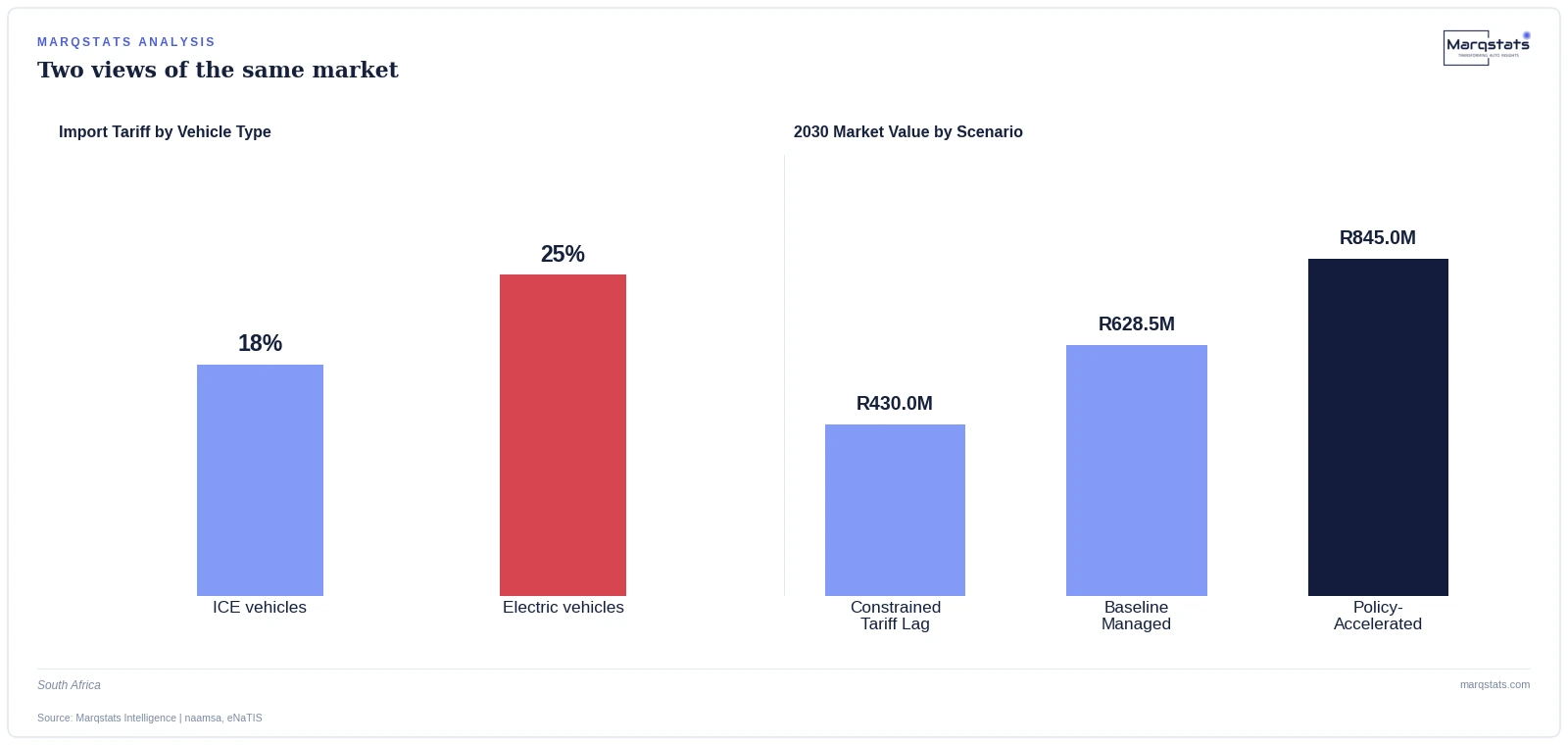
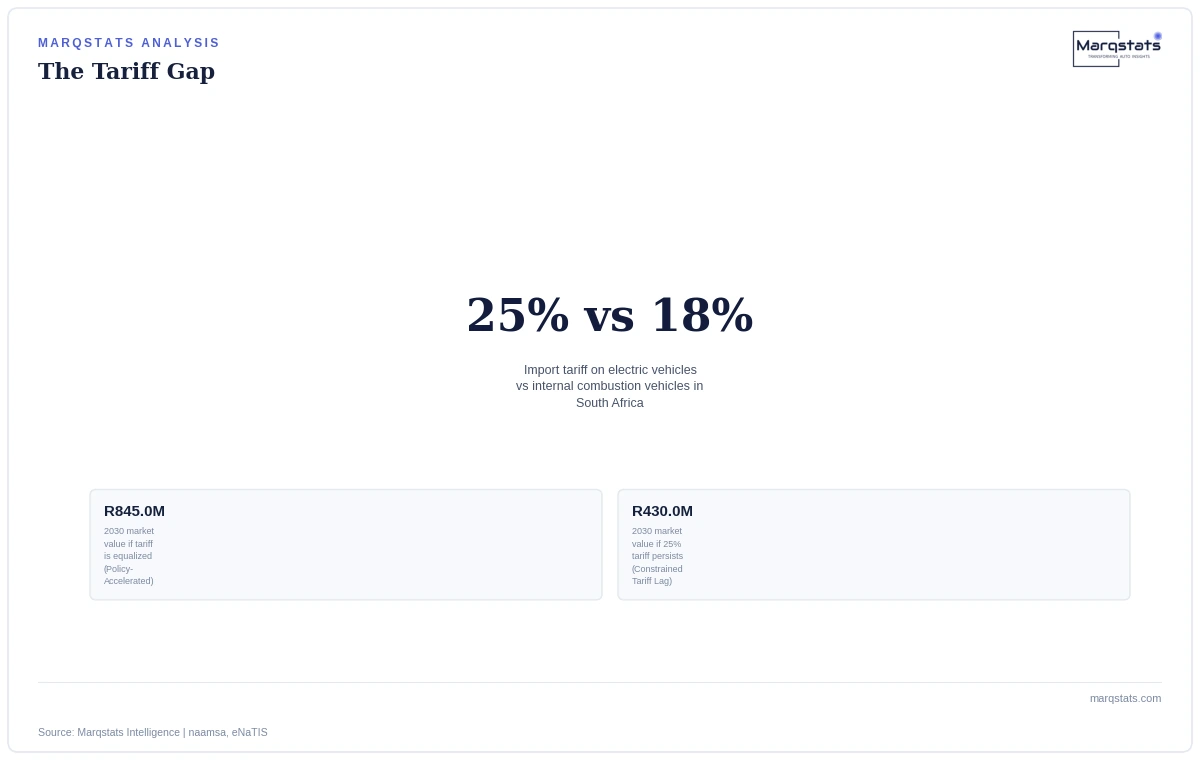
Electric vehicles entering South Africa carry a 25% ad valorem import tariff. Internal combustion vehicles carry 18%. That's a seven-percentage-point cost penalty on exactly the vehicle category the country's own Electric Vehicle White Paper, published by the Department of Trade, Industry and Competition (the dtic) in December 2023, is meant to accelerate.
Why This Isn't a Footnote in the Forecast
That distinction between a minor policy detail and the central forecast variable is easy to underestimate here.
The underlying research doesn't treat this tariff gap as background context -- it's the single named trigger separating the market's most optimistic and most constrained outcomes. Under the Policy-Accelerated Scenario, the dtic gazettes Phase Two of the White Paper by late 2026, equalizing import duties down to the 18% ICE baseline, and the market reaches R845.0 million (USD 45.68 million) by 2030. Under the Constrained Tariff Lag Scenario, the National Treasury retains the 25% tariff through 2028 to protect fiscal customs revenues, and the market reaches only R430.0 million (USD 23.24 million) -- essentially half the upside outcome, resting on one fiscal policy decision.
A Named Comparison: Why the Treasury Faces a Genuine Trade-Off
Understanding why the tariff hasn't simply been equalized already requires looking at what the Treasury is actually weighing.
This isn't a case of bureaucratic oversight. The 25% tariff protects meaningful fiscal customs revenue at a time of broader budget pressure, while the APDP Phase II's 150% investment allowance -- taking effect March 1, 2026 -- is simultaneously trying to pull local EV assembly investment into the country. Those two policy instruments are currently pulling in different directions: one raises the cost of imported EVs today, the other tries to build a domestic assembly base for tomorrow.
What the Baseline Case Assumes Instead
Neither extreme scenario is actually the source's own central expectation.
The Baseline Managed Case, the scenario this report's headline figures are drawn from, assumes neither a swift tariff resolution nor a prolonged standoff -- gradual Chinese model entry below the tariff-inflated price ceiling, structured commercial bus adoption, and steady technician training rollout instead carry the market to USD 33.97 million by 2030, a 38.17% CAGR from the USD 6.75 million 2025 base.
What This Means for Anyone Watching This Market
The practical takeaway: anyone assessing this market's trajectory should treat Phase Two White Paper gazetting timing as the single clearest early signal to watch, well ahead of any quarterly sales figure, since it's the one policy event the underlying research identifies as capable of shifting the market between its constrained and accelerated outcomes.