Why This Matters Even If You've Never Heard of SERMI
If you own or lease an electrified vehicle in Spain and it's past its warranty window, this scheme quietly determines your practical repair options: whether your nearest independent garage can actually service your car's high-voltage systems, or whether you're limited to franchised dealership pricing regardless of distance or convenience.
The Lock Nobody Talks About
Modern electric vehicles carry something older cars didn't: a security gateway module that locks electronic control units against unauthorized external modification. It's there for good reason — it stops a stranger from remotely reflashing your battery management system. But it also means an independent garage, without the right credentials, legally cannot access the same diagnostic and repair functions a franchised dealership can.
What SERMI Actually Is
SERMI — Security-related Repair and Maintenance Information — is the European accreditation scheme, governed under EU Regulation 2018/858, that decides who gets the key. In Spain, the scheme is implemented with support from workshop confederations CETRAA and CONEPA, which established an independent trust center to verify and accredit repair workshops. Pass accreditation, and an independent garage can legally perform tasks like battery management system calibration, ADAS radar realignment, and high-voltage pyrofuse resets — tasks that would otherwise stay locked to franchised dealership networks alone.
Why It's Not a Simple Formality
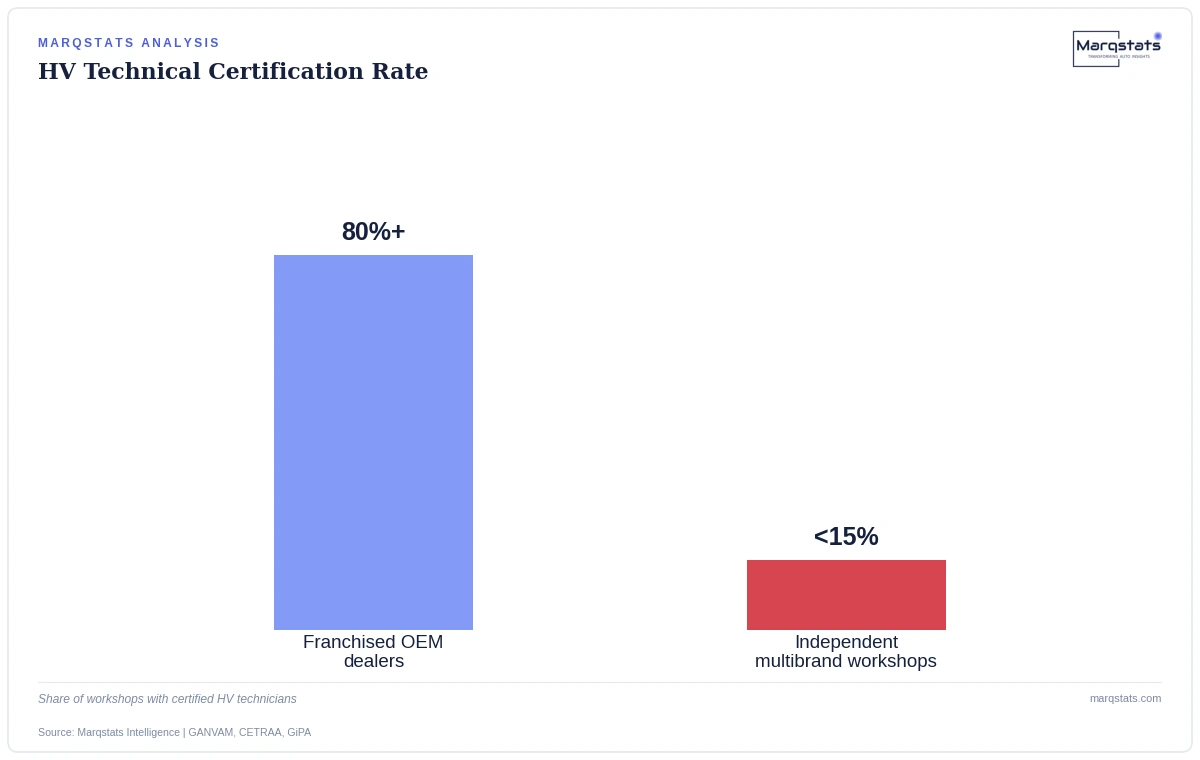
Here's the practical friction: over 80% of Spain's authorized franchised dealership facilities already have certified high-voltage technicians, insulated work bays and OEM diagnostic interfaces. Fewer than 15% of independent multibrand workshops do. SERMI accreditation is the legal key that unlocks the door — but walking through it still requires the capital outlay for insulated tools, technician safety training and certification that most independent shops haven't yet made.
The Chicken-and-Egg Problem
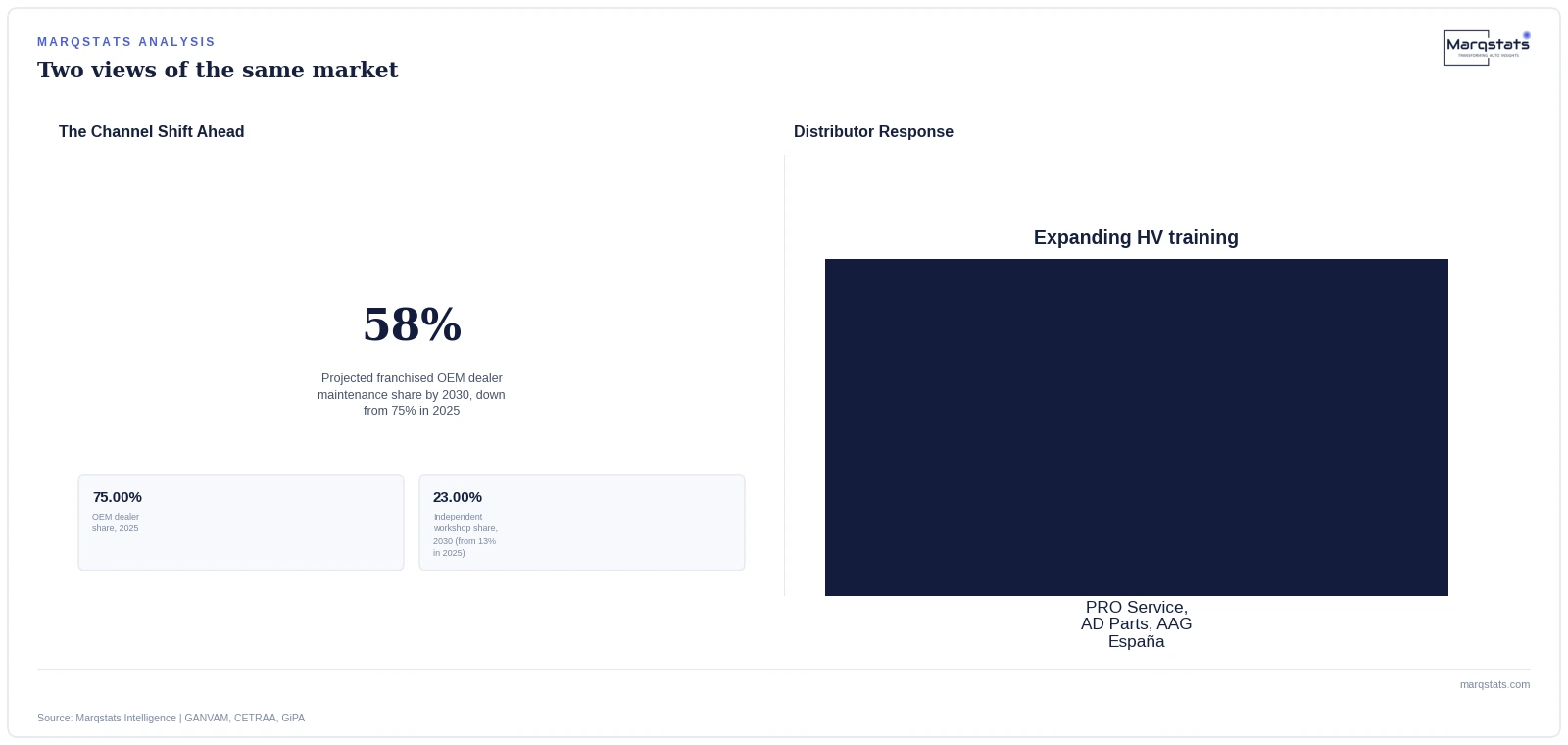
This creates a genuine sequencing challenge for smaller independent facilities. SERMI accreditation and the technical capability to actually use it both require capital outlay that is hardest to justify before enough post-warranty EV volume exists locally to pay it back — yet that volume can't shift toward independent workshops until the accreditation and capability are already in place. Larger independent chains and distribution consortia, such as PRO Service, AD Parts and Alliance Automotive Group España, are addressing this directly by expanding high-voltage training programs to help smaller technicians clear the bar.
What Accreditation Actually Costs in Practice
SERMI accreditation itself is only the first cost layer. CETRAA's own technical guidance makes clear that accreditation is a credential, not a capability — a workshop still needs to separately invest in the insulated tools, dielectric fluid evacuation equipment and technician safety certifications that actually let it perform high-voltage work once the legal access is granted. For a small independent garage, that combined outlay is a genuinely significant capital decision, not an administrative formality.
Why It Matters for the Next Five Years
Spain's own market data shows why this specific barrier matters: franchised OEM dealership share of maintenance expenditure is projected to fall from 75.00% in 2025 to 58.00% by 2030, as vehicles cross the four-year warranty threshold in growing numbers. How fast independent workshops can actually capture that shifting volume — rather than losing it to fast-fit chains instead — depends substantially on how quickly SERMI accreditation and high-voltage capability investment spread beyond the largest independent operators.