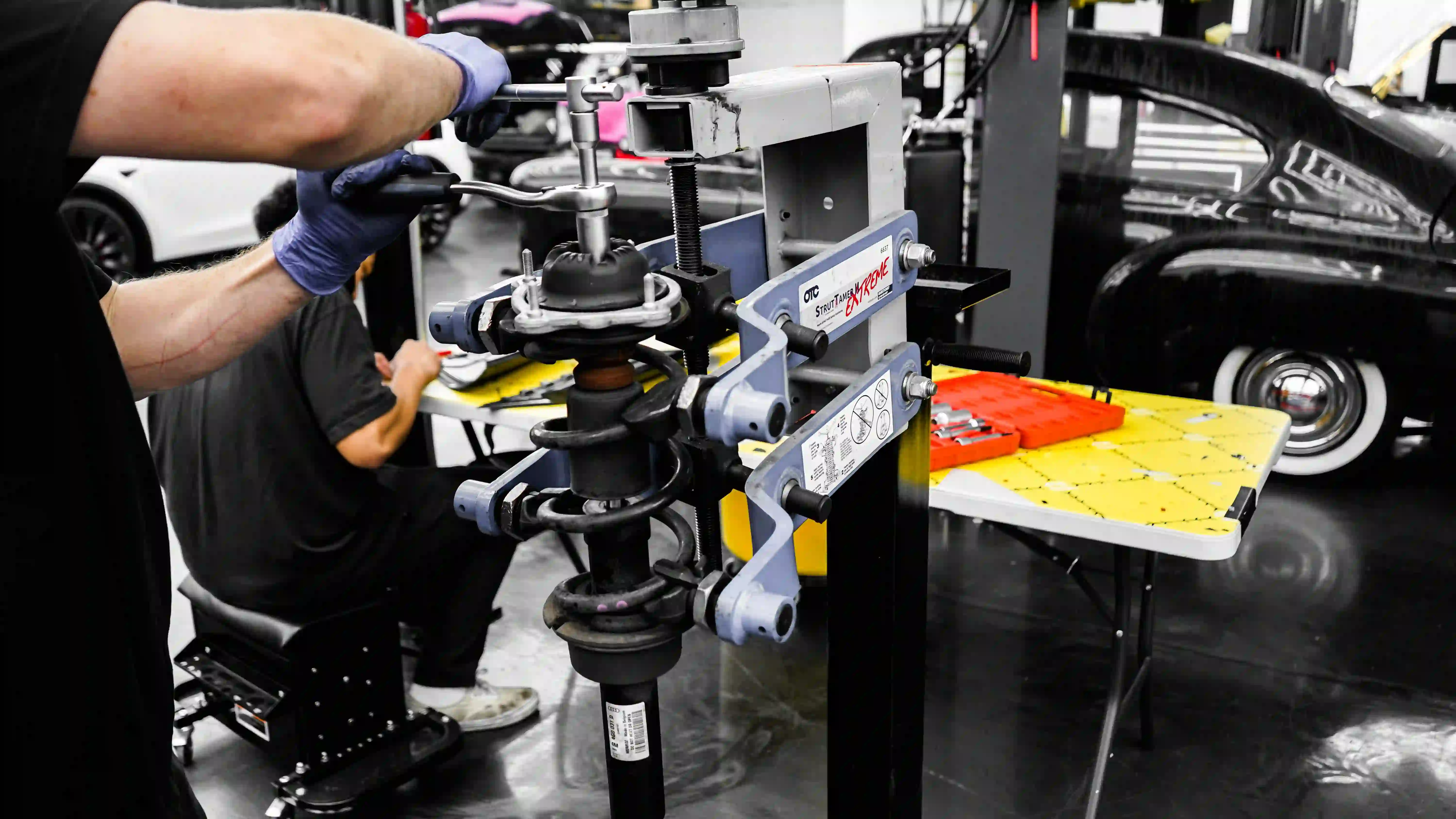
A Growing Fleet With No Factory Safety Net
It's worth understanding exactly what happens to a vehicle when it arrives in the Kingdom outside the normal distribution channel.
A parallel market dynamic is bringing grey-market, non-GCC specification vehicles into Saudi Arabia directly from China -- models from Li Auto, XPeng, Xiaomi, and Zeekr. These vehicles enter the Kingdom without local OEM distributor support, which creates a genuinely different servicing problem than any franchised-brand vehicle faces.
The Specific Problems These Vehicles Face
This isn't a vague grey-market caution -- it's three concrete, documented technical obstacles.
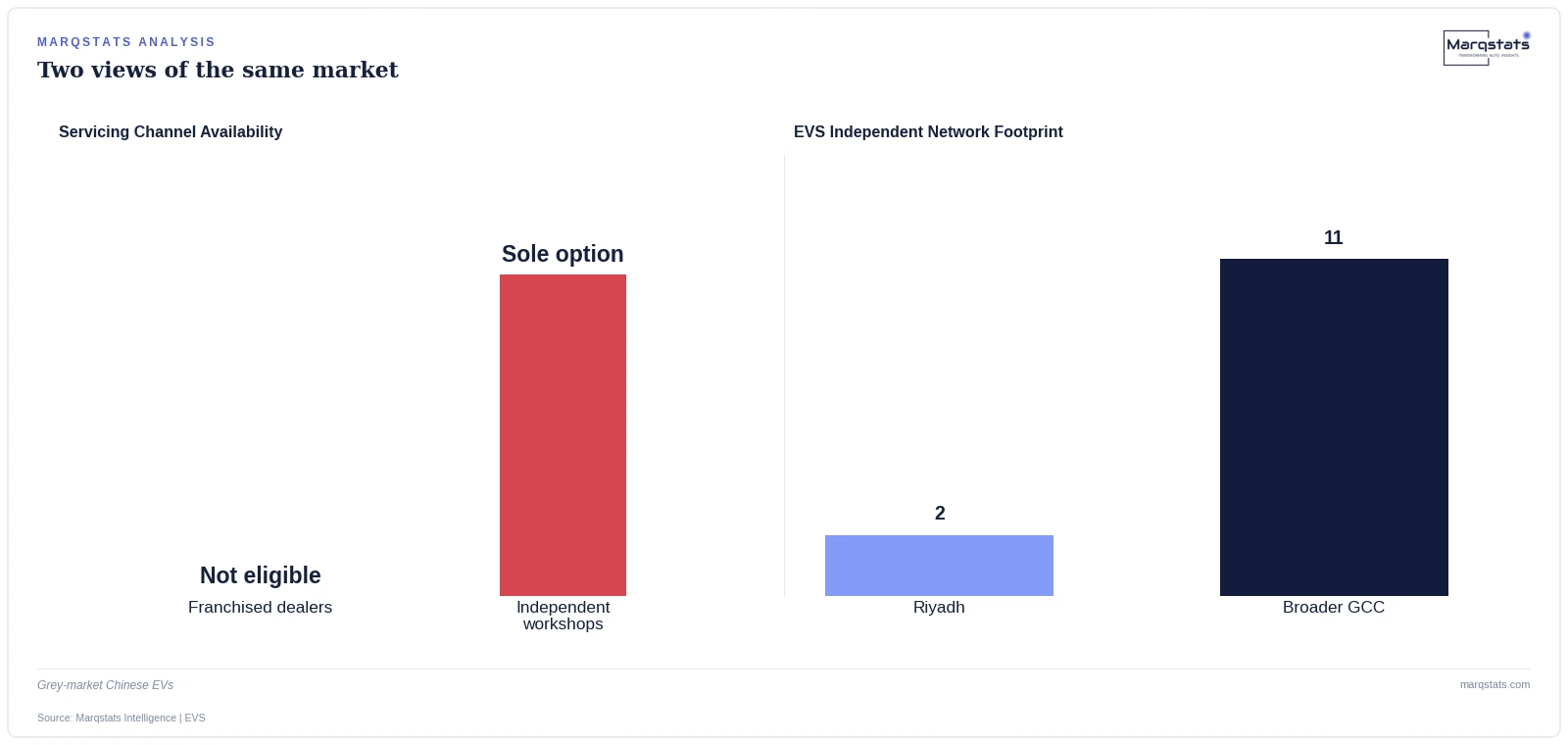
These vehicles face telematics connectivity locks, localized software mapping absences, and component supply delays -- three distinct barriers, each requiring a different kind of fix, and none of them addressable by a standard dealership workshop.
Why One Company Built an Entire Business Around This Gap
The market response here is worth naming specifically, since it shows this isn't a theoretical opportunity -- it's already a functioning business model.
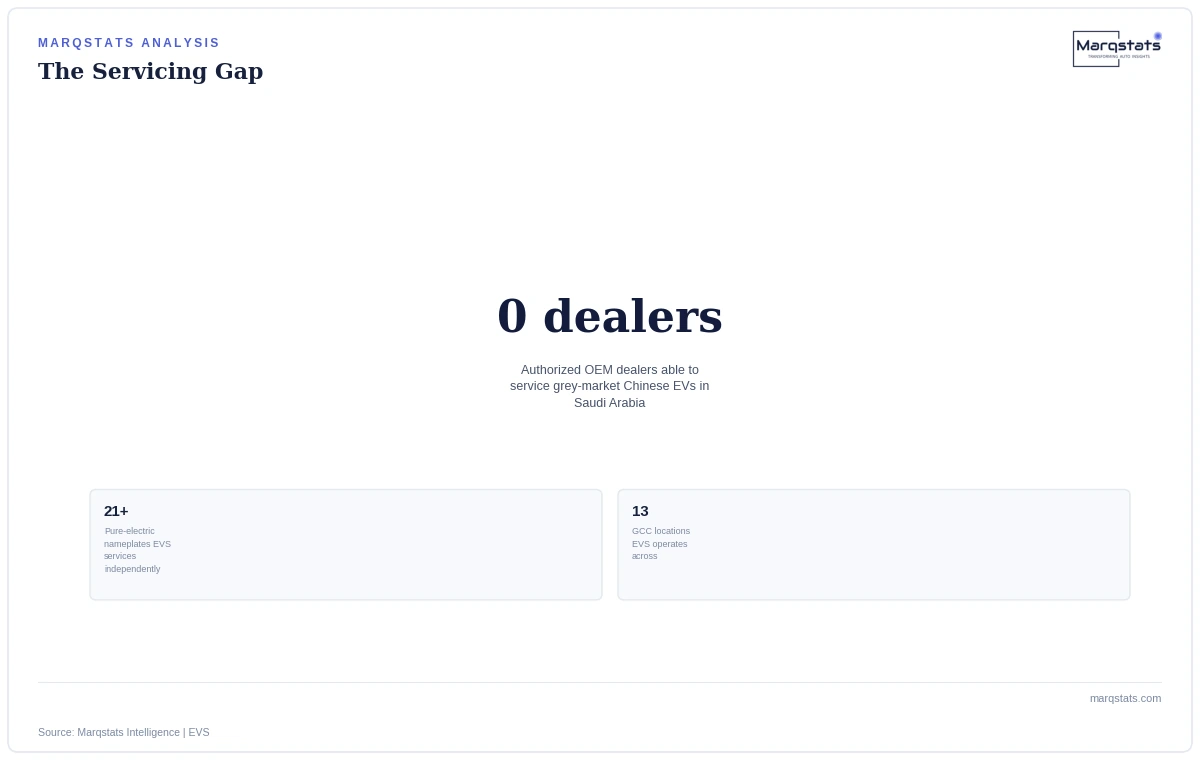
EVS (Electric Vehicle Services) has built its position as the Kingdom's largest independent multi-brand EV specialist directly around this unaddressed segment, servicing more than 21 pure-electric nameplates from two Riyadh centers and eleven more across the broader Gulf region. EVS provides cell-level battery diagnostics, high-voltage harness reconstruction, and vehicle conversions -- installing GCC-standard charging ports, Arabic-language infotainment firmware, and local SIM connectivity -- alongside independent extended warranties covering traction batteries and drive units that these vehicles otherwise lack entirely.
A Named Comparison: Why Authorized Dealers Structurally Can't Compete Here
This isn't a case of authorized dealers choosing not to compete -- it's a case of the servicing relationship itself excluding them by design.
Franchised dealerships operate under manufacturer distribution and warranty agreements specific to vehicles sold through official channels. A parallel-imported vehicle, by definition, falls outside that relationship entirely -- meaning independent specialists aren't just capturing overflow demand, they're the only structurally viable servicing option for this entire vehicle population.
Why This Niche Should Keep Growing
Nothing about Saudi Arabia's automotive trading position suggests this channel will shrink, given the broader regional pattern of grey-market EV imports across the GCC.
As Chinese EV manufacturers continue expanding model lineups faster than official GCC distribution agreements can keep pace, parallel imports into Saudi Arabia should keep growing in absolute terms, sustaining and likely expanding the addressable base for independent specialists built around exactly this gap.
What This Means for Independent Workshops
The practical takeaway: independent workshops considering entry into the Saudi EV aftermarket should evaluate the grey-market Chinese EV segment specifically, given how directly it represents demand structurally unreachable by franchised dealer networks regardless of how those networks scale.