
The Same Oil, Two Very Different Service Schedules
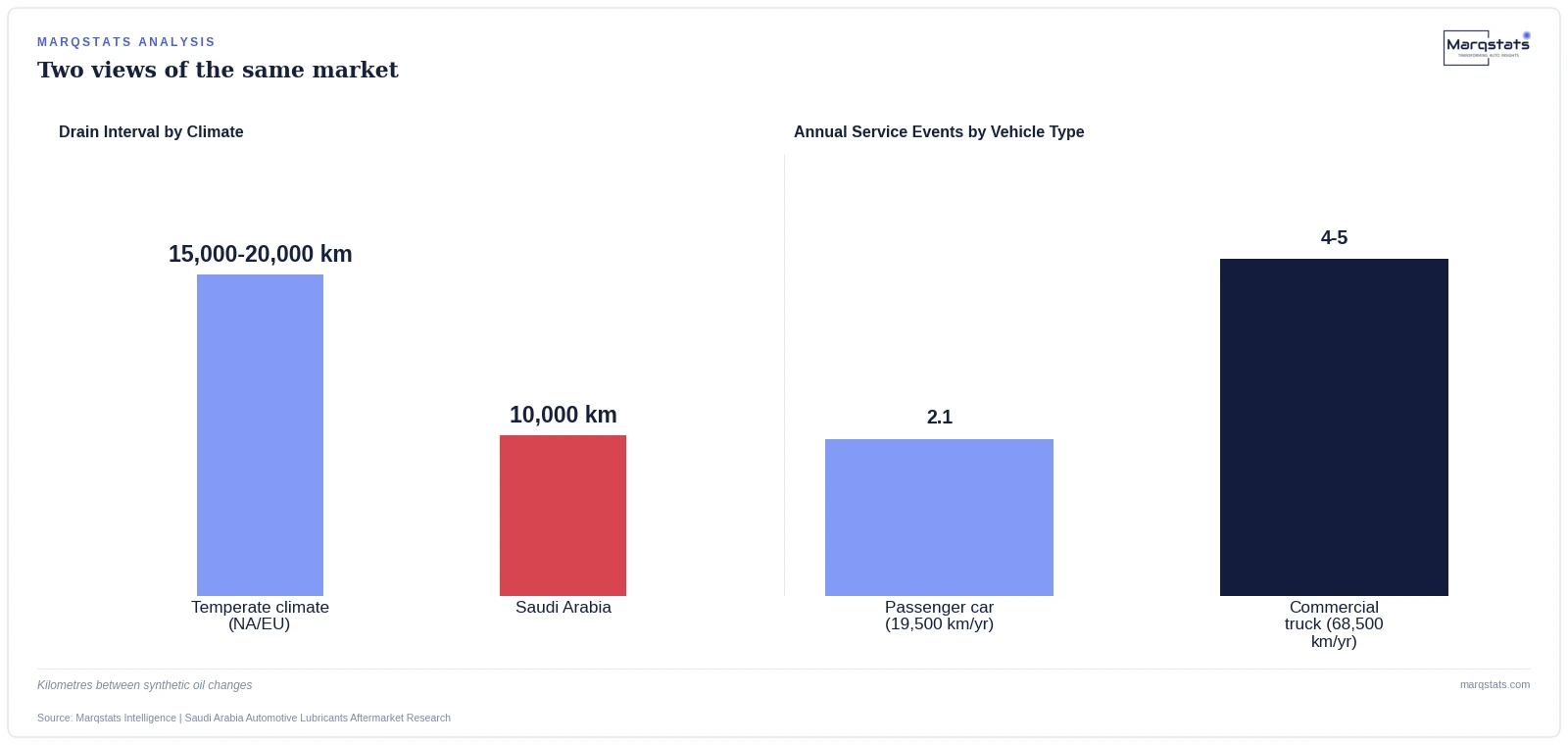
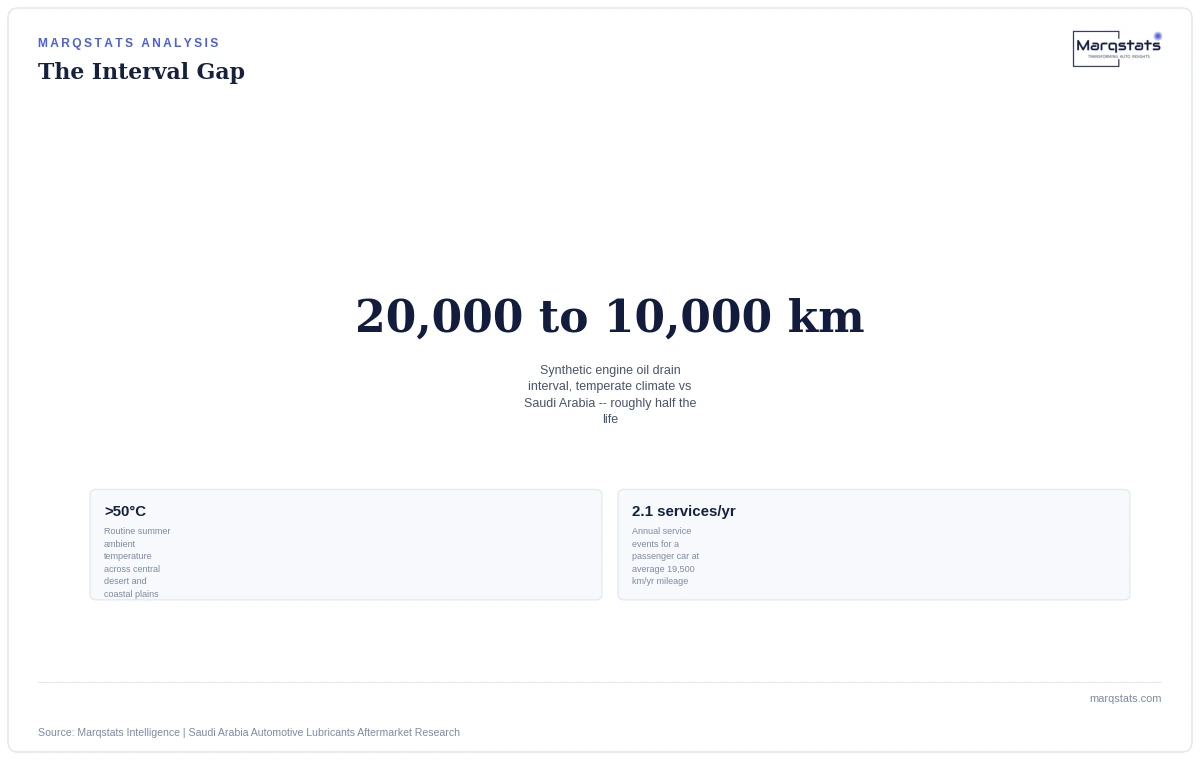
A litre of synthetic 5W-30 doesn't age the same way everywhere it's sold. The same formulation an OEM rates for 15,000 to 20,000 kilometres between changes in North America or Western Europe is capped at 10,000 kilometres by authorized dealer and quick-lube schedules across Saudi Arabia, roughly half the interval. Standard mineral oils fare worse still, dropping to 3,000 to 5,000 kilometres.
Mechanism One: Heat
Summer ambient temperatures routinely exceed 50°C across Saudi Arabia's central desert and coastal plains. That heat load accelerates three degradation pathways at once inside the crankcase: base-stock oxidation, where the oil's own molecular structure breaks down faster under sustained thermal stress; volatile component evaporation, where the lighter fractions of the formulation boil off and leave a thicker, less protective residue behind; and, in stop-and-go city traffic in Riyadh or Jeddah, extended engine idling that pushes soot accumulation and localized engine temperatures even higher.
Mechanism Two: Dust
Heat alone would shorten the interval. Fine airborne silica dust, endemic across the region, adds a second, independent failure path: any slight degradation in a vehicle's air filtration lets abrasive particulate into the intake and, eventually, the oil itself, accelerating mechanical wear on cylinder walls and bearings well beyond what thermal breakdown alone would cause. The two mechanisms compound rather than simply add: an oil already thinned and chemically degraded by heat offers less of a protective film precisely when abrasive contamination is at its highest.
What This Actually Costs a Driver or a Fleet
A private passenger vehicle in Saudi Arabia covers an average of roughly 19,500 kilometres a year. At a 10,000 km interval, that works out to about 2.1 service events annually, close to double the frequency the same driving distance would require in a market where the manufacturer's full-length interval holds. Commercial line-haul trucks, which log over 68,000 kilometres a year, need 4 to 5 fluid replacement cycles annually just to stay within the compressed schedule.
What This Means for Formulation and Service Planning
The practical takeaway: a global OEM service interval is a starting point, not a regional guarantee, and both blenders and fleet operators in this market plan around the shorter, climate-adjusted number rather than the printed one. Blenders formulating specifically for Gulf conditions should prioritise oxidation-resistant and volatility-resistant chemistry over simply matching the viscosity grade sold elsewhere, and fleet operators budgeting maintenance costs should use the compressed interval as their baseline assumption, not the manufacturer's global default, to avoid underestimating annual service spend.