A 10-minute drive-through oil change earns better margins than a dealership service bay
It seems counterintuitive: a quick, no-appointment drive-through service, where you never leave your car, out-earns a full-service dealership bay with trained technicians and a comfortable waiting room. But the numbers back it up, and the reason comes down to volume and speed, not the underlying product.
Same oil, wildly different economics
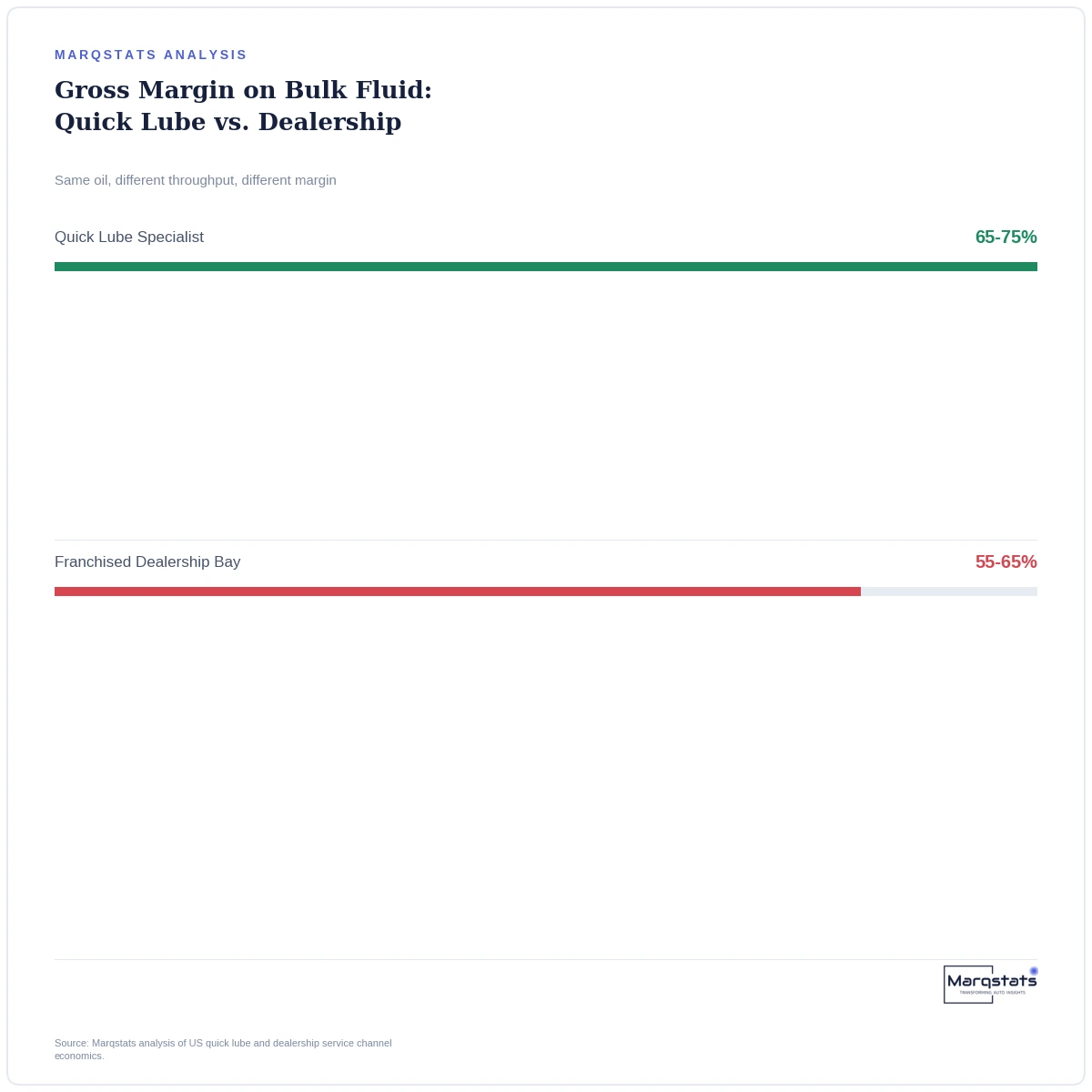
The fluid itself doesn't explain the gap. Wholesale bulk oil purchased at $11.00 to $16.00 per gallon gets installed at retail prices of $20.00 to $28.00 per gallon across the industry broadly, a margin structure available to any operator buying at comparable wholesale scale. What differs is how quickly and how many times a shop can turn that margin over in a day.
Why speed beats service depth here
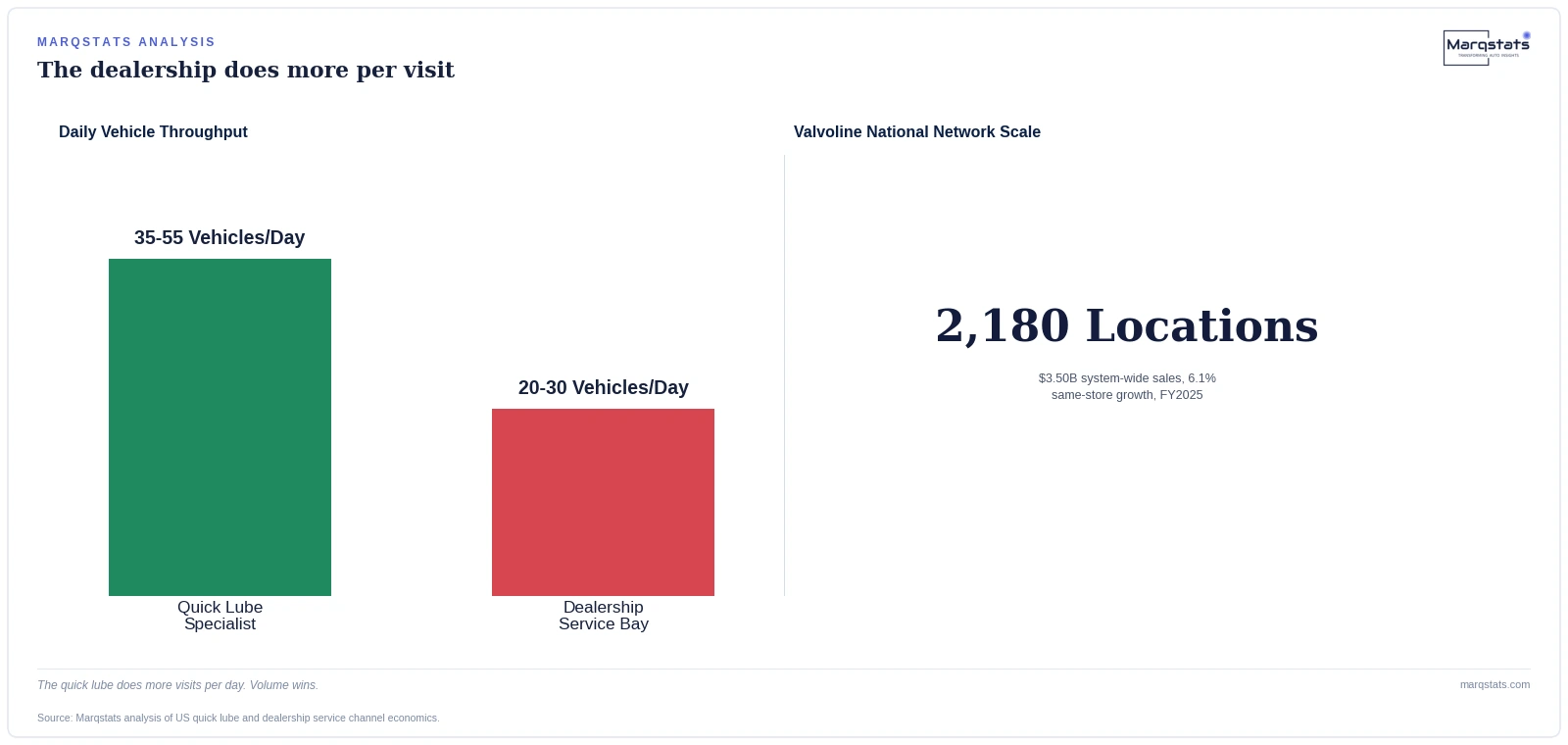
A dedicated quick lube specialist processes 35 to 55 vehicles per day with average labor service times of just 10 to 18 minutes, built around a drive-through, stay-in-your-car format. A franchised dealership service bay, by contrast, processes only 20 to 30 vehicles daily, with labor times of 60 to 90 minutes per visit at the service counter, since dealership bays typically bundle routine maintenance with diagnostics, warranty work and more complex repairs that take genuinely longer to complete.
The dealership does more per visit. The quick lube does more visits per day.
— Marqstats Analyst Team
Why that throughput difference translates directly into margin
Fixed costs, rent, staffing, equipment, spread across more transactions per day, which is a large part of why quick lube gross margins on bulk fluid run 65% to 75% compared to a dealership's 55% to 65%. Quick lube operators have also pushed average ticket sizes above $100.00 by increasing full synthetic product mix and expanding ancillary services like cabin air filter installations, capturing incremental margin on top of the core oil-change transaction without meaningfully extending the visit.
Why this is playing out at genuine national scale
This isn't a boutique business model, it's operating at real scale across the country. Valvoline Inc., having divested its global product blending business to focus entirely on dedicated automotive service, grew its retail network to 2,180 system-wide locations by fiscal 2025, generating $3.50 billion in system-wide sales driven by 6.1% same-store sales growth. Driven Brands' Take 5 Oil Change has expanded to 1,203 locations built specifically around the 10-minute drive-through format. Shell's Jiffy Lube maintains 2,077 to 2,229 franchised locations. These aren't small operators experimenting with a niche format, they're major national chains built specifically around this throughput-driven economic model.
Why dealerships are losing this particular fight structurally, not just competitively
Dealership service departments face a specific structural headwind beyond simply competing on price: they depend heavily on factory warranty service, and that business declines predictably as vehicles age past their original warranty period. With the national fleet reaching a record average age of 12.80 years, an increasing share of the vehicle parc has simply aged out of the warranty-driven service relationship that historically anchored dealership customer retention, pushing routine maintenance toward whichever channel offers the fastest, most convenient, lowest-friction alternative, which is increasingly the quick lube format.
The counter-argument: doesn't the dealership's higher per-visit revenue offset its lower margin percentage and slower throughput?
A fair objection is that comparing gross margin percentage and daily vehicle throughput in isolation understates the dealership channel's economics, since dealership visits typically generate meaningfully higher revenue per visit, $110.00 to $145.00 versus a quick lube's $85.00 to $115.00, partly offsetting the lower margin percentage and slower throughput with a larger transaction size. This is a fair point, and dealership service revenue per visit genuinely is higher on average. What the throughput math still shows, though, is that a quick lube specialist processing 35 to 55 vehicles daily at a lower per-visit price and higher margin percentage generates meaningfully more total gross profit across a full operating day than a dealership bay processing only 20 to 30 vehicles at a higher price and lower margin percentage, which is precisely the volume-over-value dynamic driving quick lube chains' aggressive national expansion.
What this means for service operators and investors
- Service operators evaluating new location formats should prioritize throughput-optimized, drive-through designs specifically for routine fluid service, following the model demonstrated by leading national quick lube chains.
- Dealership groups should evaluate whether a dedicated, throughput-optimized quick service format could capture post-warranty maintenance business currently migrating to independent quick lube chains.
- Investors evaluating this market should weight quick lube chain expansion metrics, store count, same-store sales growth, and ticket size, as leading indicators of continued channel share migration away from traditional dealership service.
The full market picture
Marqstats' complete United States automotive lubricants aftermarket analysis, including the full distribution channel economics breakdown, is available in the linked report below.
Related reportUnited States Automotive Lubricants Aftermarket Size, Share & Forecast 2026 – 2030