A Number That Jumped Almost Overnight
A near-doubling of any import category in a single year is unusual on its own. What makes this particular surge worth understanding is what these specific vehicles look like the moment they cross the border.
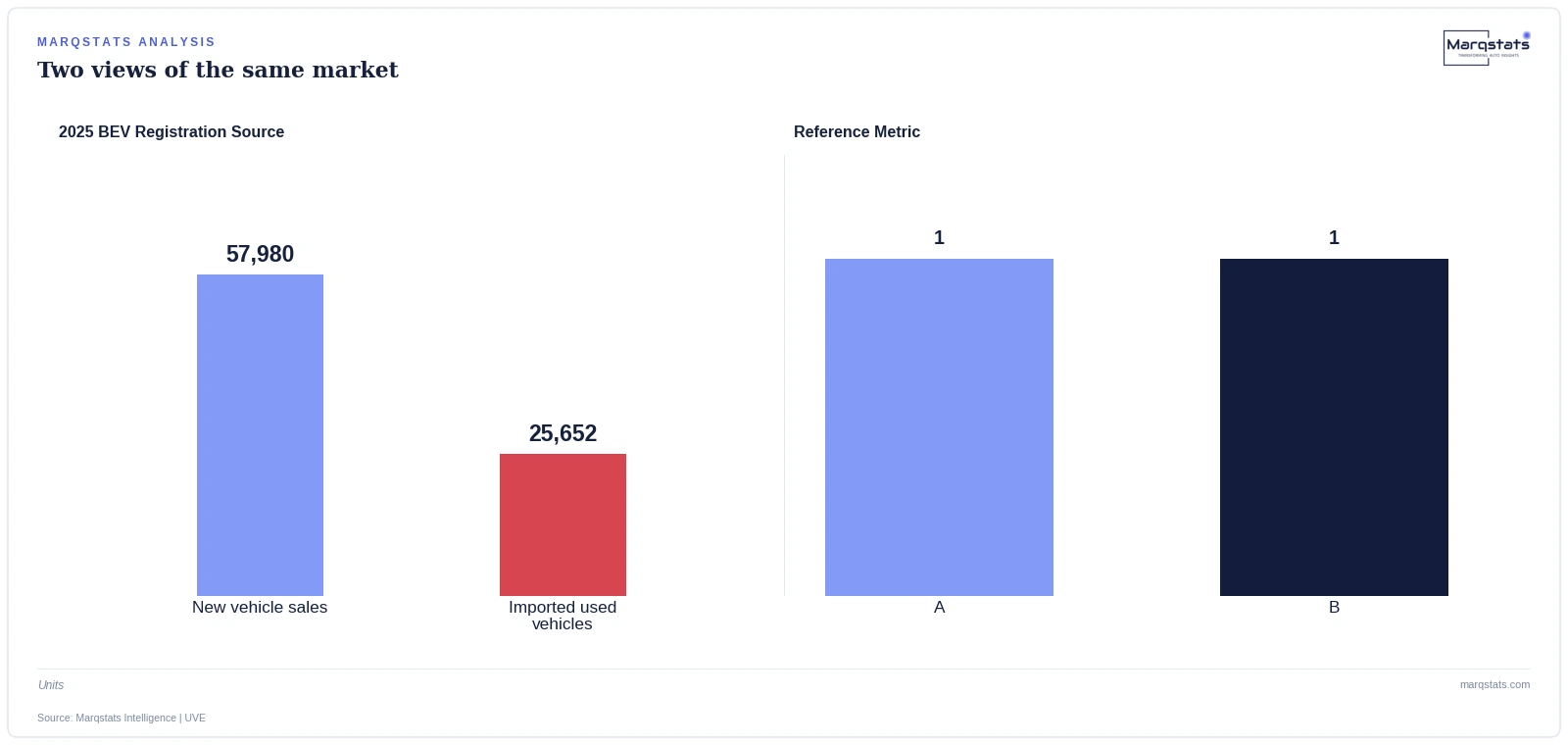
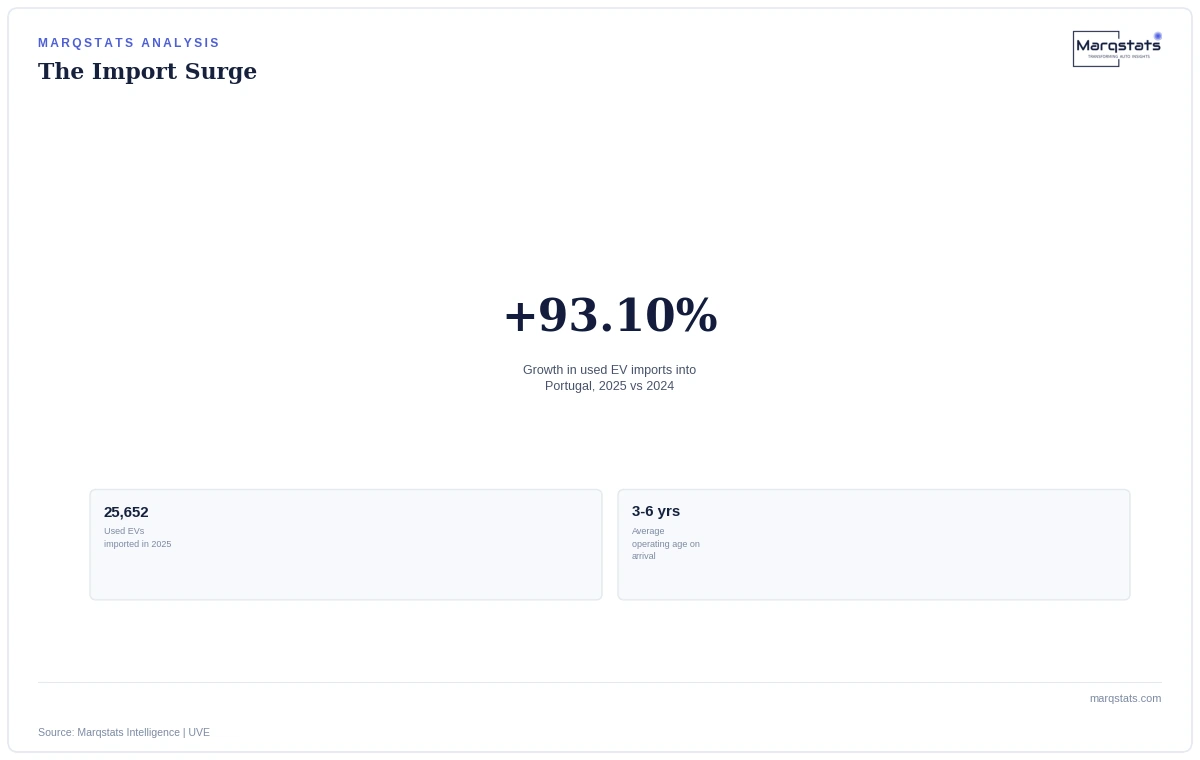
In brief: of the 83,632 battery electric vehicles registered in Portugal during 2025, new vehicle sales accounted for 57,980 units. Imported used vehicles accounted for the remaining 25,652 — a 93.10% surge over 2024 import volumes.
Why These Vehicles Specifically Bypass Dealers
This isn't a marginal share of the market either -- imported used vehicles now account for roughly a third of new battery electric vehicle registrations in Portugal each year, a genuinely significant slice of total fleet growth.
The mechanism traces to timing. These imported vehicles arrive with an average operating age of three to six years — right at or beyond the expiration point of most manufacturers' original bumper-to-bumper warranty coverage. They enter multi-brand independent workshops immediately upon national registration, since there's no factory warranty relationship pulling them toward an authorized dealer in the first place.
The Economics Behind Why Buyers Choose Imports
These vehicles arrive pre-aged into exactly the servicing category independents compete hardest for.
— Marqstats Analyst Team
European price arbitrage and domestic corporate tax advantages are driving Portuguese buyers toward used imports over new domestic purchases. That's a purely financial decision at the point of purchase — but it has a direct downstream consequence for the aftermarket, since it means a growing share of Portugal's EV fleet arrives already outside the warranty period dealers depend on for locked-in service revenue.
A Named Comparison: Why This Differs From Organic Fleet Aging
In most markets, a vehicle ages gradually out of warranty over years of ownership, giving dealers a predictable, slow-moving transition period to adjust. Portugal's import surge compresses that timeline — a vehicle can arrive already three to six years old and immediately enter the out-of-warranty servicing pool, with no gradual transition at all. That's a structurally faster handoff to independent workshops than organic aging alone would produce.
Why This Trend Should Continue
Nothing in the underlying policy environment suggests either driver behind this surge is temporary. European price differentials and Portuguese corporate tax treatment of vehicle acquisitions are structural features of the current market, not one-off conditions likely to reverse in the near term.
What This Means for Independent Workshops
The practical takeaway: independent workshops and fast-fit chains should treat the used import pipeline as a genuinely reliable, recurring source of out-of-warranty service demand — not a one-time surge — given how directly European price arbitrage and Portuguese tax policy continue favoring this purchase pathway.