A Market Where Motorcycles Set the Rules
The Philippine lubricants aftermarket runs on motorcycles. Two- and three-wheelers are the single largest product segment, 37.81% of 2025 volume, sold overwhelmingly in small 800-millilitre and 1-litre bottles rather than bulk commercial drums. That packaging format is convenient for riders. It is also, it turns out, easy to counterfeit.
The Scale of the Problem
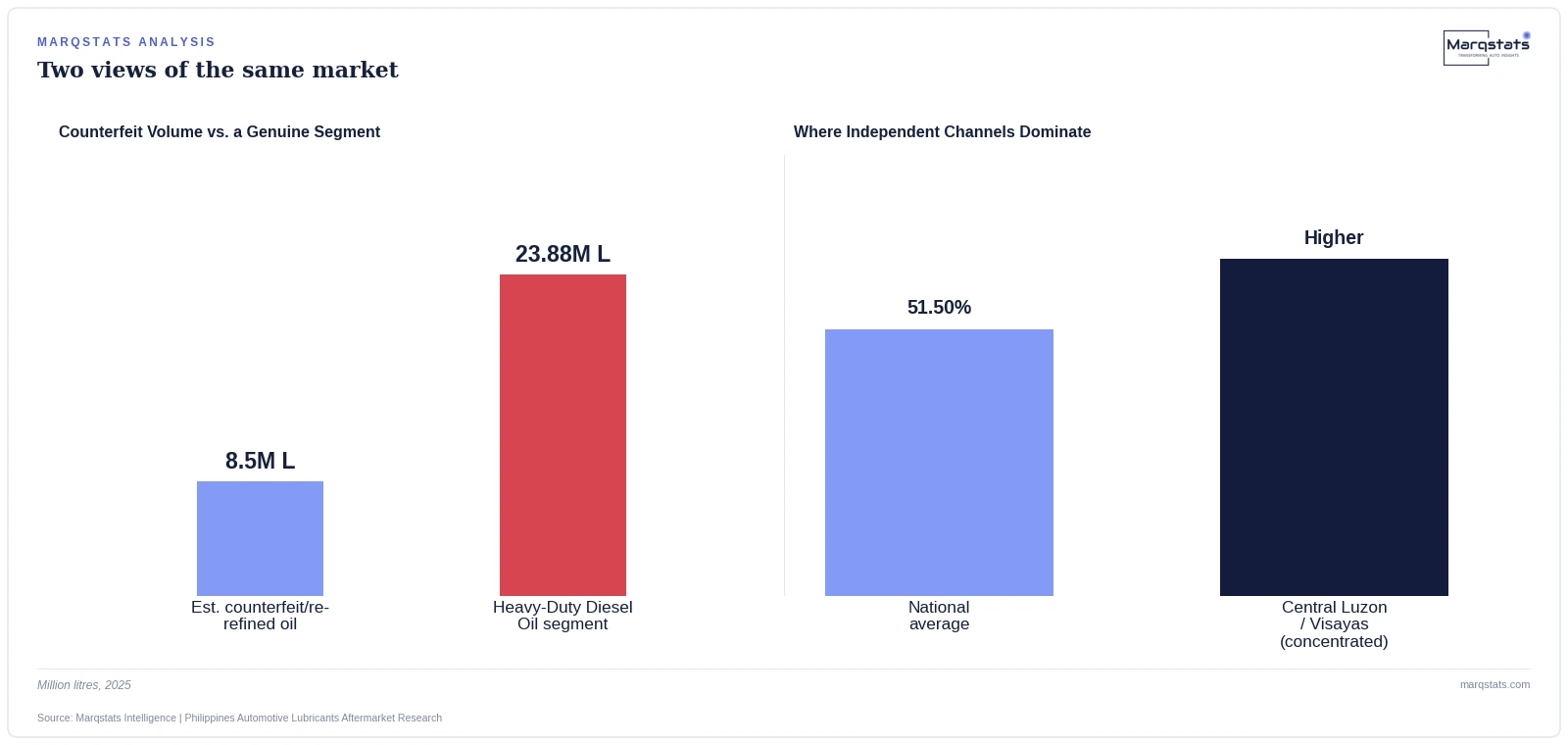
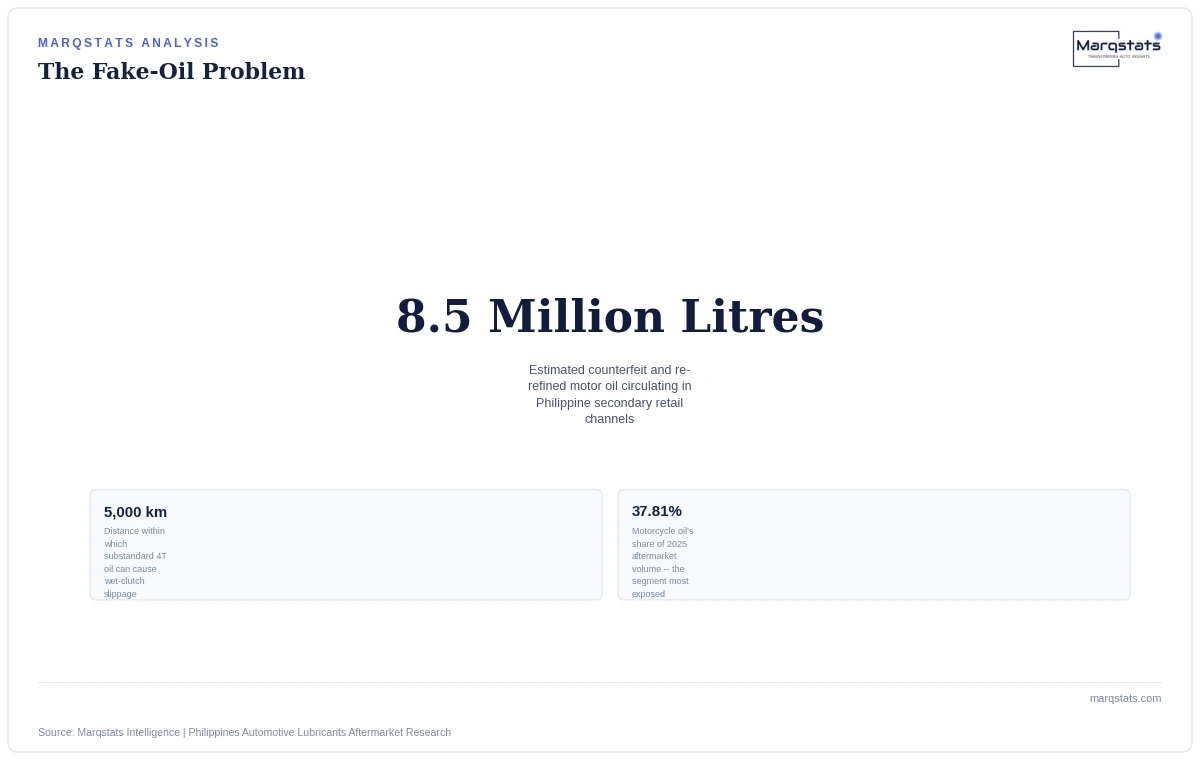
An estimated 8.5 million litres of re-refined and counterfeit motor oil are circulating through secondary retail channels in the Philippines, concentrated in two regions: Central Luzon and the Visayas. For scale, that is roughly 30% of the entire heavy-duty diesel engine oil segment's annual volume, moving through channels that bypass the quality control of branded distribution.
Why Motorcycle Oil Is the Easiest Target
Small-pack formats are exactly what makes counterfeiting viable. A 208-litre steel drum of heavy-duty diesel oil is hard to counterfeit convincingly and expensive to move in bulk through informal channels. An 800-millilitre bottle of 4T motorcycle oil is cheap to package, easy to relabel, and sold through thousands of small roadside stalls and sari-sari stores where verifying authenticity is impractical for both the seller and the buyer.
What Substandard Oil Actually Does to an Engine
The failure mode is specific and fast. Genuine 4T motorcycle oils are certified to JASO MA or MA2 standards, which specify friction characteristics compatible with a wet clutch, the clutch assembly that shares oil with the engine in nearly all Philippine motorcycles. Substandard oils lacking that certification frequently cause premature wet-clutch slippage, and can produce measurable engine wear within as little as 5,000 kilometres of road use, a fraction of even the shortest genuine service interval in this market.
Where It Concentrates, and Why
Central Luzon and the Visayas share a structural feature that likely explains the concentration: both depend heavily on fragmented, cash-based independent workshop and roadside retail channels rather than franchised or forecourt distribution. Independent garages and workshops already handle 51.50% of the country's aftermarket lubricant volume nationally, the largest single channel, and in regions with less oil-major forecourt density, that channel share runs even higher, along with the opportunity for unverified product to enter the supply chain.
What This Means for Distributors and Riders
The practical takeaway: distributors and brand owners should treat Central Luzon and the Visayas as priority regions for authentication programs and channel audits, and riders and fleet operators buying motorcycle oil outside a franchised dealer or major forecourt should check for JASO MA2 certification on the bottle before assuming a low price is simply a good deal.