The Numbers That Made Logistics Companies Pay Attention
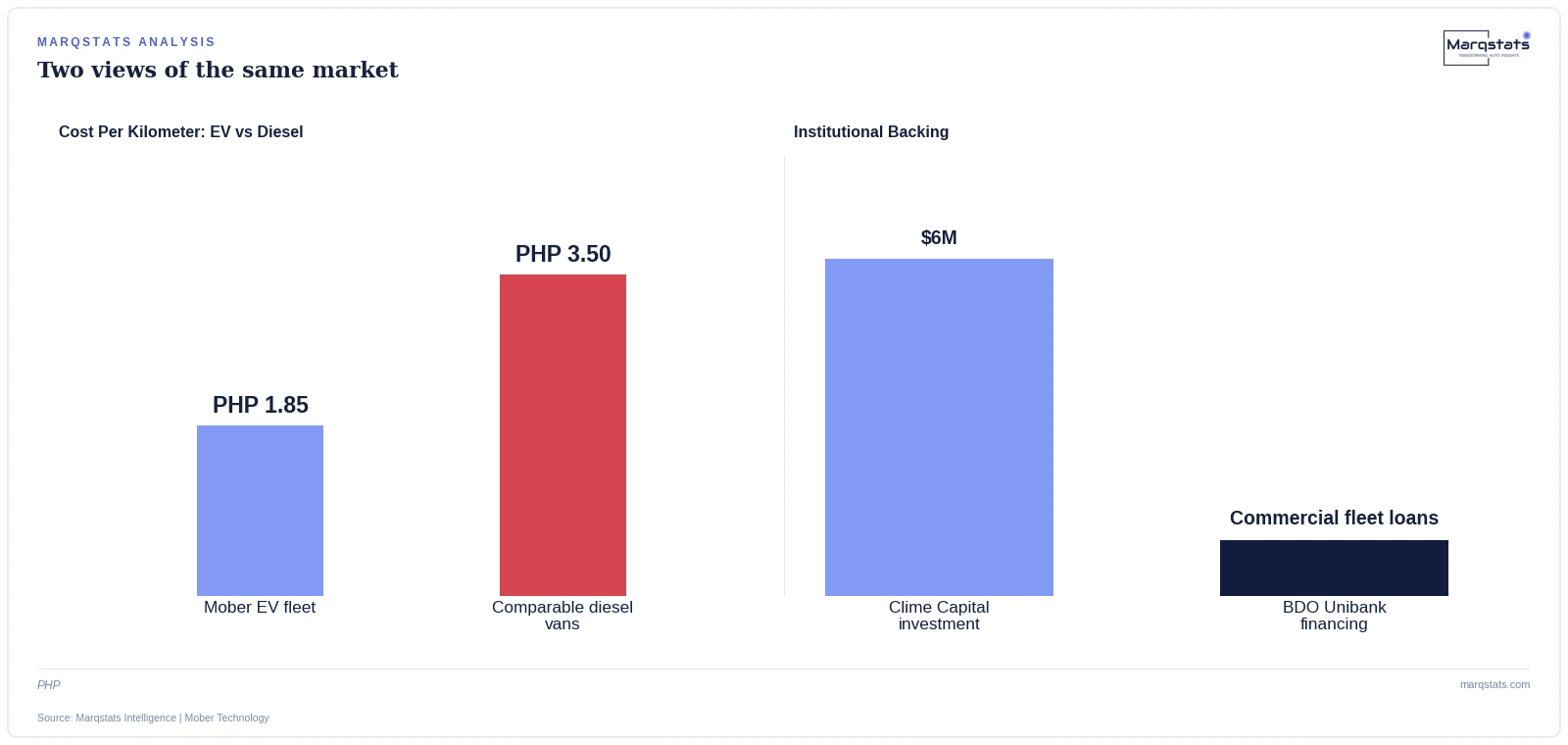
In brief: Mober Technology's electric delivery fleet costs 47.14% less to maintain per kilometer than a comparable diesel fleet. That number alone would justify EV conversion for most logistics operators. What's less obvious is how much of that saving depends on a specific operational model — not just the vehicles themselves.
The Depot Model, Explained
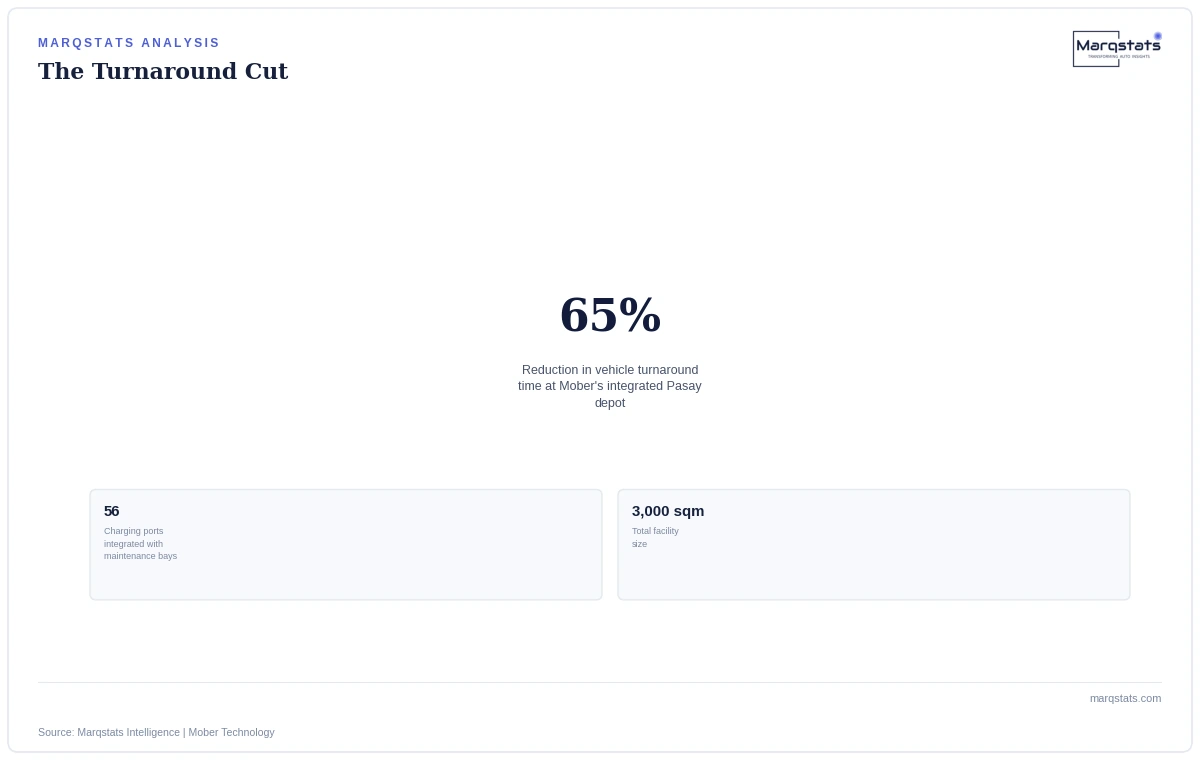
Mober built a 3,000 square meter facility in Pasay integrating 56 charging ports directly with on-site preventive maintenance bays. Vehicles charge and get serviced in the same physical location, on the same visit, rather than shuttling between a depot and a separate workshop. The result: a 65% reduction in vehicle turnaround time for logistics clients including IKEA and Nestlé.
The saving isn't just electric motors versus diesel engines. It's charging and maintenance happening in the same building, on the same visit.
— Marqstats Analyst Team
Why Decentralized Servicing Doesn't Capture the Same Advantage
A logistics fleet using decentralized independent workshops for EV servicing — the more common model for smaller operators — doesn't get this same integration benefit. Each service visit requires routing a vehicle away from its charging and delivery cycle separately, reintroducing exactly the kind of downtime the depot model was built to eliminate. The 65% turnaround improvement is specifically a function of co-locating charging and maintenance, not simply a function of driving electric vehicles instead of diesel ones.
The Client Roster This Model Is Winning
The clients choosing Mober's depot-integrated model — IKEA and Nestlé among them — are large, logistics-sophisticated operators capable of evaluating total cost of ownership rigorously before committing. Their adoption is itself a signal: these are not companies choosing EVs for sustainability optics alone, but ones whose own procurement analysis concluded the depot model's economics genuinely work at commercial scale.
Where This Model Gets Its Financing
Building this kind of dedicated infrastructure requires real capital, and Mober's own funding sources are instructive: Clime Capital Management, a Southeast Asia clean energy fund manager, invested $6 million (PHP 350 million) in Mober's fleet expansion, while BDO Unibank provided commercial fleet financing. This is institutional capital backing a specific operational thesis — that depot-integrated servicing, not just vehicle electrification alone, is where the durable cost advantage actually lives.
What This Means for Fleet Operators Evaluating EV Conversion
The practical lesson for any Philippine commercial fleet operator sizing up EV conversion: model total cost of ownership against a depot-integrated servicing structure specifically, not just against vehicle-level fuel and maintenance cost differences. The full economic case depends significantly on infrastructure design decisions made before a single electric vehicle enters the fleet.