A Number That Looks Reassuring
The Electro Movilidad Asociacion reports Mexico has 60,934 total EV charging positions nationwide. That's a genuinely large number — one that, on its own, might suggest Mexico's charging infrastructure is keeping reasonable pace with its rapidly growing EV fleet.
Look at what that number actually contains, and the picture changes substantially.
Where Almost All of Those Chargers Actually Are
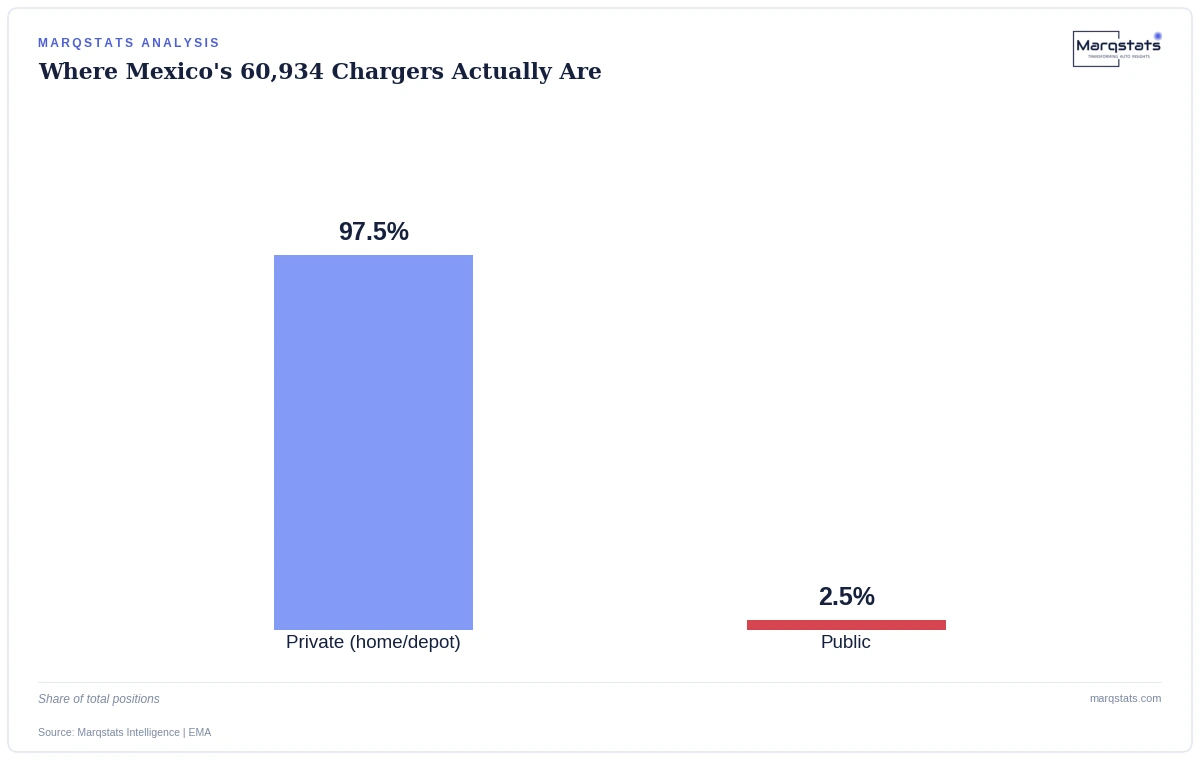
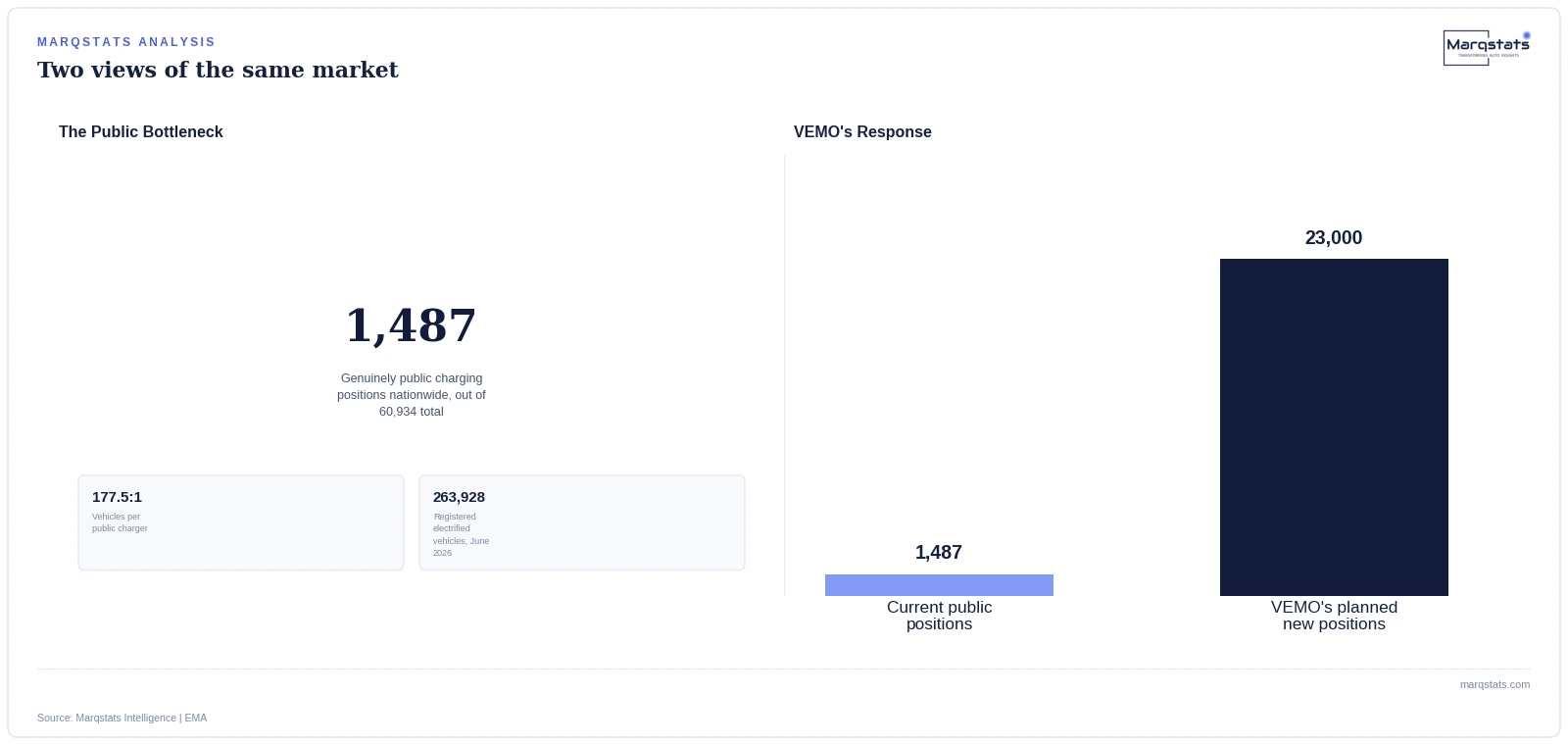
Of those 60,934 positions, 97.5% are private — installed at homes, corporate depots, and fleet facilities, accessible only to their owners. That leaves just 1,487 genuinely public charging positions nationwide, serving a fleet that had already reached 263,928 registered electrified vehicles by June 2026.
Why This Distinction Actually Matters
A private home charger is genuinely useful — for the owner, on their own daily routine. It does nothing for a driver on a highway between cities, a ride-hailing fleet vehicle covering unpredictable routes, or a commercial delivery van without dedicated depot access. Public infrastructure is what actually enables the kind of flexible, cross-country EV use case that makes electrification broadly viable rather than a commuting-only proposition.
How This Shows Up in Real Numbers
Divide Mexico's total fleet by its public charger count specifically, and the ratio runs to 177.5 vehicles per public charging position — a genuinely severe bottleneck that restricts cross-country commercial EV transit regardless of how healthy the headline infrastructure number looks.
Who's Actually Solving This, and How
Cleantech firms like VEMO Clean Mobility aren't waiting for public infrastructure to catch up. The company's announced 5-year, USD 1.5 billion capital plan targets 23,000 new charging positions across public and private hubs specifically — a private-sector response to a public infrastructure gap that fleet operators can't afford to wait out.
A Named Comparison: Why Private Investment Can't Fully Substitute
VEMO's own hub model — combining charging with dedicated maintenance bays in Monterrey and Mexico City — solves the problem for fleets that can plan routes around fixed hub locations. It doesn't solve it for the individual driver making an unplanned long-distance trip, or for smaller operators without the scale to negotiate hub access. Public highway-corridor charging remains a genuinely distinct infrastructure need that private commercial hubs, however well capitalized, aren't structurally built to fully address.
The Scale of Fleet Demand This Gap Has to Absorb
Put the fleet growth trajectory against this infrastructure picture: Mexico's active circulating electrified fleet is projected to reach 770,000 units by 2030, more than double its mid-2026 level. Unless public charging investment accelerates well beyond its current pace, that growing fleet will depend even more heavily on the private charging solutions companies like VEMO are building specifically to fill this gap.
What This Means for Anyone Reading Mexico's Charging Statistics
The practical rule: when a Mexican EV infrastructure statistic reports total charger count without specifying public versus private, treat the headline number with real caution — the public infrastructure that actually enables flexible EV use represents a small fraction of what gets counted.