A Comparison With No Methodology to Argue About
Third-party EV cost estimates always invite skepticism about methodology, sample size, or assumptions. This comparison removes that objection entirely.
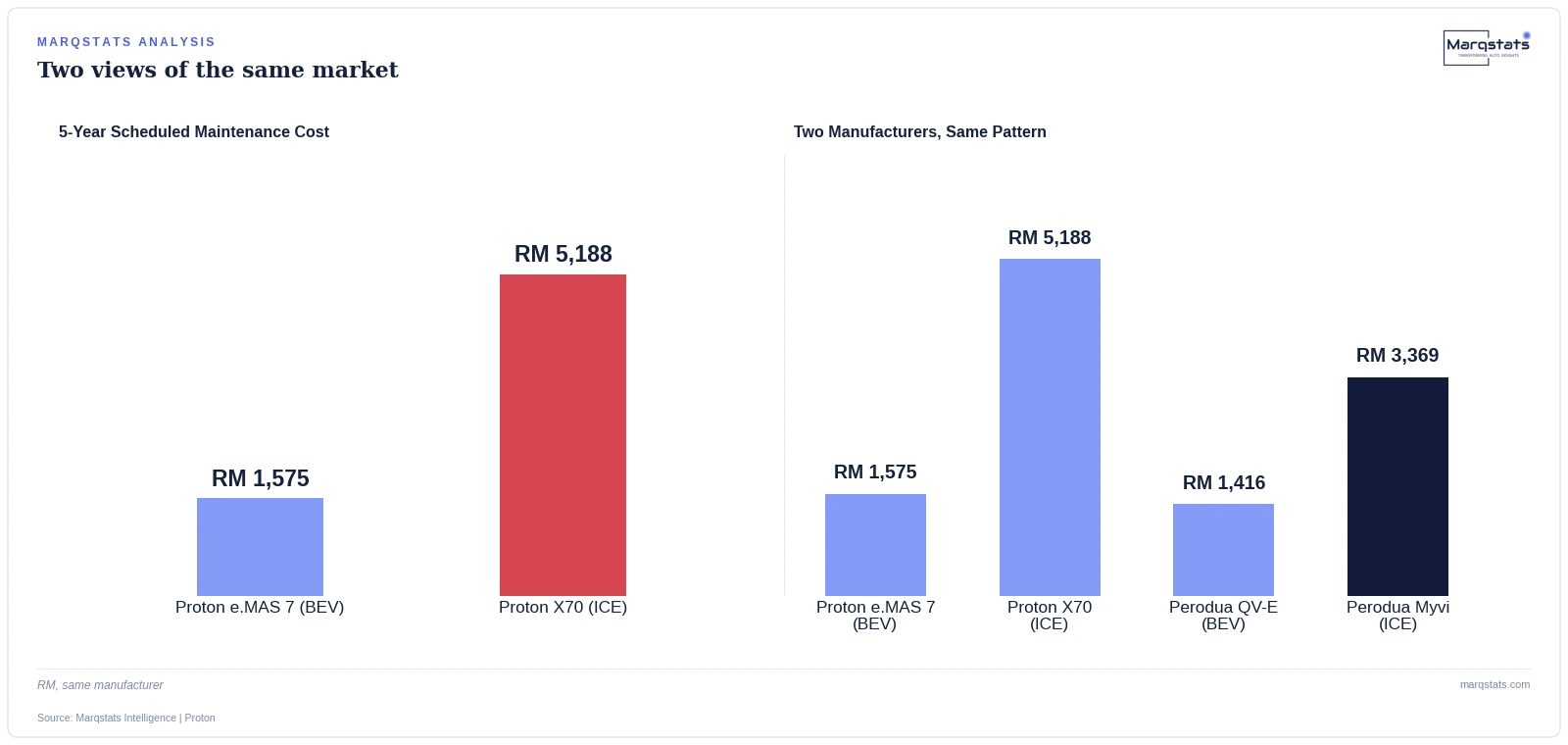
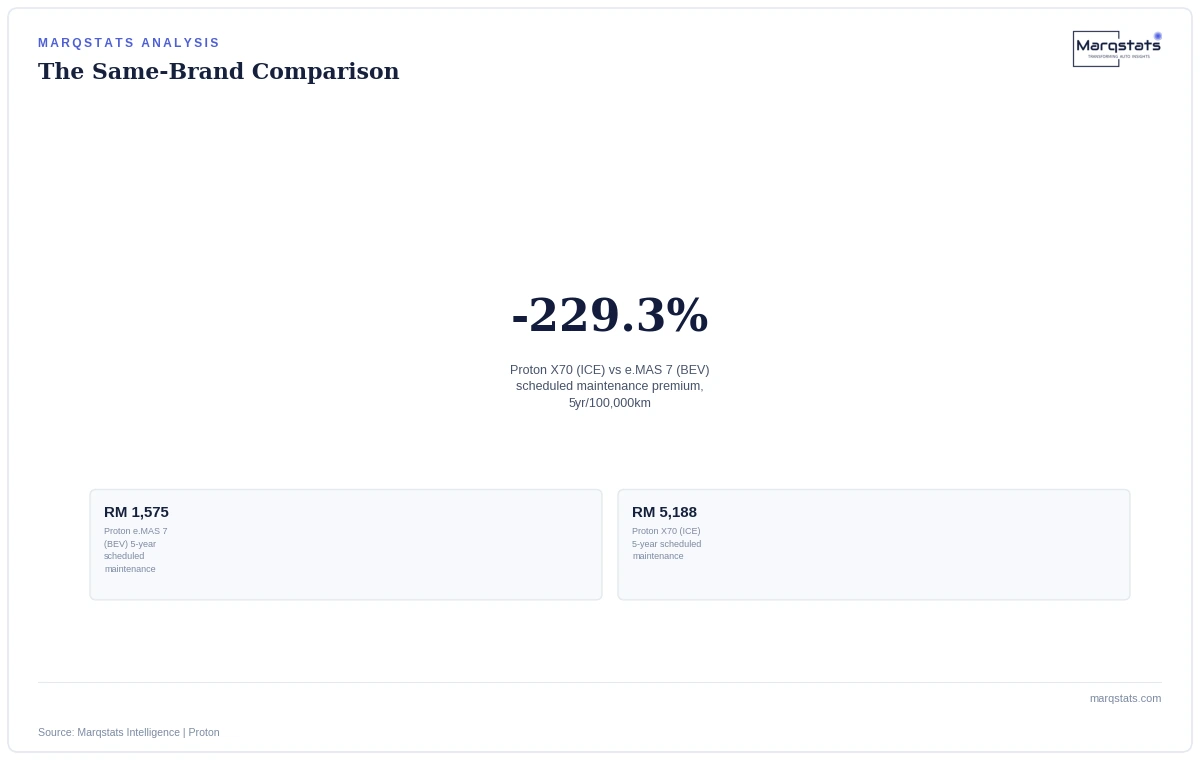
In brief: Proton's own published aftersales schedule shows the electric e.MAS 7 costing RM 1,575.48 over a 5-year, 100,000-kilometer ownership cycle, against RM 5,188.06 for the petrol-powered X70 over the identical period.
Why This Specific Comparison Is Unusually Clean
The value of this comparison isn't the numbers alone -- it's what stays constant between the two vehicles being compared.
Same manufacturer. Same warranty team. Same published methodology.
— Marqstats Analyst Team
Same manufacturer, same warranty administration, same published-schedule methodology -- the only variable that changes is the powertrain. That controls away nearly every confound that usually complicates BEV-versus-ICE cost comparisons drawn from different brands, different markets, or third-party estimates.
A Named Comparison: Perodua's Numbers Tell the Same Story
This isn't a one-manufacturer anomaly -- a second Malaysian carmaker's own data shows an almost identical pattern.
Perodua's published service schedule shows its electric QV-E costing RM 1,416.08 over the same 5-year window, against RM 3,368.70 for the petrol Myvi -- a 137.9% premium for the ICE vehicle. Two different Malaysian manufacturers, two different vehicle segments, and the same directional finding from each company's own published numbers.
Where the Savings Actually Come From
It's worth being specific about which components disappear entirely, since that's what drives the gap.
The scheduled maintenance items removed on the electric side are the ones that generate the bulk of conventional workshop revenue: engine oil, oil filters, spark plugs, timing belts, and multi-ratio transmission fluid. Electric powertrains replace that entire maintenance category with periodic reduction-gear oil, cabin filters, and coolant checks -- fewer line items, lower cumulative cost.
Why This Doesn't Mean EV Ownership Is Free of Aftermarket Spend
The scheduled-maintenance savings are real, but they're not the whole cost picture, and it's worth being precise about that distinction.
This comparison covers scheduled preventive maintenance specifically -- it does not capture the offsetting wear categories (accelerated tire wear, suspension component stress, auxiliary battery replacement) that shift spend toward chassis dynamics rather than eliminating it. The scheduled-service savings are real and manufacturer-verified; they are one part of total ownership cost, not the whole picture.
What This Means for Buyers and Fleet Planners
The practical takeaway: anyone comparing total EV and ICE ownership costs in Malaysia should treat manufacturer-published scheduled-service data as a reliable baseline specifically, while still budgeting separately for the wear-related categories these schedules don't capture.