A Reform That Wasn't About the Purchase Price
Most coverage of Malaysia's EV policy focuses on the purchase-tax exemptions that expired at the end of 2025. The reform that actually stabilizes this market's long-term fleet growth assumptions is a different one entirely.
Since 2019, Malaysia's road tax formula for electric vehicles used a progressive structure that punished exactly the vehicles the government was otherwise trying to promote. It's worth understanding just how steep that punishment actually was before looking at what replaced it.
The Numbers Behind the Old System
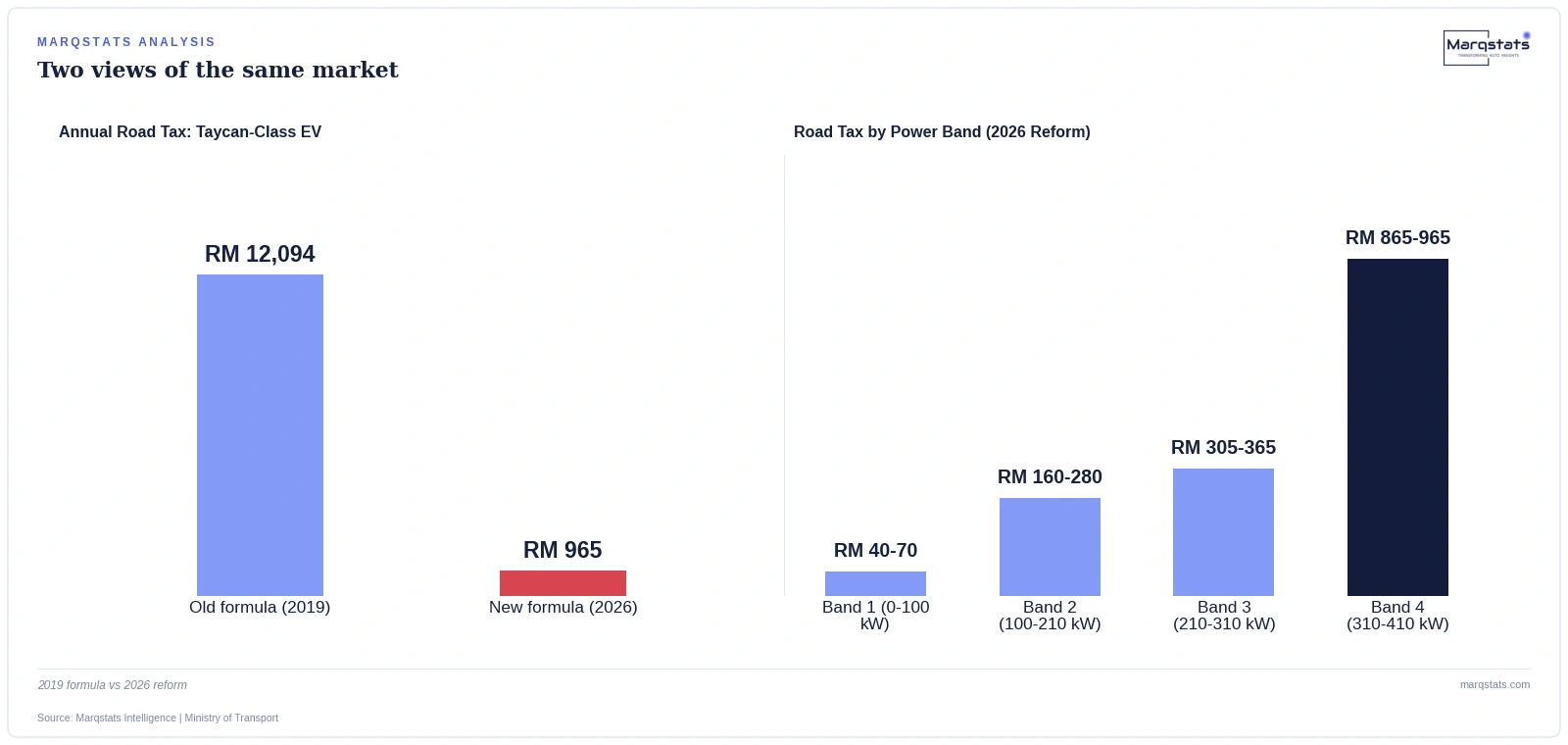
These specific figures trace directly to the underlying research's own regulatory analysis, not a rough estimate.
A mid-tier 300 kW electric SUV faced RM 4,503 in annual road tax under the old system. A performance EV in the Porsche Taycan class faced RM 12,094 every year. Those fees were steep enough to function as a de facto adoption penalty once the initial purchase-tax holiday ended on 31 December 2025.
What Actually Changed on January 1, 2026
The restructured formula didn't tweak the old system -- it replaced the underlying logic entirely.
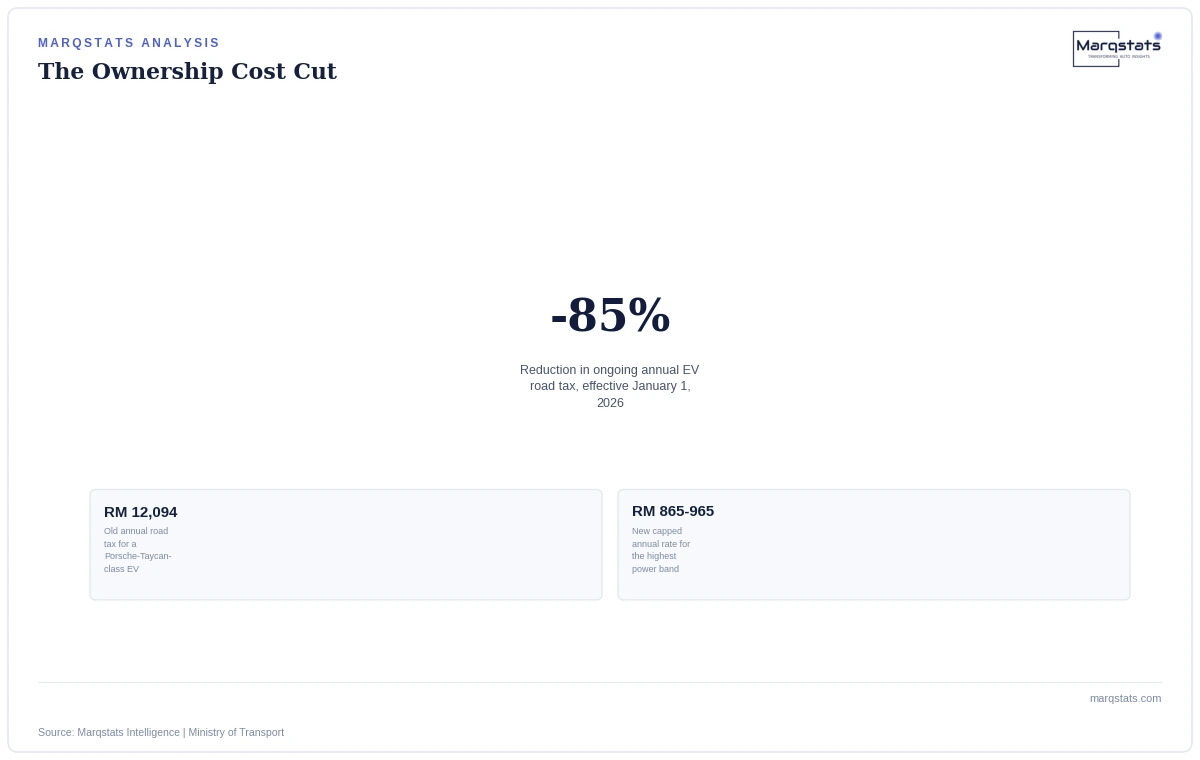
The new kilowatt-based formula organizes vehicles into output-power bands with capped incremental charges rather than an open-ended progressive scale. The effect was immediate and large: ongoing annual road tax fell by up to 85%, with even the highest power band now capped between RM 865 and RM 965 annually -- a fraction of what the old Taycan-class fee once demanded.
A Named Comparison: Why This Reform Outweighs the Purchase Incentives
Purchase-price incentives get more attention, but the math behind why this specific reform matters more is worth spelling out.
A purchase-tax exemption is a one-time benefit realized at the point of sale. A road tax structure that changes the ongoing annual cost of ownership compounds every single year a vehicle stays on the road -- and Malaysia's active EV fleet is only getting older and larger. This is the detail the underlying research itself credits with stabilizing long-term fleet growth assumptions for the entire aftermarket sector, not the purchase-tax exemptions that dominated earlier coverage.
Why This Should Matter to Anyone Forecasting Malaysia's EV Fleet
A recurring-cost reform behaves differently in a growth model than a one-time incentive, and that difference should show up in how analysts weight it.
Forecasters and fleet planners modeling Malaysia's EV trajectory should weight this road tax restructuring at least as heavily as the CBU purchase-tax exemptions that expired at the end of 2025, since the road tax reform's effect persists indefinitely rather than applying only at the point of sale.
What This Means for the Aftermarket
The practical takeaway: workshops, dealers and component suppliers should treat Malaysia's fleet growth trajectory as resting on a durable fiscal foundation specifically, not a temporary incentive window, since the road tax reform's ongoing nature makes it structurally different from the purchase-tax holiday that has already expired.