
Six Sites, 42 Arrests, and Oil in Forged Brand Cans
In November 2025 enforcement officers in Selangor found a factory-scale operation that recycled dirty oil into what looked like branded engine oil.
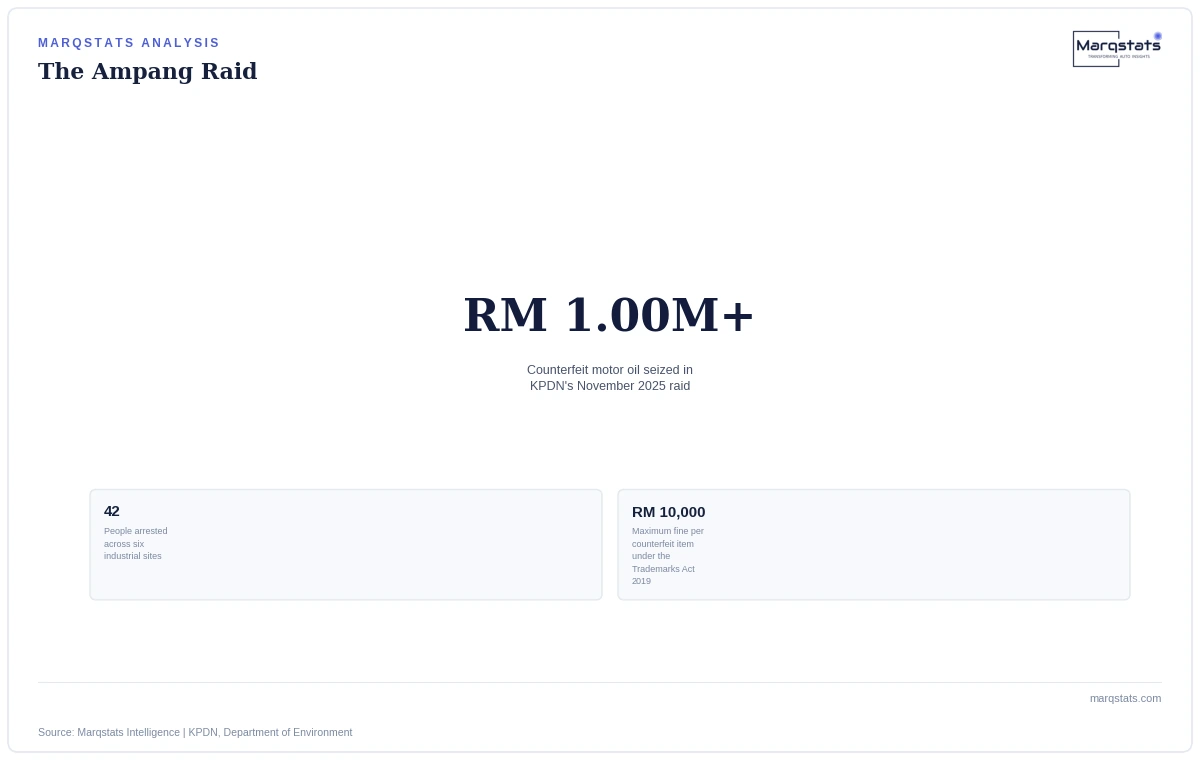
The Ministry of Domestic Trade and Cost of Living, known as KPDN, raided an illicit syndicate operating across six industrial sites in Kampung Baru Ampang. Officers arrested 42 people, 28 of them foreign workers, and seized counterfeit motor oil worth more than RM 1.00 million.
How the Operation Worked
The research describes a simple loop that turns waste into product.
The syndicate collected spent automotive oil. It treated the waste oil with crude chemical neutralisation and distillation, blended the recovered fluid with cheap base stock and artificial dyes, and packed the mixture into containers that copied popular retail products under forged multinational brand identities.
What the Law Says
Prosecutions have followed.
In April 2026 cases began in the Petaling Jaya Sessions Court under the Trademarks Act 2019. The statute allows fines of up to RM 10,000 per counterfeit item, jail terms of up to three years, or both.
A Named Comparison: Where Fake Oil Finds Its Buyers
Counterfeit oil does not appear evenly across the market. It follows the supply chain.
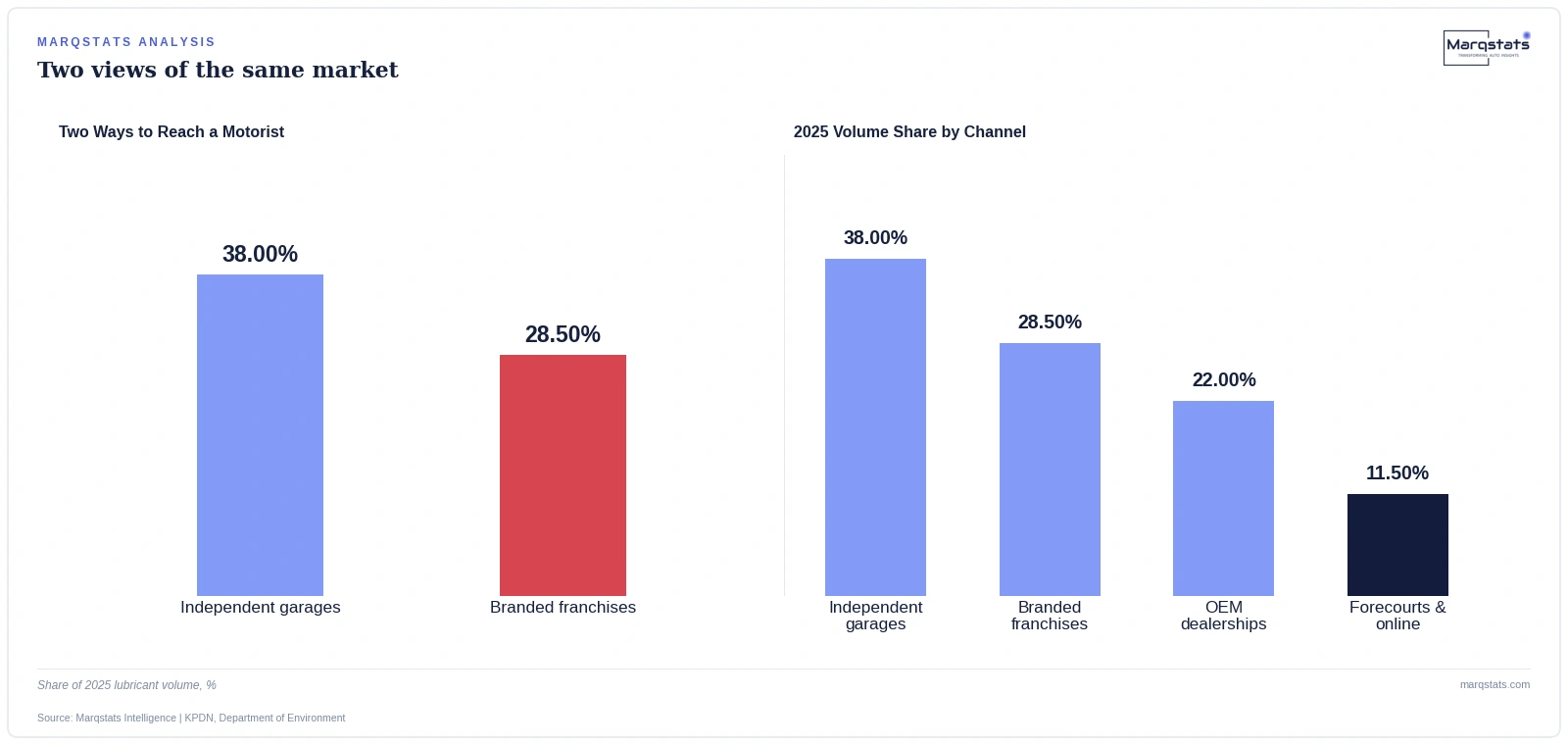
Independent multi-brand garages handle the largest share of exchanges, 38.0% of volume in the research's channel split. They buy through independent spare-part stockists and wholesale distributors, on credit terms and volume rebates, and mechanics choose the brand for most owners. The research says that unverified supply chains expose these garages to adulterated oil. Branded workshop franchises, 28.50% of volume and the fastest-growing channel, are supplied directly by the marketers, which guarantees provenance: PETRONAS runs 125 AutoExpert and 18 MotoExpert centres supplied through its own distribution arm.
How Brands and Regulators Are Responding
Two defences are emerging, one from marketers and one from waste regulators.
Shell Malaysia uses "Untuk Pasaran Malaysia" labels with double-layered peel-and-reveal QR codes linked to an authentication database, and Castrol uses digital scan verification through its FastScan and Motorist apps. On the waste side, spent oil is Scheduled Waste SW 305 under the Environmental Quality (Scheduled Wastes) Regulations 2005. Workshops, fleet depots and dealers must store it in bunded containment, hand it only to licensed recovery facilities and log each consignment in the eSWIS system, which the research says closes routes that once fed illicit blenders.
What This Means for Garages and Marketers
The practical takeaway: garages should buy only from authenticated distributors, scan pack codes where offered and keep consignment records, and marketers should extend branded franchise networks and tamper-evident packaging. The research does not size the counterfeit market, so no share of lost volume is claimed.