A Majority Fleet Outside the Warranty System
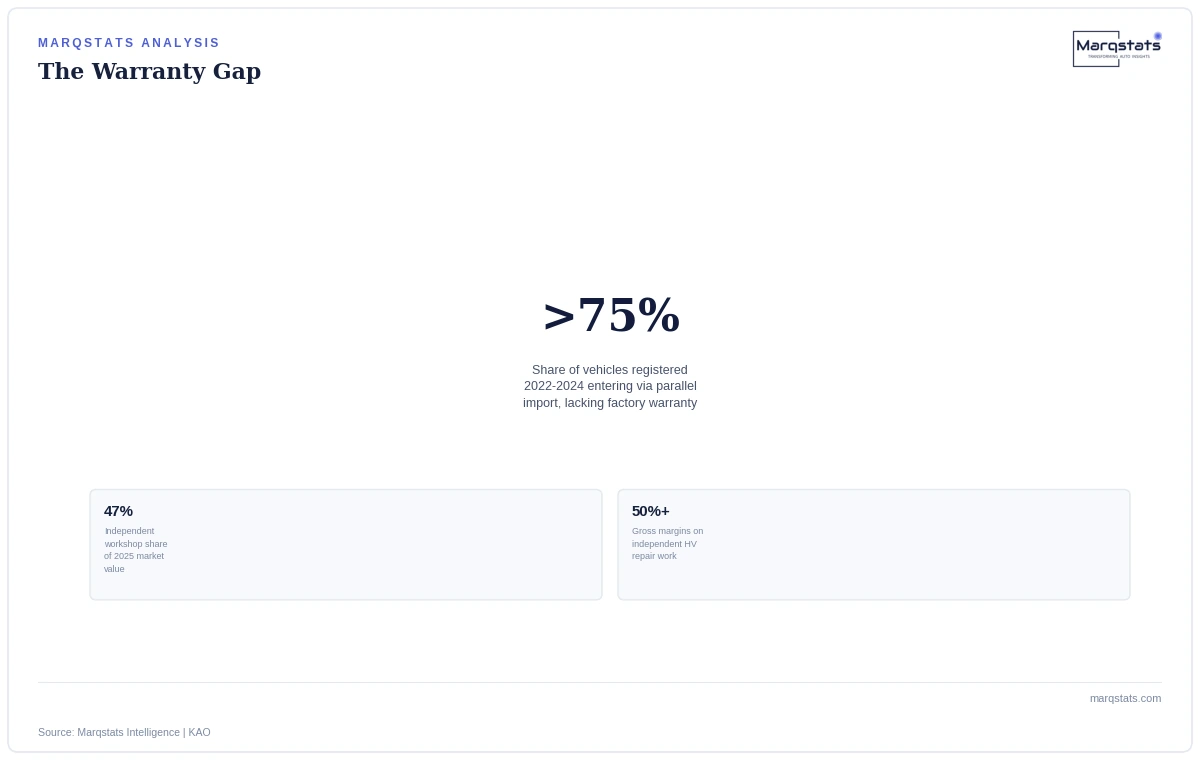
In brief: over 75% of the electric vehicles registered in Kazakhstan between 2022 and 2024 entered the country through individual or third-party parallel-import channels, primarily from China. Most of them operate entirely outside factory warranty coverage.
Why Dealers Won't Cover Them
This is a deliberate business decision, not an oversight or a temporary gap in the certification process -- dealers have consistently applied this exclusion since parallel importing became a meaningful share of new vehicle supply starting in 2022.
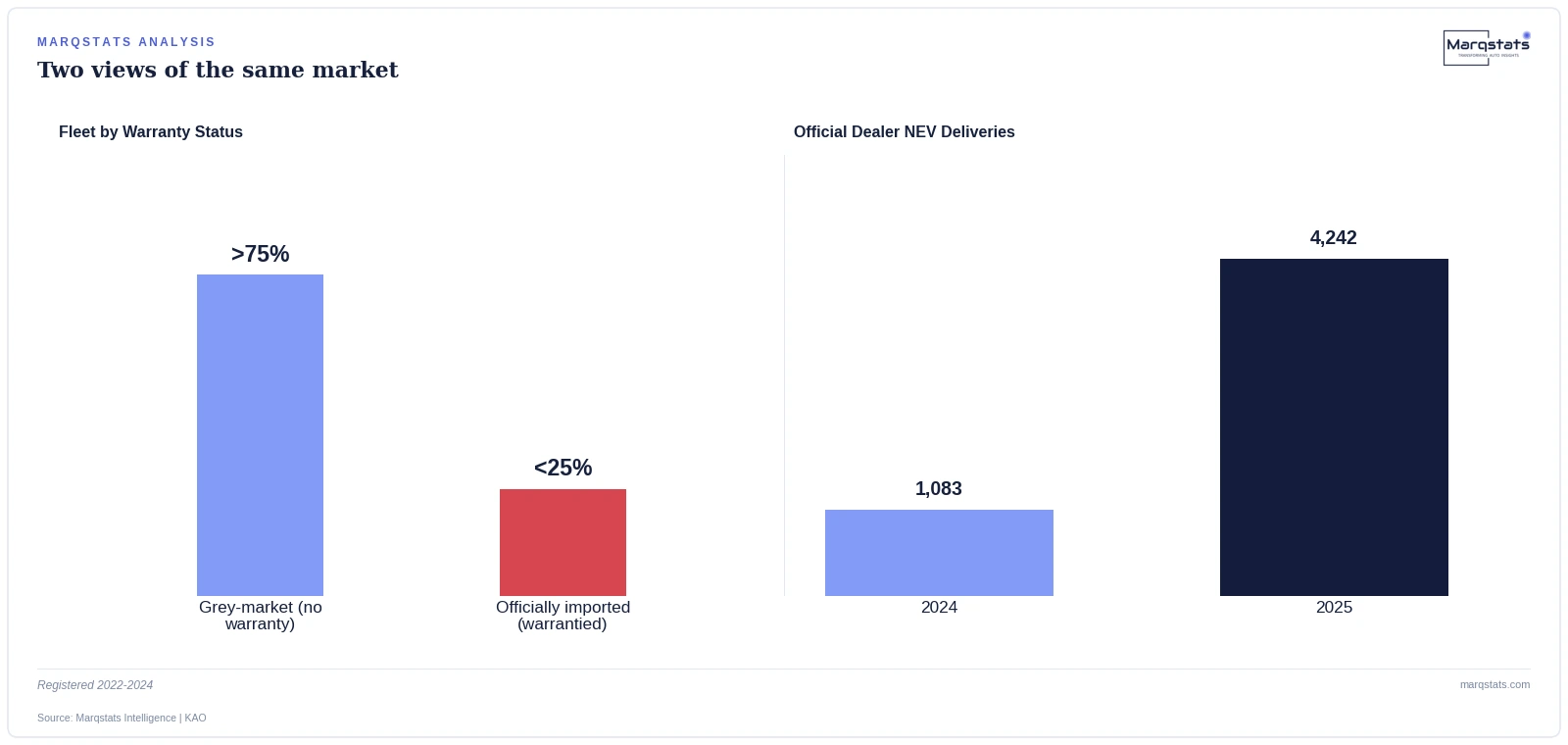
Authorized dealership networks have historically restricted warranty coverage to models built specifically for the domestic or Eurasian Economic Union market. A parallel-imported Zeekr or BYD built to Chinese domestic specifications simply doesn't qualify, even though it's the same vehicle platform an authorized dealer might otherwise service.
The Industry That Grew to Fill the Gap
Independent workshops didn't compete with dealers for these vehicles. Dealers ceded them entirely.
— Marqstats Analyst Team
Specialized independent centers like ProVolta Club Service and EV-Electric Almaty built their entire business model around this gap — sourcing replacement battery cells, electronic control modules and diagnostic software directly from Chinese supply networks. That capability now lets them perform component-level battery rebuilds at a fraction of the cost of whole-pack replacements typically quoted by franchised dealerships, on high-voltage repair work carrying gross margins exceeding 50%.
A Named Comparison: Why This Differs From a Typical Independent-vs-Dealer Rivalry
In most mature EV markets, independent workshops compete with dealers for the same customer base on price or convenience. In Kazakhstan, the relationship is closer to a handoff than a rivalry: dealers made a deliberate choice to exclude an entire vehicle population from warranty coverage, and independents built a durable, differentiated business specifically around servicing exactly those vehicles. It's less competition than division of labor, imposed by the dealers' own warranty policy.
Why This Gap Is Unlikely to Close on Its Own
There is little commercial incentive for authorized dealers to reverse this policy voluntarily. Extending warranty coverage to grey-market vehicles would mean absorbing unknown build-quality and specification risk on vehicles they never certified for import in the first place, so the exclusion is likely to remain a durable, structural feature of this market rather than a temporary phase.
What This Means for Anyone Entering This Market
The practical takeaway: a new entrant weighing whether to compete for warranty-covered, officially-imported vehicles or build capability for the much larger grey-market population should recognize that the second option, while requiring genuine investment in Chinese supply chain relationships and diagnostic capability, targets the segment independent operators have already proven can sustain premium repair margins at scale.