
A Merger Talk That Failed, and a Different Deal That Didn't
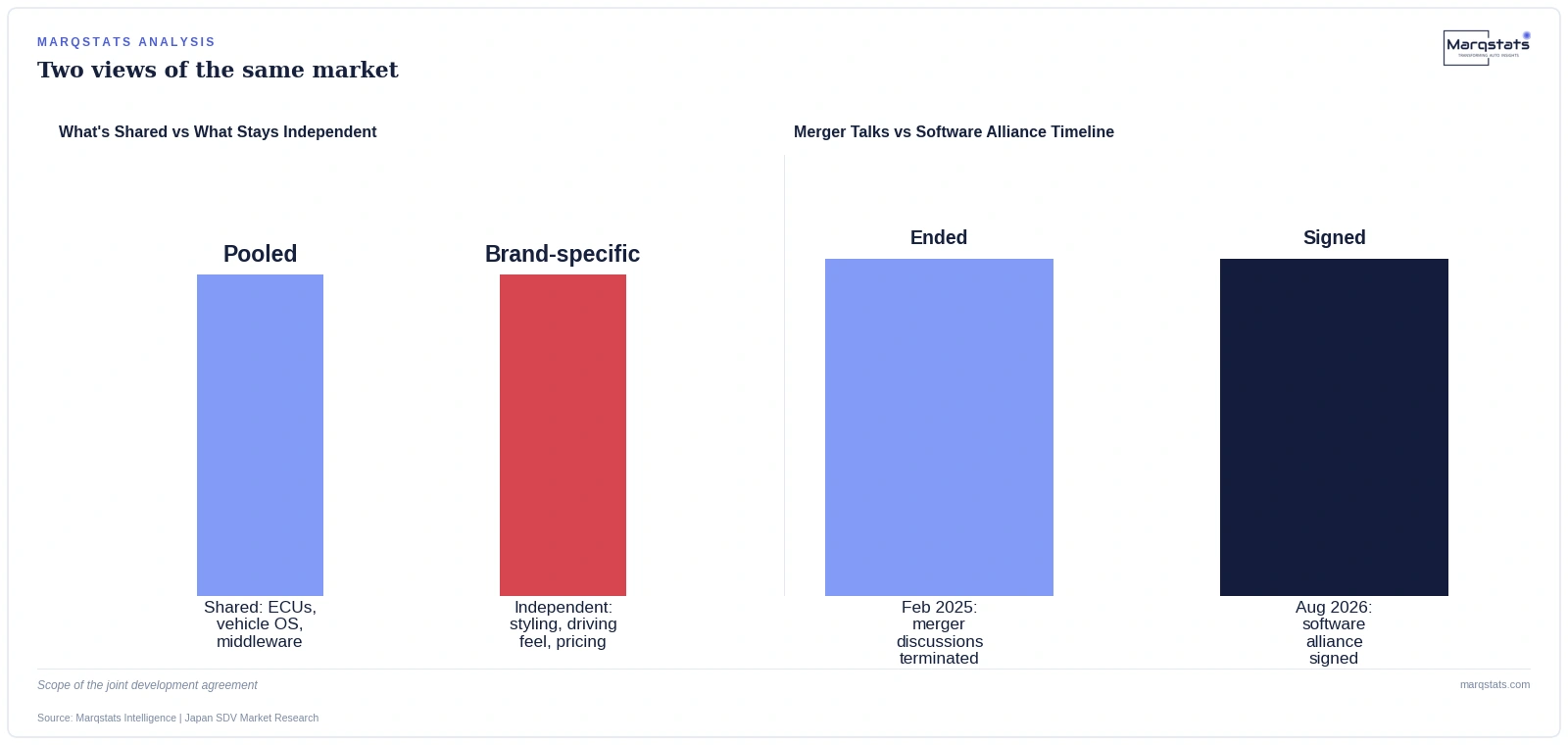
In February 2025, Honda and Nissan terminated corporate merger discussions. Eighteen months later, on 31 August 2026, the same two companies, joined by Mitsubishi Motors, signed a binding joint development agreement anyway, just a narrower one: common specifications for next-generation vehicle ECUs, in-vehicle operating systems, and middleware, rather than a combined corporate structure.
The Number That Explains the Deal
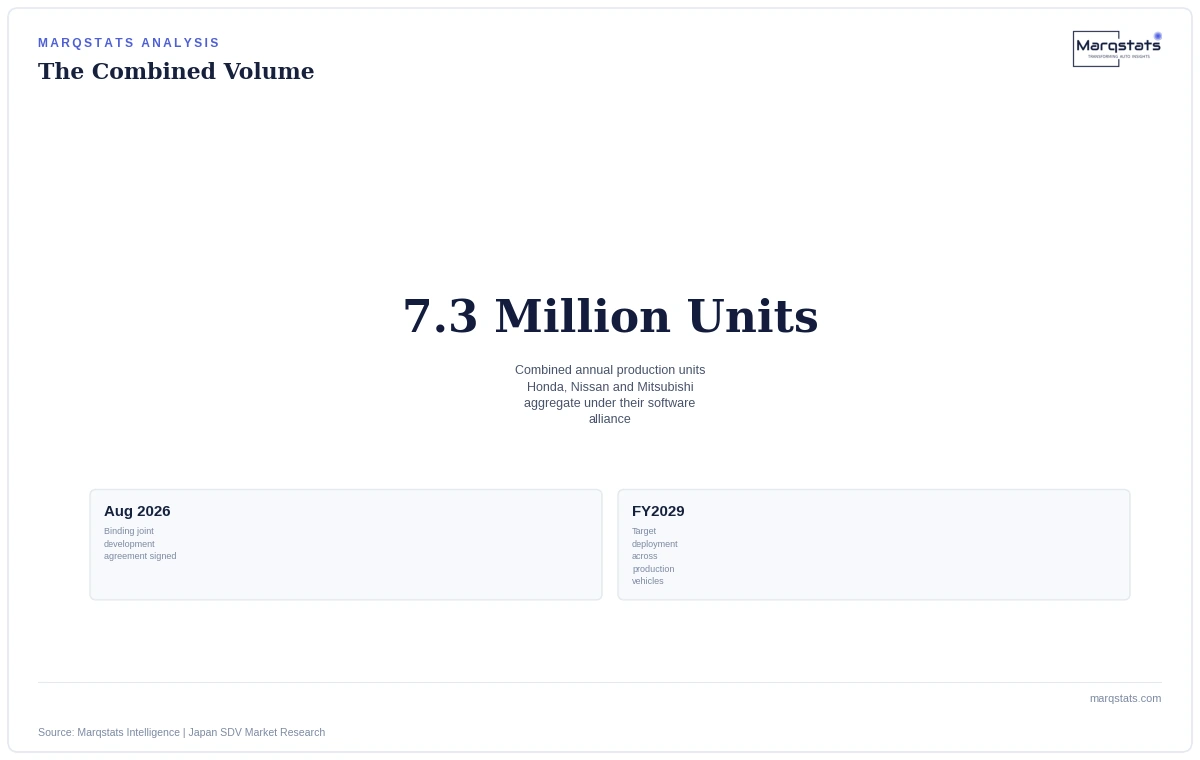
None of the three companies individually commands the production scale that makes full in-house software-defined vehicle platform development straightforwardly affordable. Together, they aggregate 7.3 million annual production units, a volume base large enough to spread the fixed engineering cost of common ECU, operating system and middleware specifications across far more vehicles than any single one of the three could justify alone. The alliance plans to deploy its standardized architecture across production vehicles starting in fiscal year 2029.
Why This Deal Makes More Sense Than a Merger Would Have
A full corporate merger asks two companies to combine everything: brand identity, dealer networks, labor structures, board governance. A joint software development agreement asks for something much narrower and much easier to actually execute: shared engineering specifications for the parts of the vehicle that don't differentiate one brand from another in a customer's eyes. A driver does not choose a Nissan over a Honda because of which company wrote the underlying ECU firmware. They choose based on styling, driving feel, pricing and brand reputation, exactly the layers this alliance leaves each company free to keep building independently.
What This Means for Who Should Be Watching Fiscal 2029
The practical takeaway: this alliance is a template worth watching closely, not just for what it delivers, but for whether it delivers on schedule. Development cost for a modern vehicle software stack is largely fixed regardless of how many units it eventually ships across, which means the number of competitors willing to share that fixed cost matters as much as any single competitor's individual engineering talent. If Honda, Nissan and Mitsubishi hit their fiscal 2029 deployment target, expect other mid-scale automakers facing the same capital-intensity math to look seriously at forming their own version of the same arrangement.