A Capacity Problem That Isn't About Certification
In brief: most discussion of Japan's EV service capacity constraints focuses on certification and capital — the cost of scan tools, calibration bays, training courses. Japan's own labor data points to a second, harder-to-fix constraint sitting underneath those numbers.
The Gap in Numbers
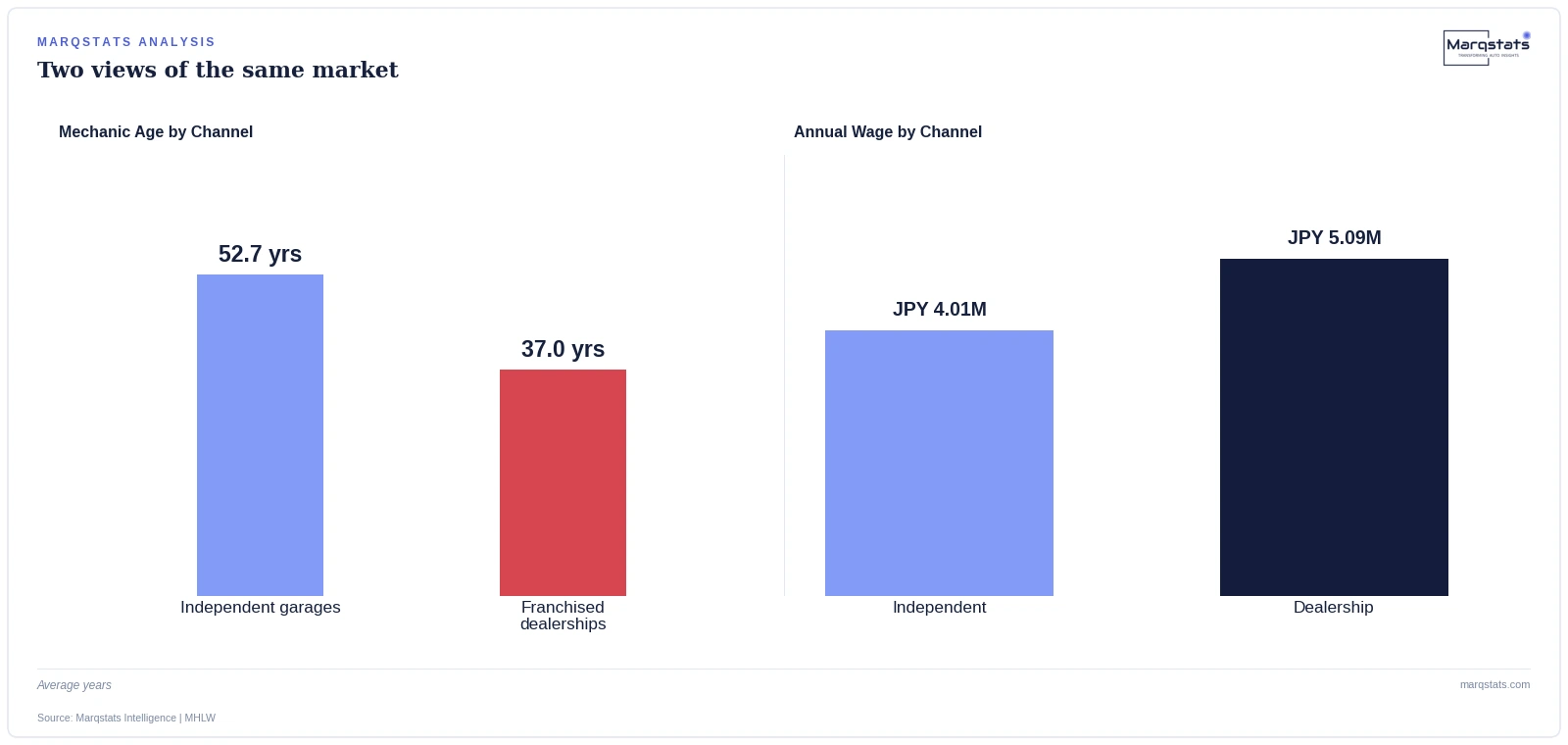
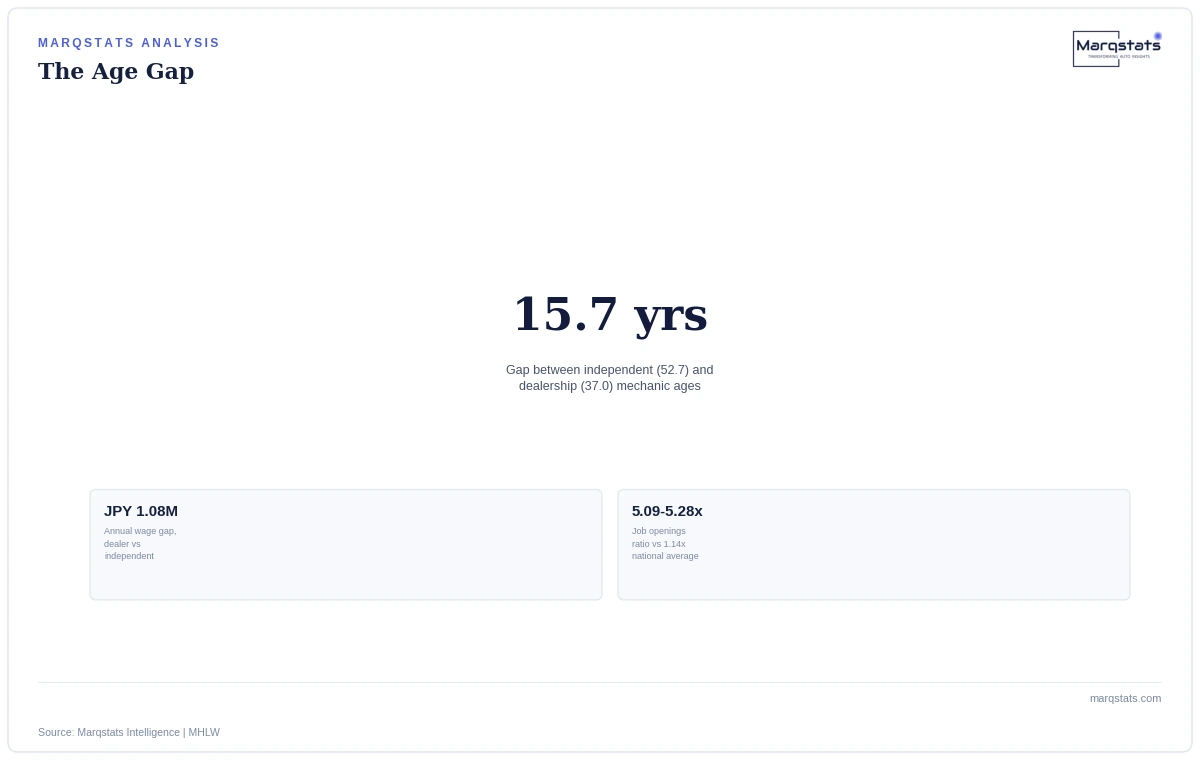
Independent garage mechanics in Japan average 52.7 years old. Franchised dealership mechanics average 37.0 years old. That's a 15.7-year gap between the two channels servicing the same expanding EV fleet.
Why Younger Technicians Choose Dealerships
A workshop can fund a scan tool in one budget cycle. It can't fund a generation of new mechanics that fast.
— Marqstats Analyst Team
The economics are straightforward. Dealership mechanics earn an average annual wage of JPY 5.09 million, against JPY 4.01 million at independent shops — a genuine, persistent compensation gap. Combined with a mechanic effective job openings ratio running 5.09 to 5.28 times the national all-industry average of 1.14, technicians entering the workforce have both more options and a clear financial incentive to choose dealership careers over independent shops.
Why This Compounds the Certification Problem
Electronic Control System Maintenance certification, and the high-voltage safety training underneath it, requires exactly the kind of digital-native technical aptitude younger technicians bring more readily. An aging independent workforce isn't just smaller — it's also, on average, further from the training most independent shops now need to actually deliver.
A Named Comparison: Why This Is a Slower Problem Than Capital Investment
A workshop facing a capital barrier — the JPY 400,000 to JPY 800,000 needed for a legal scan tool, say — can solve that problem within a single budget cycle if the business case supports it. Reversing a multi-decade demographic and wage trend, with vocational enrollment already declining and dealerships offering a clear pay premium, is fundamentally different in kind, not just in scale. It's a problem measured in decades, not fiscal quarters.
Why Waiting for the Problem to Solve Itself Won't Work
There is no natural mechanism that closes this gap on its own. Without a deliberate intervention -- higher independent-sector wages, targeted subsidies, or a genuinely different training pipeline -- the current trajectory points toward an independent workforce that keeps aging while the EV fleet it needs to service keeps growing, a combination that compounds rather than resolves over time.
What This Means for Independent Workshops and Policymakers
The practical takeaway: independent workshop owners and industry associations like JASPA should treat wage competitiveness, not just certification subsidies or tooling grants, as a genuine strategic priority — addressing only the capital and training side of this gap leaves the underlying compensation problem, which is arguably the harder one to solve, completely untouched.