
A Real Trade-Off, Not a Budget Cut
Understanding which one it actually was matters for anyone trying to forecast Italy's EV market trajectory over the next several years, since the two readings imply genuinely different signals about government commitment to electrification.
In May 2025, the Italian government formally revised its National Recovery and Resilience Plan targets. It's tempting to read this as a simple funding cut. The actual policy move was more specific and more interesting than that: money moved from one EV-supportive priority to another.
What Actually Got Cut
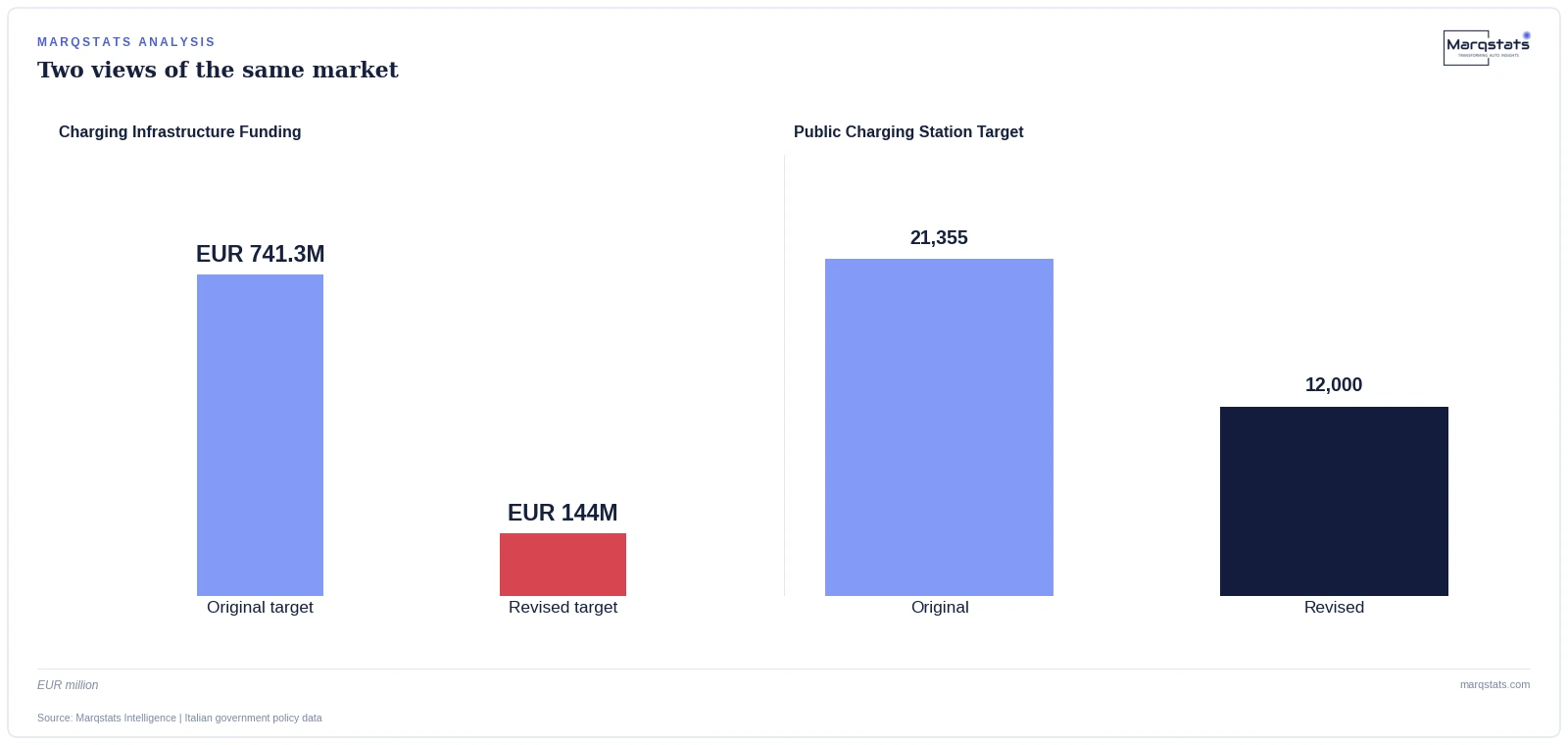
Public charging infrastructure deployment targets were scaled back from 21,355 to 12,000 high-power stations, cutting direct infrastructure funding from EUR 741.3 million to just EUR 144 million.
Where That Money Actually Went
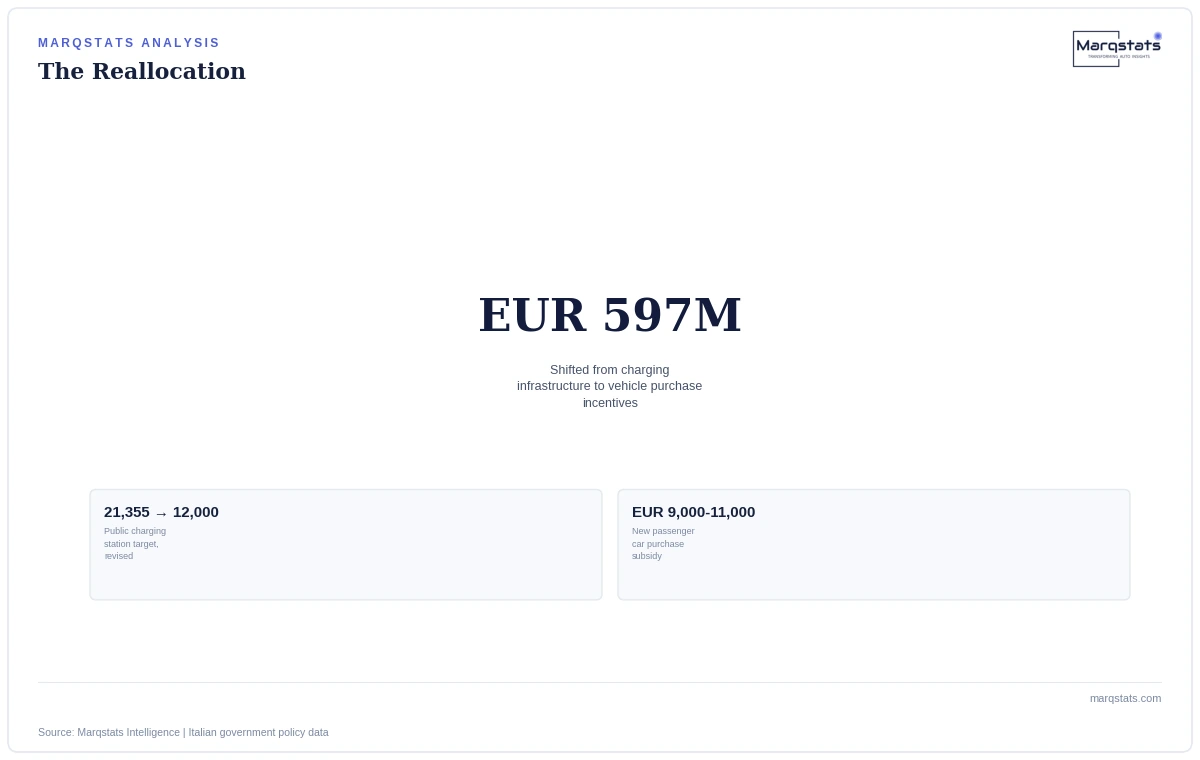
The reallocated EUR 597 million didn't disappear from the EV ecosystem — it moved directly into vehicle purchase incentives targeted at low- and middle-income households and fleet operators, offering subsidies of EUR 9,000 to EUR 11,000 for passenger cars and up to EUR 20,000 for light commercial vehicles.
Why This Is a Genuine Strategic Bet, Not Just Budget Shuffling
The underlying logic is a bet about what's actually constraining EV adoption right now: purchase price, not charging availability. If that bet is right, more Italians buying EVs sooner directly grows the maintenance-eligible fleet faster than incremental charger deployment would have — even though it means public charging infrastructure growth slows relative to the original plan.
A Named Comparison: Why This Differs From a Simple Austerity Move
This wasn't Italy walking away from EV support — total committed EV-related funding didn't shrink, it moved. That distinction matters for how workshops and parts suppliers should read this policy shift: it signals continued, arguably accelerated near-term fleet growth (more vehicles sold sooner), even as it signals slower relative growth in the public charging network those vehicles will eventually rely on.
The Scale of the Shift This Represents
EUR 597 million is a genuinely substantial sum to redirect within a single policy revision -- large enough to meaningfully accelerate near-term vehicle sales volume on its own, particularly for the lower- and middle-income households and fleet operators the incentives specifically target, who are often the buyers most sensitive to sticker price at the point of purchase.
What This Means for the Aftermarket
The practical implication: workshops and parts suppliers should expect the maintenance-eligible EV fleet to grow faster in the near term than the public charging network supporting it, a genuine signal to weight private and workplace charging servicing capability, not just public fast-charger maintenance, when planning where to invest.