The Segment Nobody Puts in a Press Release
That gap between commercial reality and public narrative is worth sitting with, since it means most strategic planning around India's EV aftermarket may be anchored to the wrong reference point entirely.
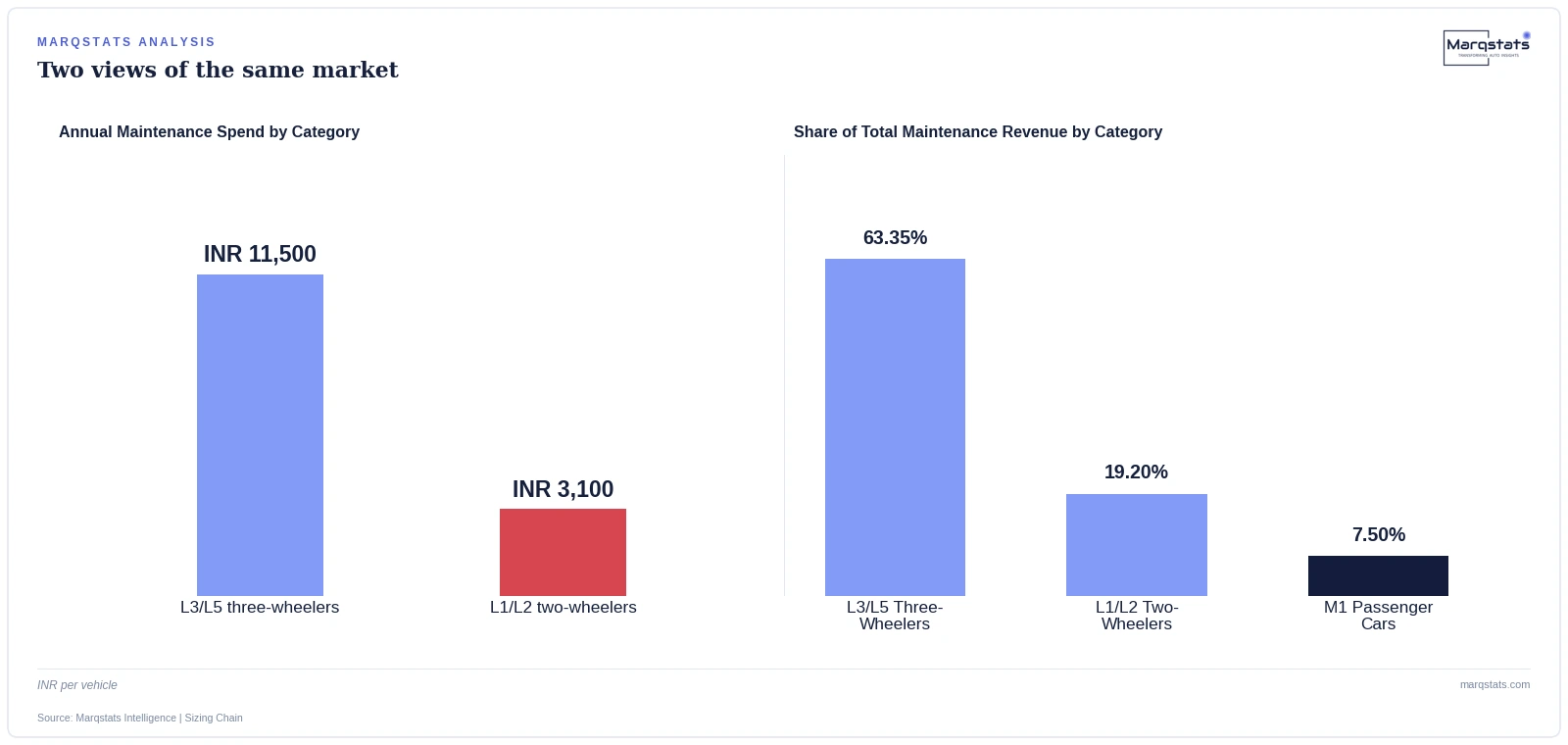
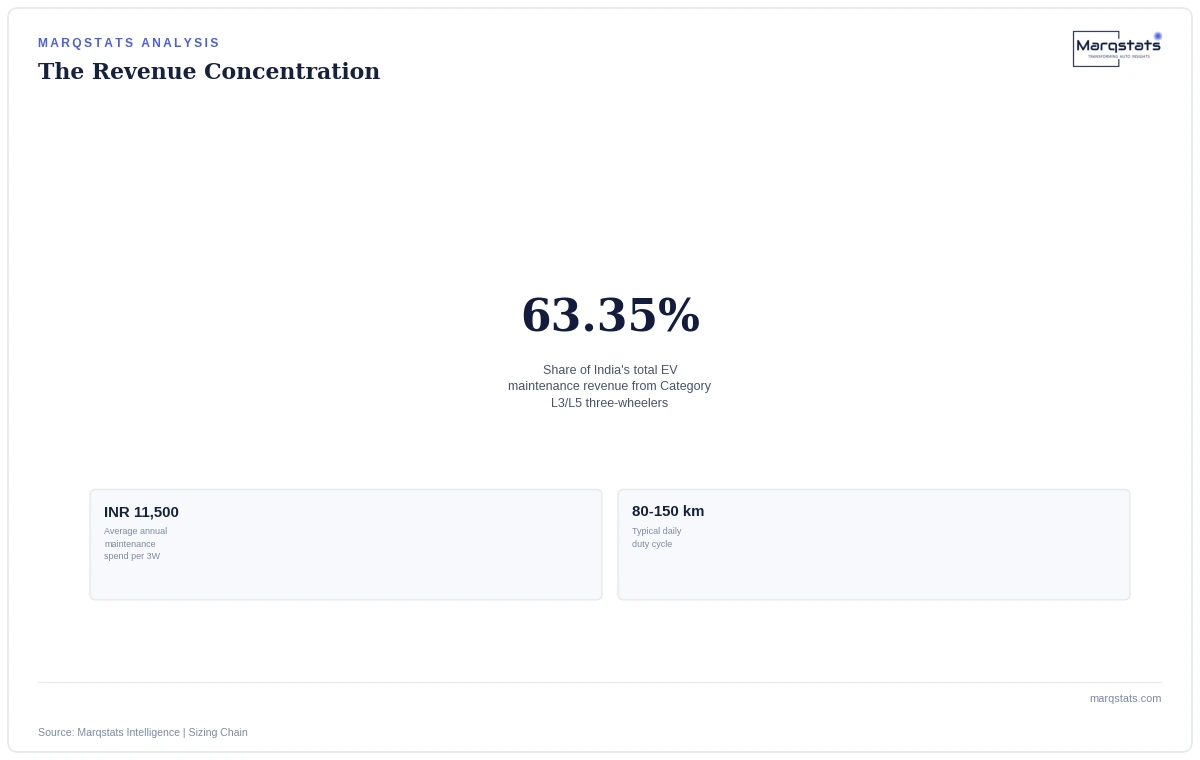
In brief: ask most people what drives India's electric vehicle story, and the answer usually involves Tata Nexon EVs, Ola scooters, or premium urban commuters. The underlying research's own revenue data points somewhere else entirely: Category L3 and L5 electric three-wheelers, dominated by informal e-rickshaws.
Why Three-Wheelers Generate So Much Revenue
The mechanism is straightforward duty-cycle math. These vehicles operate 80 to 150 kilometers daily under continuous commercial stress — urban passenger ferrying, last-mile cargo logistics — driving average annual maintenance spend of INR 11,500 per vehicle, more than triple the INR 3,100 a privately-owned two-wheeler generates.
An Almost Entirely Different Service Economy
This is the segment most industry commentary skips past entirely.
— Marqstats Analyst Team
This segment doesn't run on the same rails as passenger car or premium scooter servicing either. Independent and informal operators — roadside mechanics, unorganized repair stalls — capture 75% of Category L3/L5 servicing, the exact inverse of the 86% authorized-channel dominance in passenger cars. Much of this activity happens through lead-acid battery topping, LFP cell balancing performed outside formal digital records, and mechanical differential fluid flushes — work that rarely shows up in official industry statistics at all.
A Named Comparison: Why This Differs From India's Broader EV Narrative
Most policy and investment attention in Indian EVs flows toward passenger cars and premium two-wheelers — the segments with brand recognition, venture funding, and consumer marketing budgets. The actual maintenance revenue data tells a specifically different story: the largest, most durable revenue pool sits in an informal, cash-economy-adjacent segment that gets comparatively little strategic attention relative to its actual commercial weight.
Why This Concentration Is Likely to Persist
There's little reason to expect this pattern to shift quickly. Urban last-mile logistics and passenger ferrying demand continues growing across Indian cities, and the duty-cycle economics driving three-wheeler maintenance spend -- continuous daily commercial use, not discretionary private ownership -- are structural, not a temporary phase of the market's early growth.
What This Means for Anyone Planning Around This Market
The practical takeaway: workshops, parts suppliers and investors evaluating India's EV maintenance opportunity based on passenger vehicle or premium two-wheeler assumptions are targeting the wrong majority of the actual revenue pool — the underlying research's own data points specifically toward Category L3/L5 servicing infrastructure, battery refurbishment capacity, and informal-channel partnerships as the segment with the largest, most durable commercial opportunity.