
A Feature Most Roadmaps Still List as Speculative
In most software-defined vehicle market reports, in-car payments show up as a future monetization possibility, a slide in a roadmap deck, not a shipping feature. Tata Motors skipped that waiting period entirely. In May 2025, it unveiled the Harrier.ev, a production SUV built on its acti.ev+ architecture, with a working in-dashboard payment system already integrated.
What Made the Difference
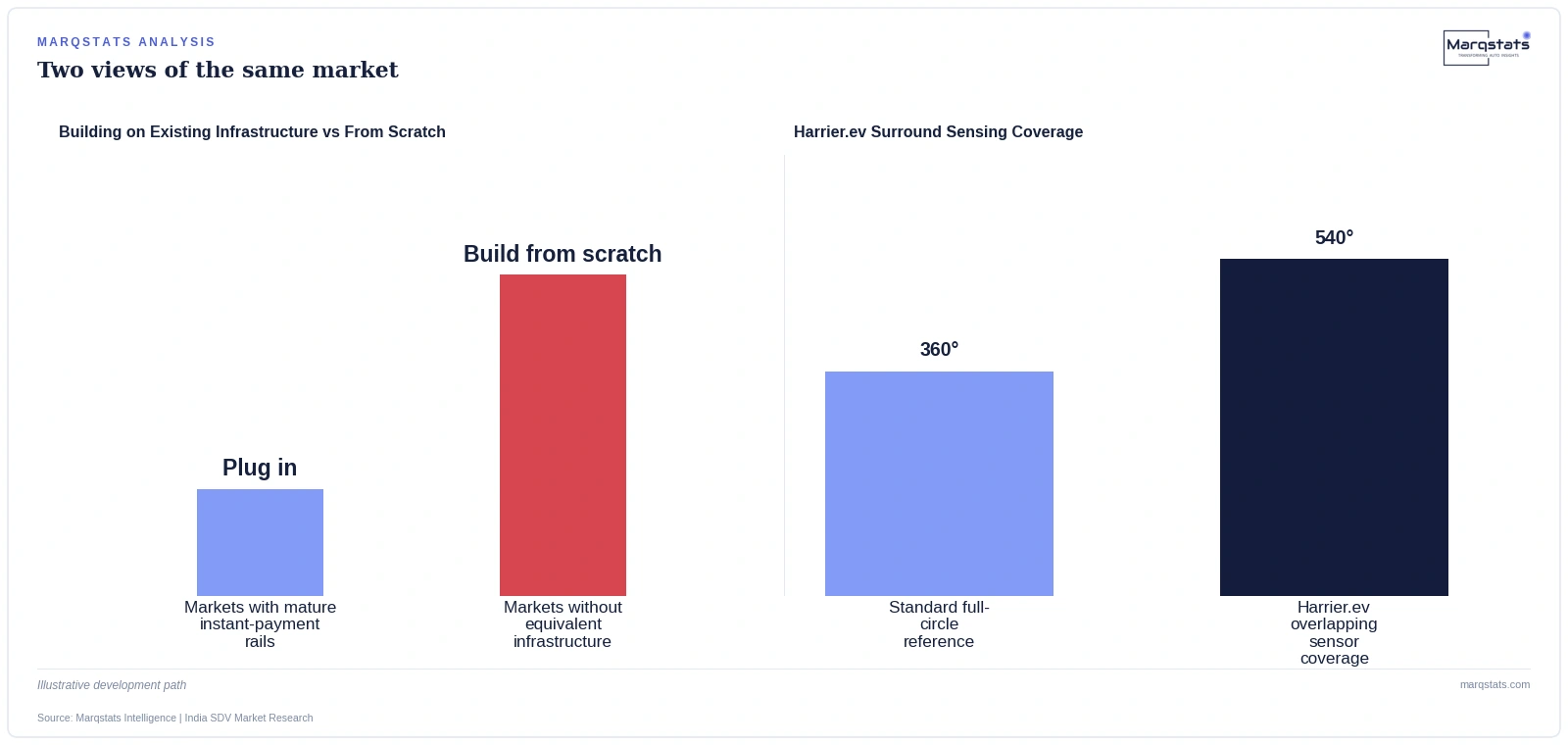
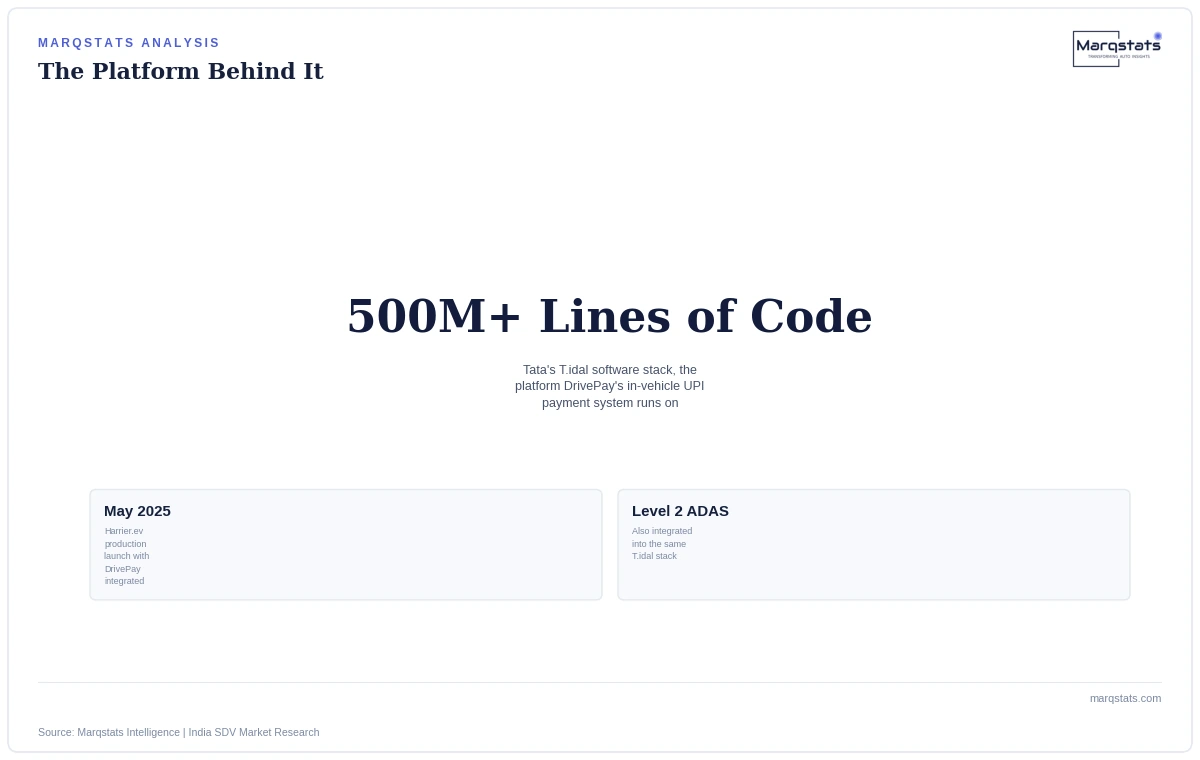
The Harrier.ev's T.idal software stack, running over 500 million lines of code, integrates DrivePay, an in-vehicle Unified Payments Interface system, alongside 540-degree surround sensing and Level 2 ADAS. The reason this shipped in a production vehicle rather than staying a concept demo: India's UPI payment rail was already a mature, near-universal consumer habit years before the automotive industry got involved. Building in-car payments in most other markets means building an entirely new commercial payment rail from scratch, a genuinely hard, multi-year undertaking. Tata's engineering team got to build on top of infrastructure that already existed, that hundreds of millions of Indians already used daily.
Why This Sequencing Matters Beyond This One Feature
The pattern worth generalizing: a country's existing digital infrastructure can pull an SDV monetization feature into production years ahead of where the underlying vehicle technology alone would have justified it. India didn't get in-car payments because its automakers moved faster on payment technology than everyone else. It got them because the payment technology was already sitting there, mature and ubiquitous, waiting for a vehicle platform capable of plugging into it. The vehicle software was the missing piece, not the payment rail.
What This Means for Reading Other Markets' SDV Roadmaps
The practical implication for anyone evaluating SDV monetization timelines elsewhere: don't assume a feature that looks speculative in one market is equally speculative everywhere. The real constraint is often the maturity of the underlying digital infrastructure a feature needs to plug into, not the sophistication of the vehicle software itself. Markets with mature instant-payment rails, strong digital identity systems, or dense app ecosystems already in place are the ones most likely to pull specific SDV features into production ahead of schedule, exactly as UPI did for DrivePay.