
The Growth Spike Nobody Fully Explains
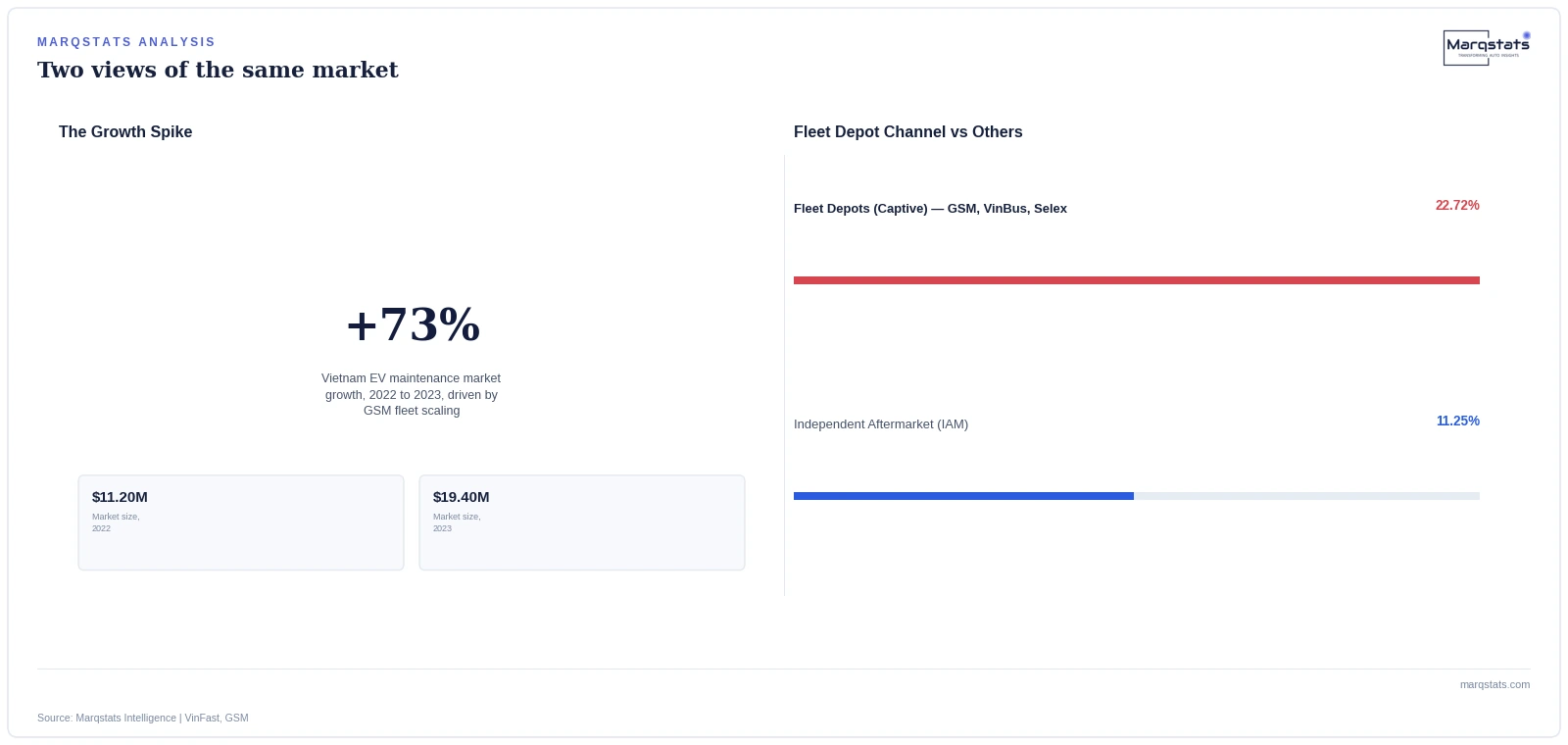
In brief: Vietnam's EV maintenance market jumped 73% between 2022 and 2023 — a genuinely sharp acceleration. Consumer EV coverage from that period focuses on VinFast's expanding model lineup. The underlying research's own driver attribution says something more specific: "deployment and scaling of the GSM electric taxi fleet."
Who GSM Actually Is
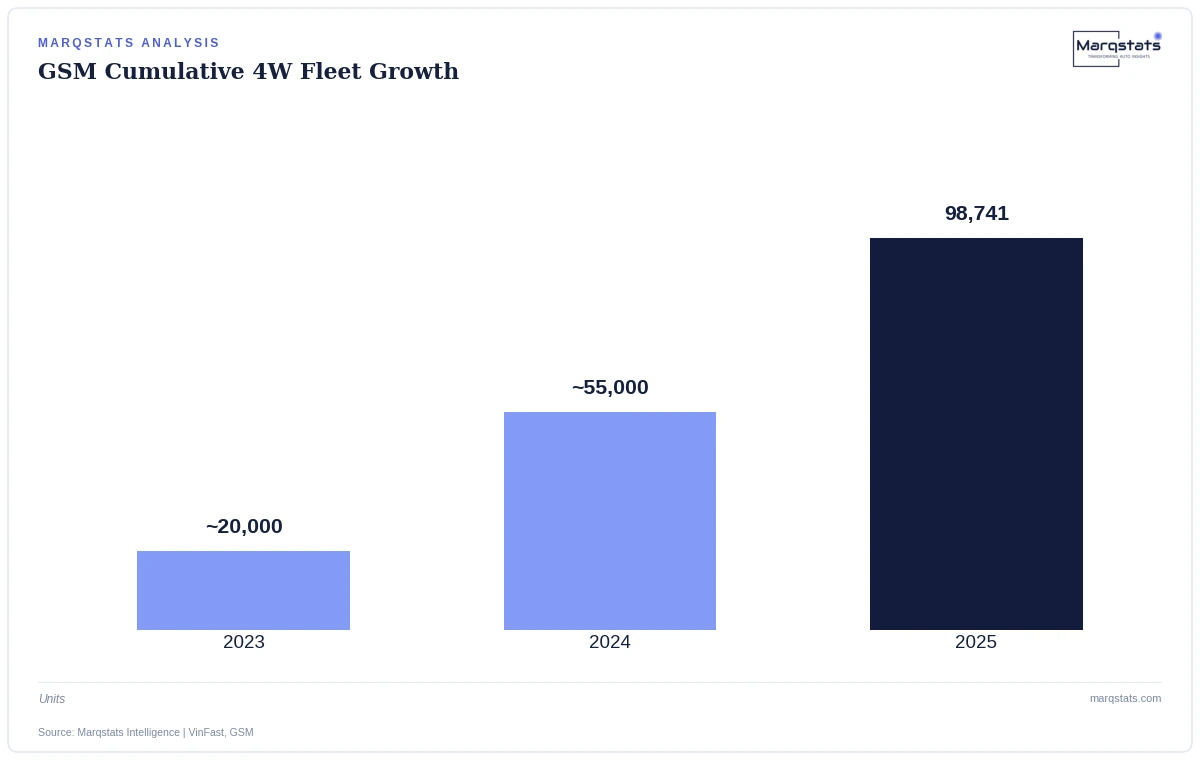
Green and Smart Mobility Joint Stock Company, operating under the Xanh SM brand, runs electric taxi and vehicle leasing operations at a scale the underlying research describes as the largest corporate electric vehicle fleet in Southeast Asia. By early 2026, GSM had received nearly 100,000 four-wheeled EVs and more than 50,000 electric two-wheelers from VinFast — with VinFast recognizing VND 21,877 billion in vehicle sales revenue from GSM in 2025 alone, while GSM itself posted net revenues of approximately VND 17,400 billion, up 125% year-over-year.
Why One Fleet's Growth Moves the Whole Market
A single commercial taxi driving 100,000 km a year generates more maintenance demand than a private car does in four.
— Marqstats Analyst Team
The mechanism is straightforward once you see it: GSM taxis running two shifts a day easily exceed 10,000 km per month, requiring Level 1 scheduled servicing every 35 to 45 days — compared to an annual service cycle for a typical private vehicle. Every vehicle GSM adds to its fleet generates dramatically more recurring maintenance revenue per year than an equivalent private sale would.
What This Means for Reading This Market's Own Growth Numbers
This has a direct, practical consequence: national EV adoption surveys and private consumer sentiment data are poor predictors of Vietnam's near-term EV maintenance revenue specifically. GSM's own disclosed fleet-scaling plans — published in its own investor and operational updates — are a far more concentrated, more predictive variable for anyone forecasting this market's near-term commercial-segment trajectory.
A Named Comparison: How GSM's Model Differs From Standard Consumer Retail
GSM's maintenance model runs through internalized depot operations for routine wear items — tire rotations, brake pad replacements, suspension bushing renewals — with major structural battery faults and software re-flashing escalated to VinFast's authorized Level 2 workshops. That split structure means GSM's fleet growth doesn't just add maintenance volume to the market; it specifically concentrates that volume into the Fleet Depots (Captive) channel, a distinct 22.72% slice of the 2025 market that scales almost one-for-one with GSM's own fleet decisions.
How Big a Share This Represents Today
Fleet Depots (Captive) — the channel GSM, VinBus and Selex Motors collectively anchor — captured USD 21.40 million, 22.72% of the total 2025 Vietnam EV maintenance market, on its own. That single channel, dominated by one company's fleet decisions, is nearly twice the size of the entire independent aftermarket segment combined.
Why This Concentration Is a Genuine Forecasting Risk
A market this dependent on one company's fleet strategy carries a real concentration risk worth naming directly: any slowdown in GSM's own fleet expansion pace, whether from capital constraints, competitive pressure, or strategic reprioritization, would show up disproportionately in this market's own near-term growth numbers relative to what broader EV adoption trends alone would suggest.