Two Numbers That Shouldn't Both Be True
It's the kind of statistic pairing that looks like a contradiction until you trace both halves back to the same physical component.
Electric vehicles cost meaningfully less to maintain on a routine basis than comparable petrol or diesel cars. That part of the EV ownership pitch is genuinely true and well documented. What gets left out of most of that pitch is what happens the moment something actually goes wrong.
The Numbers Behind Both Halves
These specific figures trace directly to the underlying research's own named sources, not a rough estimate.
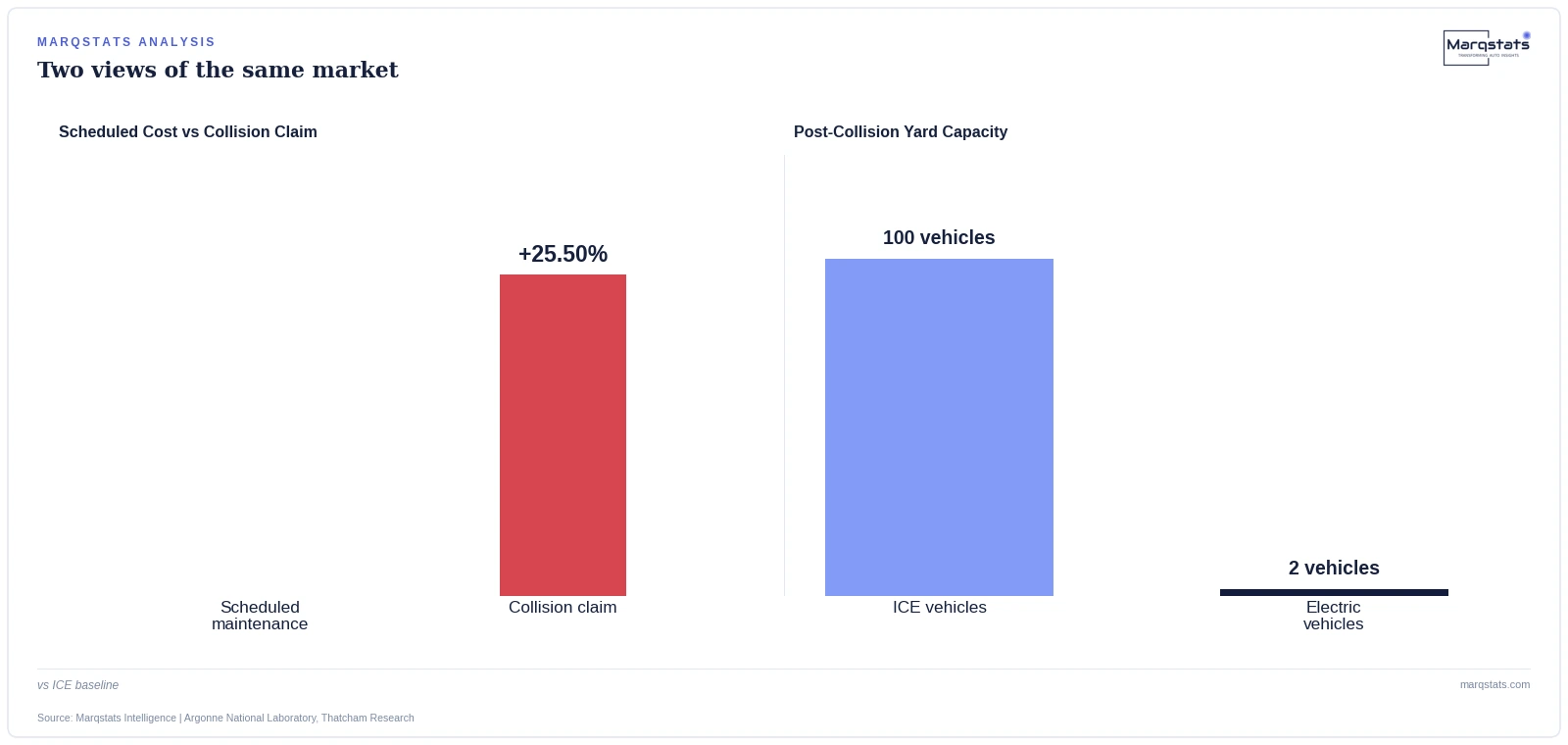
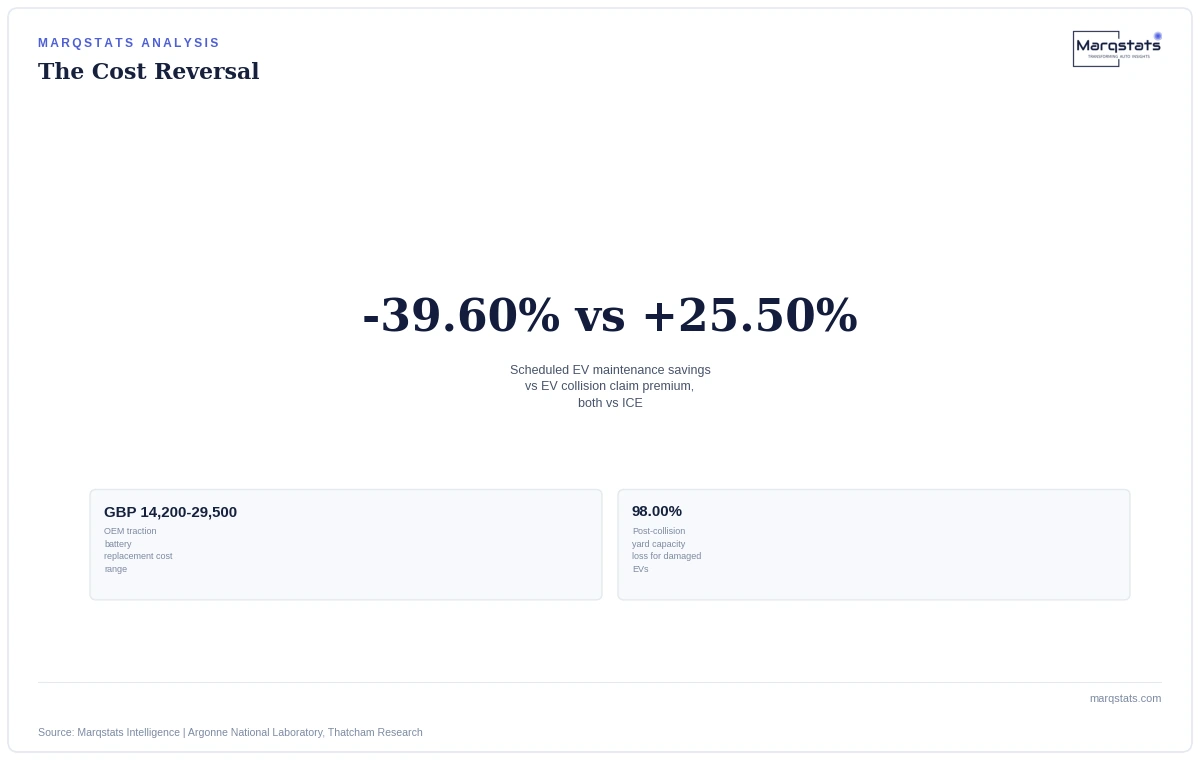
Argonne National Laboratory's lifecycle cost modeling puts scheduled EV maintenance at $0.061 per mile, against $0.101 for a comparable internal combustion vehicle -- a genuine 39.60% reduction worth roughly $480 per vehicle annually at typical US driving distances. But Thatcham Research's UK collision studies find the opposite pattern once a vehicle is actually damaged: EV claims run 25.50% more expensive and take 14.00% longer to repair than ICE equivalents.
Why Both Numbers Trace to the Same Component
This isn't two unrelated statistics -- it's one underlying architecture problem showing up on both sides of the ledger.
Electric powertrains eliminate the consumable parts that generate routine combustion-engine service revenue -- oil, spark plugs, transmission fluid -- which is exactly why scheduled maintenance runs cheaper. But the traction battery those consumables used to sit alongside is now structurally integrated into the chassis on many platforms, and inspecting or repairing it without full-pack replacement remains largely uneconomical. Original manufacturer replacement packs range from GBP 14,200 to GBP 29,500, representing 30% to 50% of the vehicle's original value.
A Named Comparison: Why Insurers Write Off Cars With Minor Damage
The battery-cost dynamic has a direct, measurable consequence for how insurers actually handle claims, and it's worth being specific about the mechanism.
Because a replacement battery's cost so often exceeds a depreciated vehicle's residual market value within just 12 to 24 months of ownership, insurers routinely classify EVs with only minor underbody or battery-housing damage as total constructive losses. There is currently no widely approved non-destructive way to verify cell integrity without pulling the pack -- so rather than inspect and potentially repair, the economically rational move is often to write the entire vehicle off.
Why the Physical Repair Yard Tells the Same Story
The safety consequence of this same battery architecture compounds the economic one in a way that's genuinely striking to see quantified.
A 1,500 square meter outdoor holding yard that would normally accommodate 100 damaged ICE vehicles awaiting repair can safely quarantine only 2 electric vehicles, under mandatory 15-meter thermal-runaway buffer protocols -- a 98.00% collapse in usable storage capacity. Add a mandatory 48-hour post-incident observation window before teardown can even begin, and the entire collision-repair pipeline for EVs is measurably slower and more space-constrained before a technician ever touches the vehicle.
What This Means for Buyers, Insurers and Repair Networks
The practical takeaway: anyone evaluating total EV ownership cost should treat collision and battery-integrity risk as a distinct line item from routine maintenance savings specifically, rather than assuming the well-publicized per-mile savings figure describes total lifetime cost of ownership.