A Tariff Cut That Sounds Simple
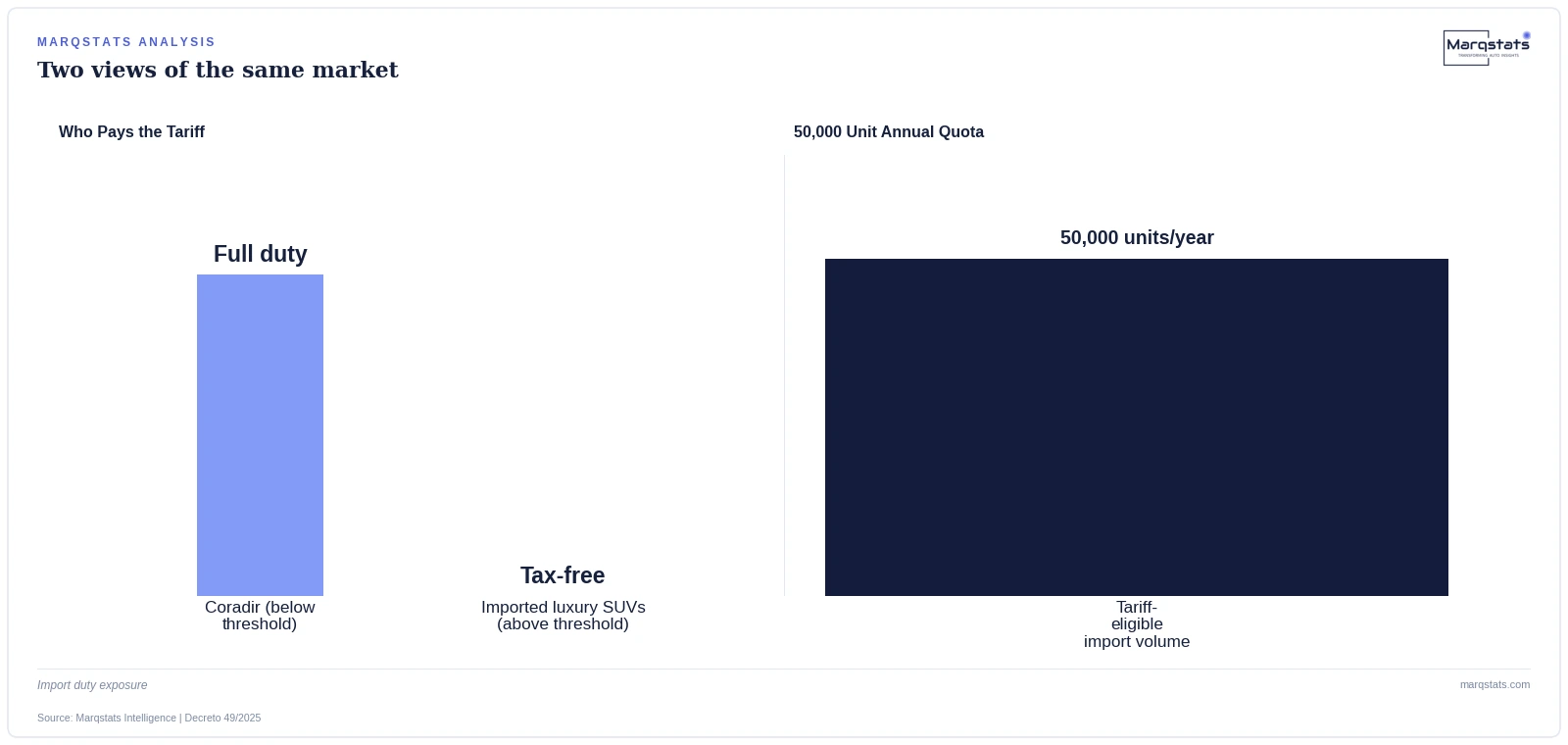
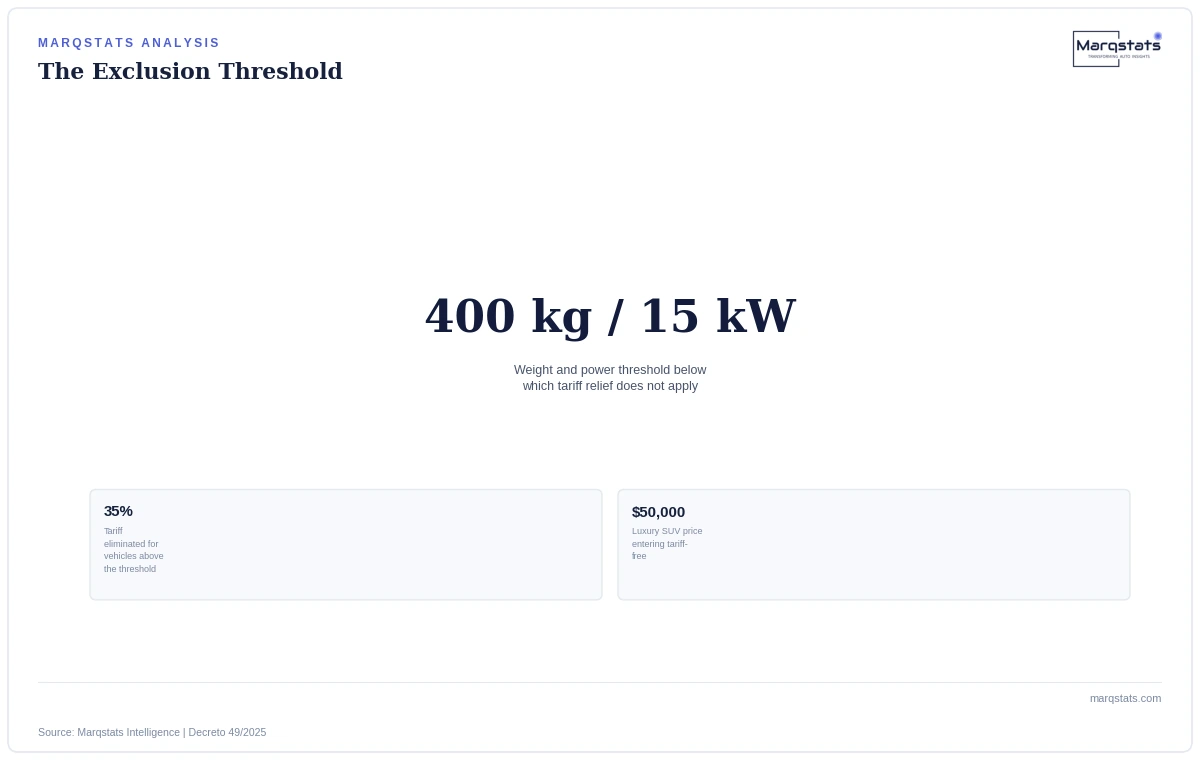
Decreto 49/2025 did something genuinely significant for Argentina's electrified vehicle market: it eliminated the 35% import tariff on up to 50,000 electrified vehicles a year. On its face, that's a straightforward pro-adoption policy — fewer taxes, more EVs on the road.
Read the decree's actual text, and a specific exclusion changes the picture entirely.
The Threshold Nobody Talks About
Vehicles weighing under 400 kg or producing under 15 kW are explicitly excluded from the tariff relief. That sounds like a narrow technical carve-out. In practice, it draws a line directly through Argentina's own domestic micro-EV manufacturing sector.
Who Actually Sits on Each Side of That Line
Coradir, the domestic manufacturer producing the Tito and Tita micro-EV models, builds vehicles that fall below this threshold. The company pays full import duties on the lithium cells and controllers it needs to build them — the exact components the tariff relief was ostensibly designed to make more affordable. Meanwhile, an imported mild-hybrid SUV priced around USD 50,000, comfortably above the weight-and-power threshold, enters the country completely tariff-free.
Why This Isn't Necessarily Deliberate, But Is Real Either Way
It's entirely possible this threshold was written for a legitimate technical reason — perhaps to exclude e-bikes or other genuinely different vehicle categories from an automotive-focused policy. Whatever the original intent, the practical effect is measurable and one-directional: it accelerates adoption of larger, imported hybrid vehicles more than it supports the smaller, genuinely electric vehicles Argentina's own manufacturers are building.
A Named Comparison: How Tariff Design Shapes Market Composition Elsewhere
This isn't a uniquely Argentine phenomenon — tariff and subsidy thresholds shape which vehicle categories accelerate fastest in markets worldwide, and a boundary drawn at the wrong point can favor imported volume over domestic innovation without anyone intending it to. What's distinctive about Argentina's case is how directly traceable the effect is: a single, specific, named company (Coradir) sits on the disadvantaged side of a single, specific, named threshold.
The Scale This Represents
Coradir isn't a hypothetical example — it's a real, operating Argentine manufacturer whose entire product line sits on the disadvantaged side of this threshold. Every unit it builds carries a cost structure the decree's own stated goal of accelerating electrified adoption doesn't actually support, while comparably or more expensive imported vehicles above the threshold receive the full benefit the policy was designed to provide.
What This Means for Anyone Watching Argentina's EV Policy
The practical takeaway: anyone assessing Decreto 49/2025's genuine effect on Argentina's electrified vehicle market should look past the headline tariff elimination to the specific weight-and-power boundary underneath it — that boundary, not the tariff cut itself, is what's actually determining which vehicle categories benefit most.