A Fleet Growing Faster Than Domestic Sales Alone Can Explain and Track
It's worth separating the two growth channels clearly, since they create very different kinds of demand for the aftermarket to plan around.
The Czech Republic's electric vehicle fleet is expanding rapidly. Domestic new-car sales explain only part of that growth -- a genuinely large share of the story is coming from somewhere else entirely.
The Numbers Behind the Import Wave
The scale of this shift is worth sitting with -- it's reshaping the fleet composition in real time.
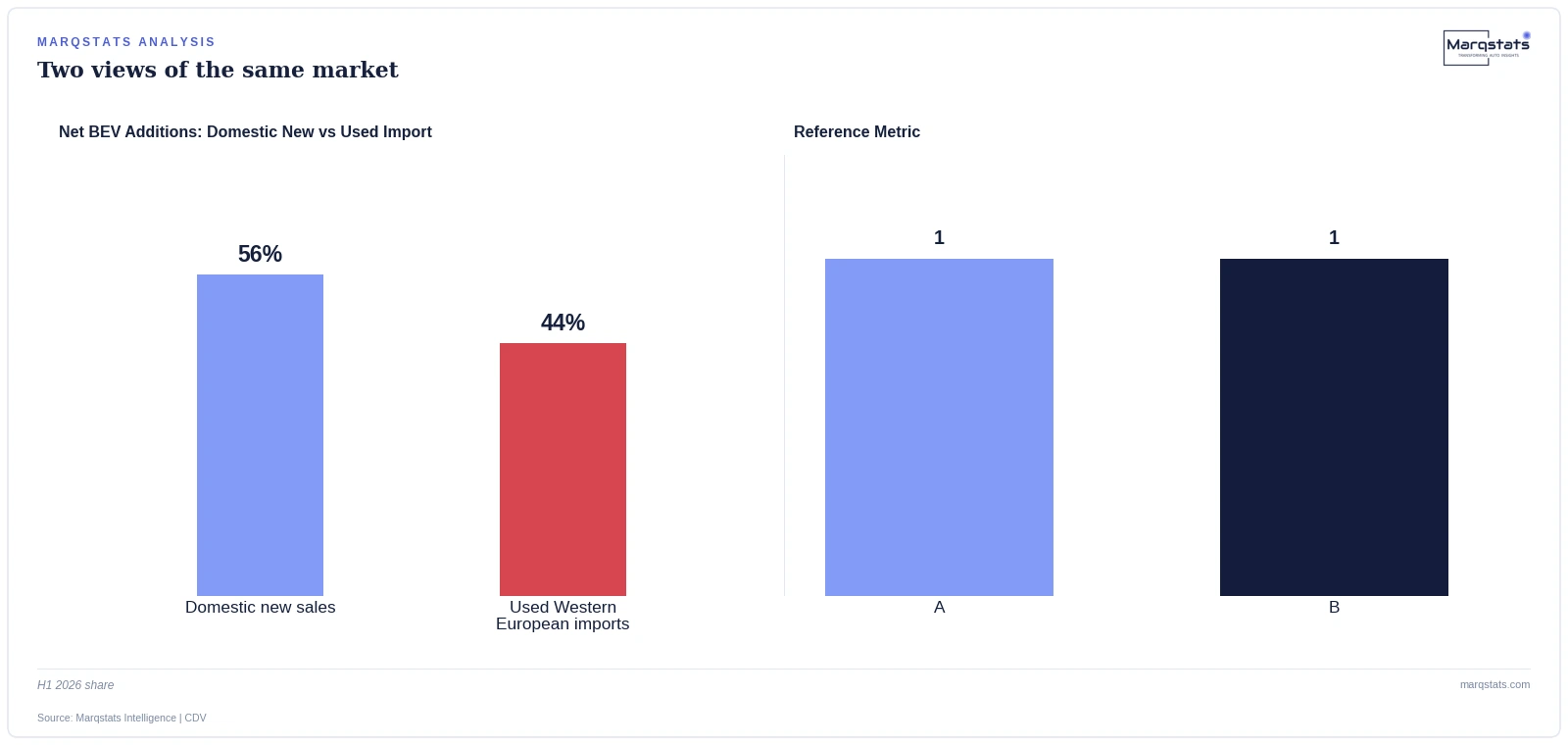
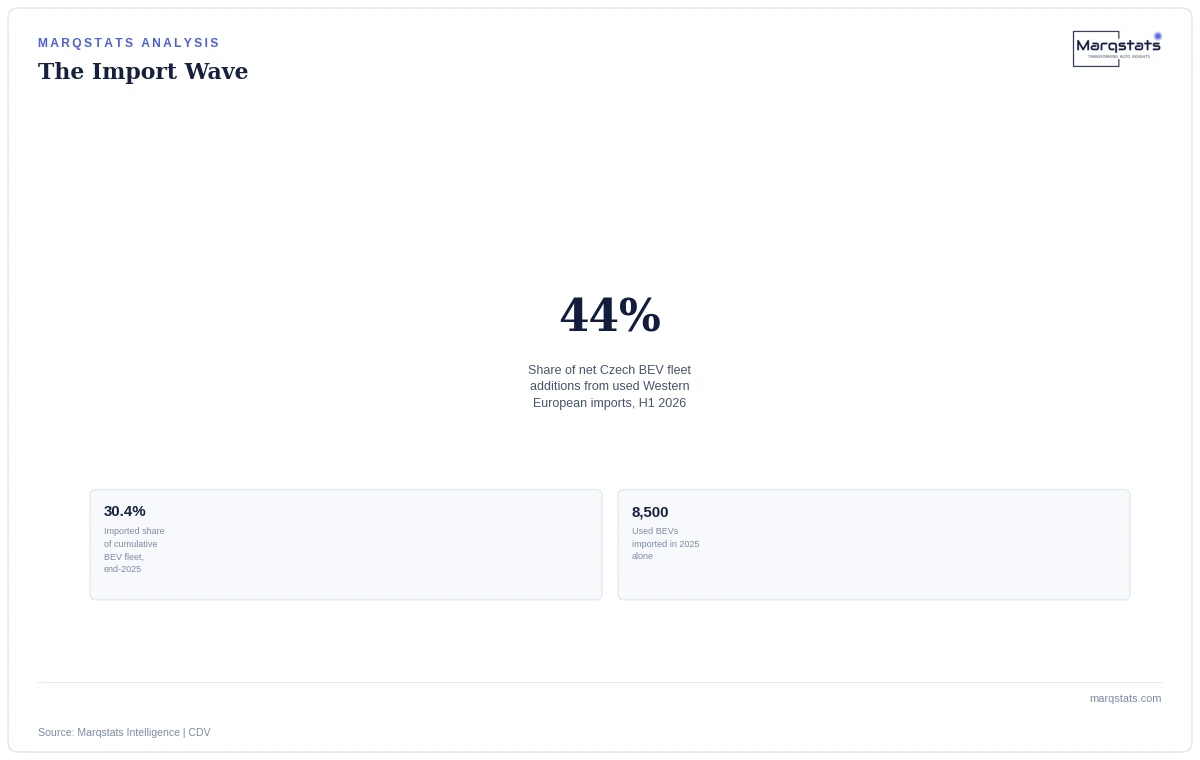
Imported pre-owned BEVs accounted for 30.4% of the cumulative passenger BEV fleet by year-end 2025, with 8,500 used units imported during 2025 alone. In the first half of 2026, that share climbed further: imports from Germany, Austria and Belgium represented 44% of all net BEV additions to the Czech fleet.
Why These Are Off-Lease Vehicles, Not New Cars
That specific distinction matters enormously for what kind of service demand these vehicles actually generate once they arrive.
These aren't new vehicles crossing the border. They're predominantly off-lease corporate vehicles from Western European fleets -- cars that have already completed a typical three-to-four-year lease cycle before arriving in the Czech Republic, often already at or near the end of their original factory warranty coverage.
A Named Comparison: Why This Differs From Organic Fleet Aging
The difference isn't academic -- it changes the shape of demand the aftermarket actually has to serve.
This compression matters directly for how quickly independent workshops should expect out-of-warranty volume to actually arrive.
In a market with no significant import activity, a vehicle fleet ages gradually and predictably out of warranty, year by year, giving the aftermarket a slow, manageable transition. The Czech Republic's import pipeline compresses that timeline directly: a vehicle can arrive already three or four years old and immediately enter the out-of-warranty servicing pool, with none of the gradual transition organic aging alone would produce.
Why This Trend Should Continue
That stability is worth building a service strategy around rather than treating as a passing anomaly.
Nothing about the underlying economics driving this import pipeline looks temporary -- Western European lease-cycle turnover and cross-border price differentials are structural features of the current market, not one-off conditions likely to reverse soon.
That reliability is exactly what makes this segment worth planning capacity around.
What This Means for the Independent Aftermarket
Planning around it now beats reacting to it later.
The practical takeaway: independent Czech workshops should treat the used-import pipeline as a genuinely reliable, recurring source of out-of-warranty demand rather than a temporary anomaly, given how directly Western European lease-cycle economics and cross-border price differentials continue feeding this specific channel.
Marqstats tracks this Czech import trend continuously across every quarterly national fleet data refresh nationwide.