A Cost Before the Repair Even Starts
It's a genuinely significant figure worth understanding in full detail before assuming independent workshops can compete on price alone against authorized dealer networks.
For an independent workshop in Colombia, the real barrier to servicing electric vehicles isn't training alone -- it's the physical infrastructure required just to open the doors for high-voltage work in the first place.
What the Capital Investment Actually Covers
This is a genuine capital expenditure decision, not a marginal cost most independent shop owners can absorb casually.
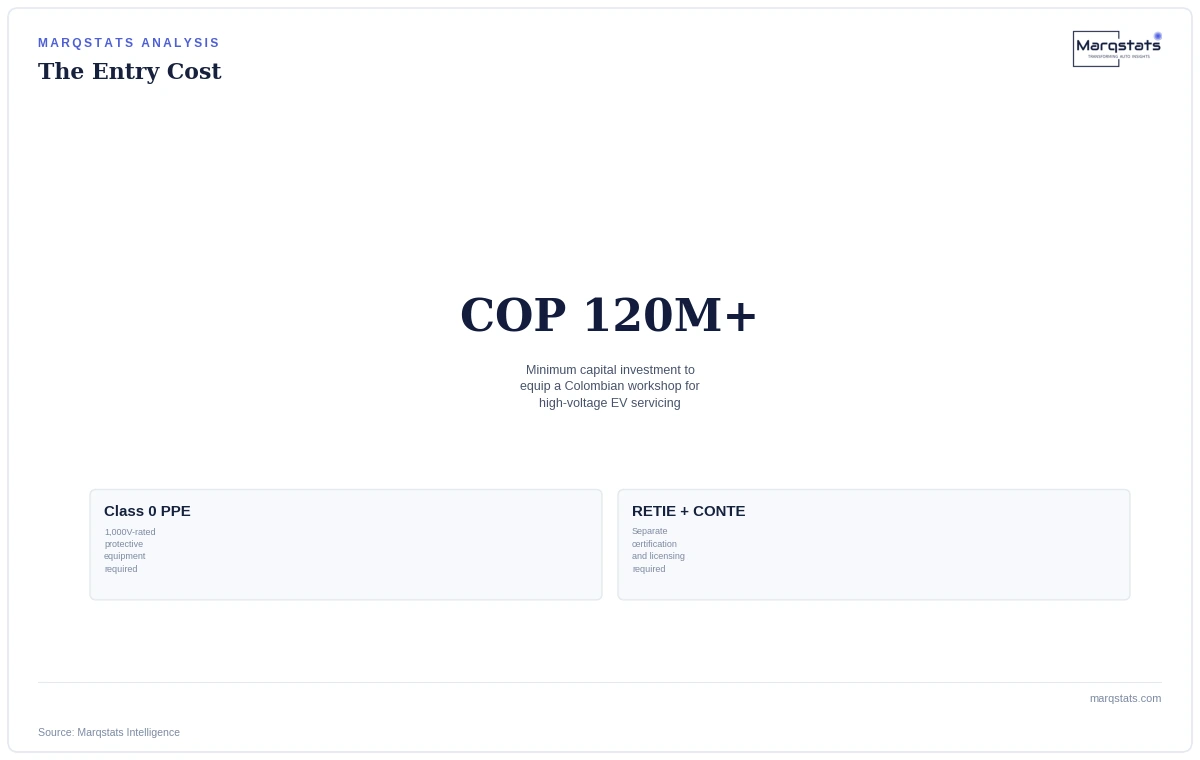
Outfitting a repair bay for high-voltage vehicles requires capital outlays exceeding COP 120,000,000. That figure covers Class 0 (1,000V-rated) personal protective equipment, insulated mechanic toolsets, high-voltage differential multimeters, specialized insulation resistance milliohmmeters, mechanical battery lift tables, and dedicated fire suppression systems for lithium-ion thermal events.
Why Certification Compounds the Cost
That second cost layer is easy to overlook when reading the headline capital figure alone.
That capital figure doesn't even include the separate cost of RETIE electrical safety certification and CONTE professional licensing technicians need to legally work on vehicles carrying 350V DC to 800V DC. Standard mechanical repair businesses typically lack technicians holding these credentials entirely, meaning the investment is really two separate costs stacked together: equipment and qualified people.
A Named Comparison: Why Software Access Compounds the Barrier Further
Recognizing this third layer changes how independent workshops should realistically plan their competitive positioning.
Even a workshop that clears both the equipment and certification hurdles still hits a third wall: access to proprietary diagnostic software environments like BYD's Vehicle Diagnostic System or Tesla's Toolbox application is restricted to authorized franchisees. That's a barrier no amount of capital investment in tools alone can solve -- it's a deliberate manufacturer access restriction layered on top of the physical and credential barriers already in place.
Why the Capital Barrier Is Genuinely Unlikely to Fall Anytime Soon
That durability is exactly what makes early investment genuinely valuable for workshops willing to commit.
None of the three cost components -- physical tooling, certified personnel, and diagnostic access -- show signs of becoming cheaper or easier to secure over the forecast period, meaning this specific barrier should be treated as durable rather than a temporary market-entry friction likely to ease on its own.
Workshops that plan for all three cost layers from the outset avoid the common trap of underbudgeting and stalling mid-investment.
What This Means for Independent Workshops Weighing the Investment
The practical takeaway: independent workshops evaluating whether to enter high-voltage servicing should treat this as a three-part investment -- equipment, certified people, and whatever diagnostic access can realistically be secured -- rather than assuming tooling alone clears the path to competing with authorized dealers on modern EV platforms.