A Gap That Should Be Closing
China's new energy vehicle fleet has scaled dramatically — from 31.40 million units in 2024 toward nearly 49 million by mid-2026. With that kind of growth, and with monthly starting salaries for qualified high-voltage technicians in Tier-1 cities running RMB 10,000 to RMB 18,000, nearly double traditional ICE mechanic pay, it would be reasonable to expect the technician workforce to be catching up.
It isn't. It's falling further behind.
The Numbers Behind the Widening Gap
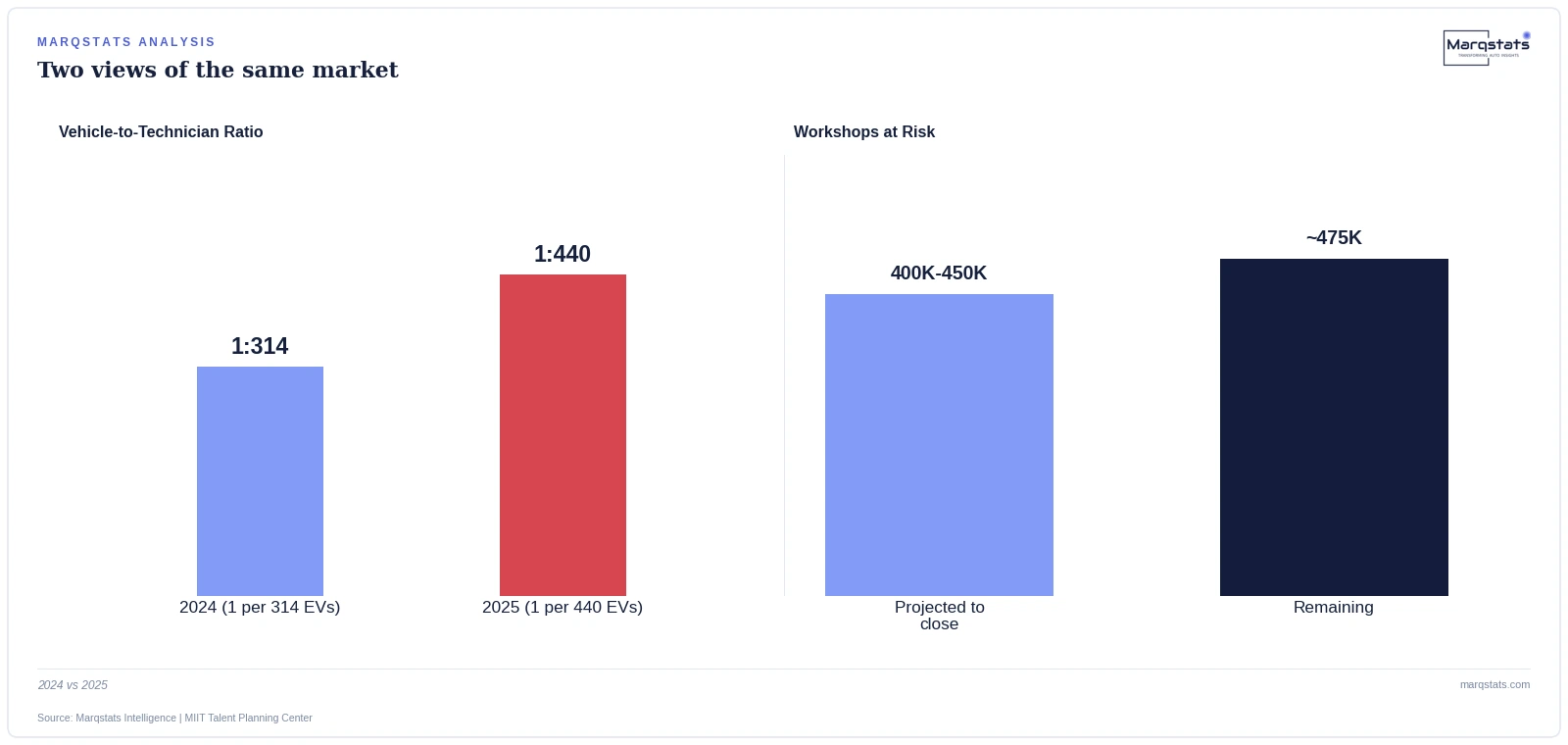
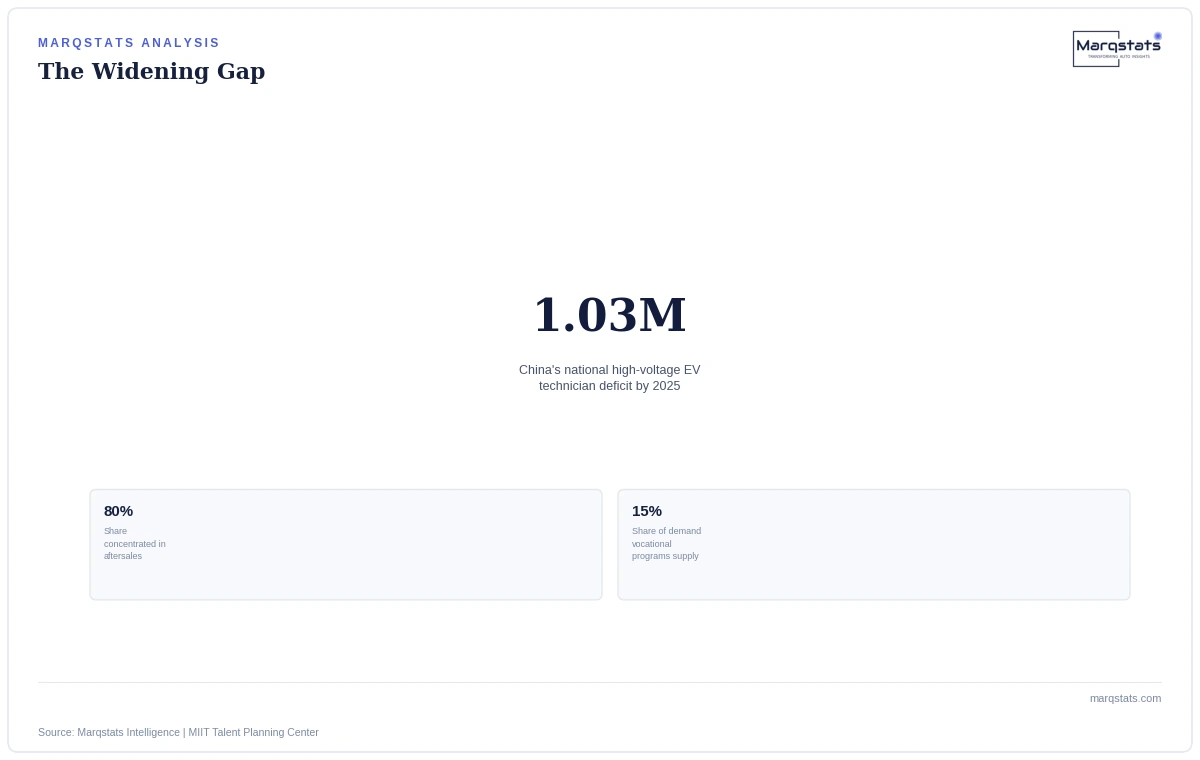
China's national high-voltage technician deficit reached 1.03 million personnel by 2025. Aftersales service and maintenance represents 80% of that gap — over 800,000 qualified technicians short. The vehicle-to-technician ratio actually widened over that period, from one certified technician per 314 EVs in 2024 to one per 440 EVs through 2025.
Why Higher Pay Alone Isn't Solving This
The strong salary premium is a genuine, powerful market signal — and it's still not enough, because the actual bottleneck sits further upstream. Vocational colleges and technical institutes have been slow to update curricula still built around internal combustion mechanics, fuel injection systems, and planetary automatic gearboxes. Graduating classes currently supply less than 15% of net annual aftermarket demand for qualified technicians.
What This Actually Costs the Industry
The downstream consequence is concrete and already being forecast: industry analysis from the China Automotive Maintenance and Repair Association projects that between 400,000 and 450,000 of China's roughly 900,000 traditional independent workshops will face consolidation, insolvency, or closure over the next five years — specifically because they cannot finance high-voltage tooling or recruit the certified technicians needed to service the fleet that already exists on the road.
A Named Comparison: Why This Differs From a Typical Skills Gap
Most industry talent shortages narrow over time as wage premiums pull workers in and training programs expand to meet documented demand — that's the standard self-correcting pattern. China's EV technician shortage is behaving differently: fleet growth is outrunning the training pipeline's response speed specifically, not because the incentive to train is missing, but because curriculum modernization and program capacity simply take longer to build than showrooms take to sell electric vehicles.
What This Means for Anyone Operating in This Market
The practical takeaway: any workshop, dealership, or investor evaluating China's EV aftermarket should treat the technician pipeline, not capital availability or consumer demand, as the binding near-term constraint on how quickly service capacity can genuinely scale — and should expect this constraint to persist for years, not resolve quickly through pay increases alone.