A Genuinely Large Cost Advantage
It's the kind of cost figure that would make a strong headline on its own, but it only tells half of what's actually happening in this market.
Santiago's electric transit buses cost meaningfully less to maintain than the diesel fleet they're replacing. That part of the story is straightforward and well documented. The more interesting part is what that cost advantage does to Chile's national maintenance market structure.
The Numbers Behind Both Halves of the Story
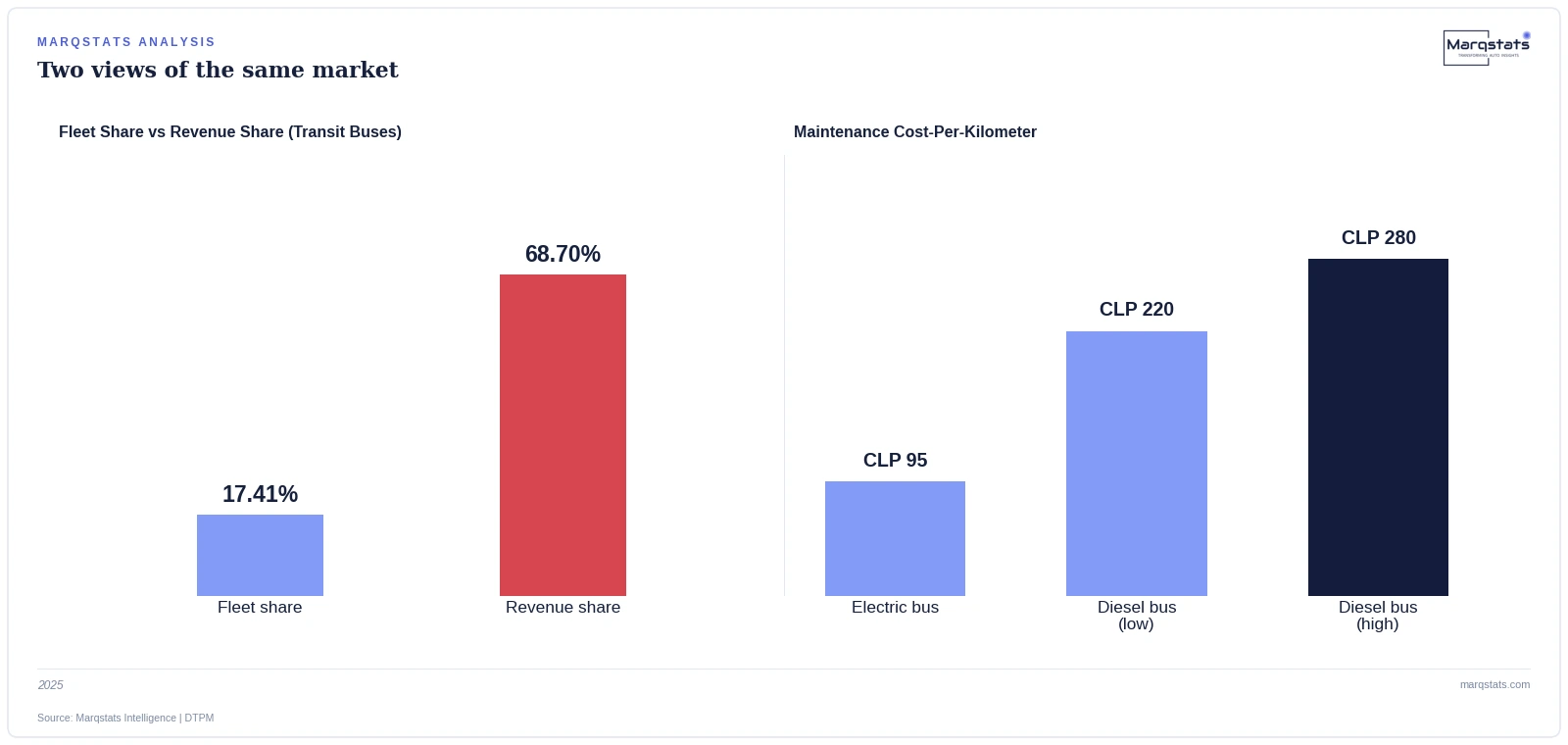
These specific figures trace directly to the underlying research's own reconciled sizing chain, not a rough estimate.
Electric transit buses cost CLP 95.00 per kilometer to maintain, against CLP 220 to CLP 280 for equivalent diesel buses on identical Santiago routes -- a 62.0% reduction. And despite that individual-vehicle cost advantage, transit buses collectively still generate 68.70% of Chile's total EV maintenance revenue, despite representing just 17.41% of the active plug-in fleet.
Why a Cheaper Vehicle Still Dominates Total Revenue
That distinction between per-unit cost and total market revenue is easy to conflate but genuinely matters here.
The two facts aren't actually in tension. A bus running 65,000 kilometers a year under a contractually enforced 98% availability mandate still generates far more absolute maintenance spend than a private car averaging 13,500 kilometers annually -- even at a meaningfully lower cost per kilometer. Scale and duty cycle intensity overwhelm the per-unit savings.
A Named Comparison: Why This Data Is Unusually Trustworthy
That reliability is worth flagging explicitly since it changes how much confidence to place in the headline figure.
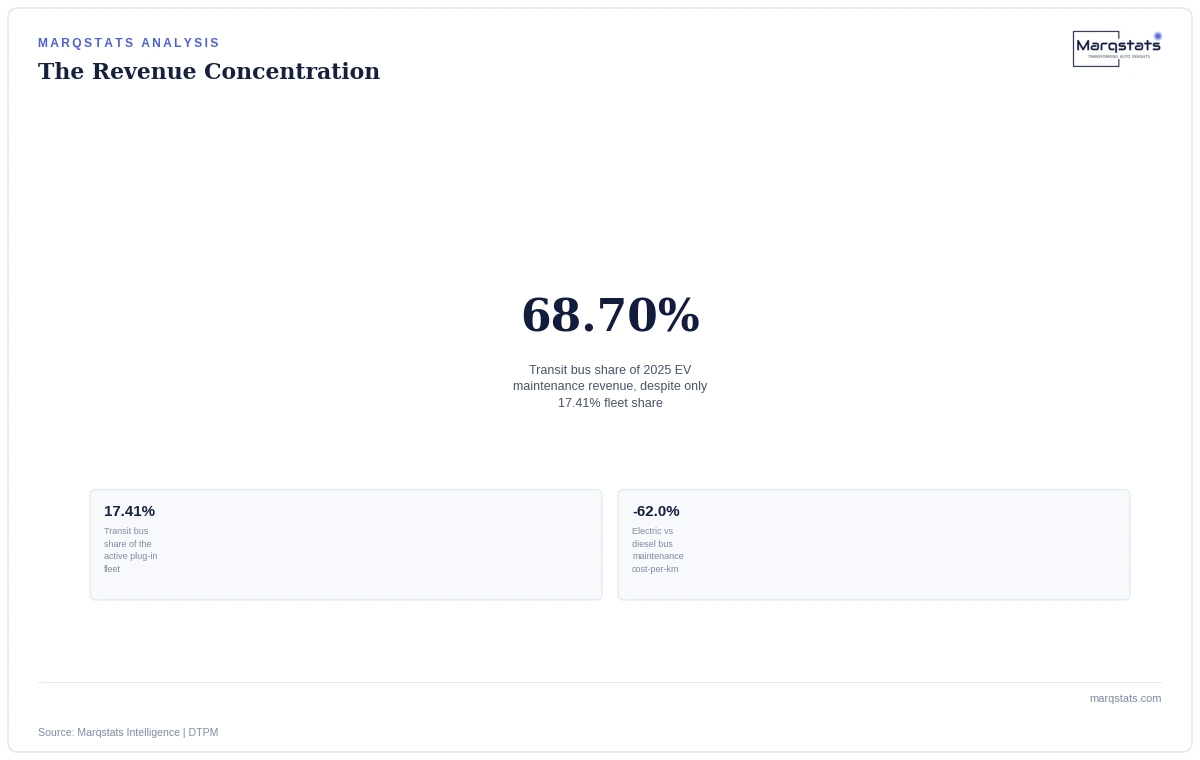
Most market sizing relies heavily on modeled estimates layered on top of registration counts. Chile's transit figures are different: public concession disclosures and DTPM reporting provide direct verification for 68.70% of the entire national market's value -- meaning the headline number for this market isn't primarily a derived estimate, it's substantially a documented fact, backed by the same contractual reporting that governs DTPM's concession payments.
How Durable This Concentration Should Be Expected to Remain
Nothing about the underlying drivers points toward transit's share dropping quickly. Even the source's own Baseline projection shows transit buses retaining a substantial 42.24% of market value by 2030, a genuine decline from 68.70% but still the largest single vehicle segment, meaning depot-based capability remains strategically relevant well past the current forecast window.
What This Means for Anyone Assessing This Market
The practical takeaway: Chile's EV aftermarket opportunity is genuinely a transit-first market for the current forecast window, and depot servicing capability, telemetry systems, and concessionaire relationships matter more here than dealer-network coverage of private passenger vehicles.