
A Fraction of the Fleet, a Chunk of the Revenue
This isn't a quirk specific to Brazil either -- it's a pattern that shows up anywhere heavy-duty commercial vehicles operate alongside a much larger population of private passenger cars, though Brazil's own municipal transit electrification push, anchored by Sao Paulo specifically, makes the effect unusually visible and well documented.
Municipal electric buses make up just 0.3% of Brazil's circulating electrified vehicle fleet by unit count nationwide. They generate 9.9% of the country's entire EV maintenance market revenue.
The Math Behind the Gap
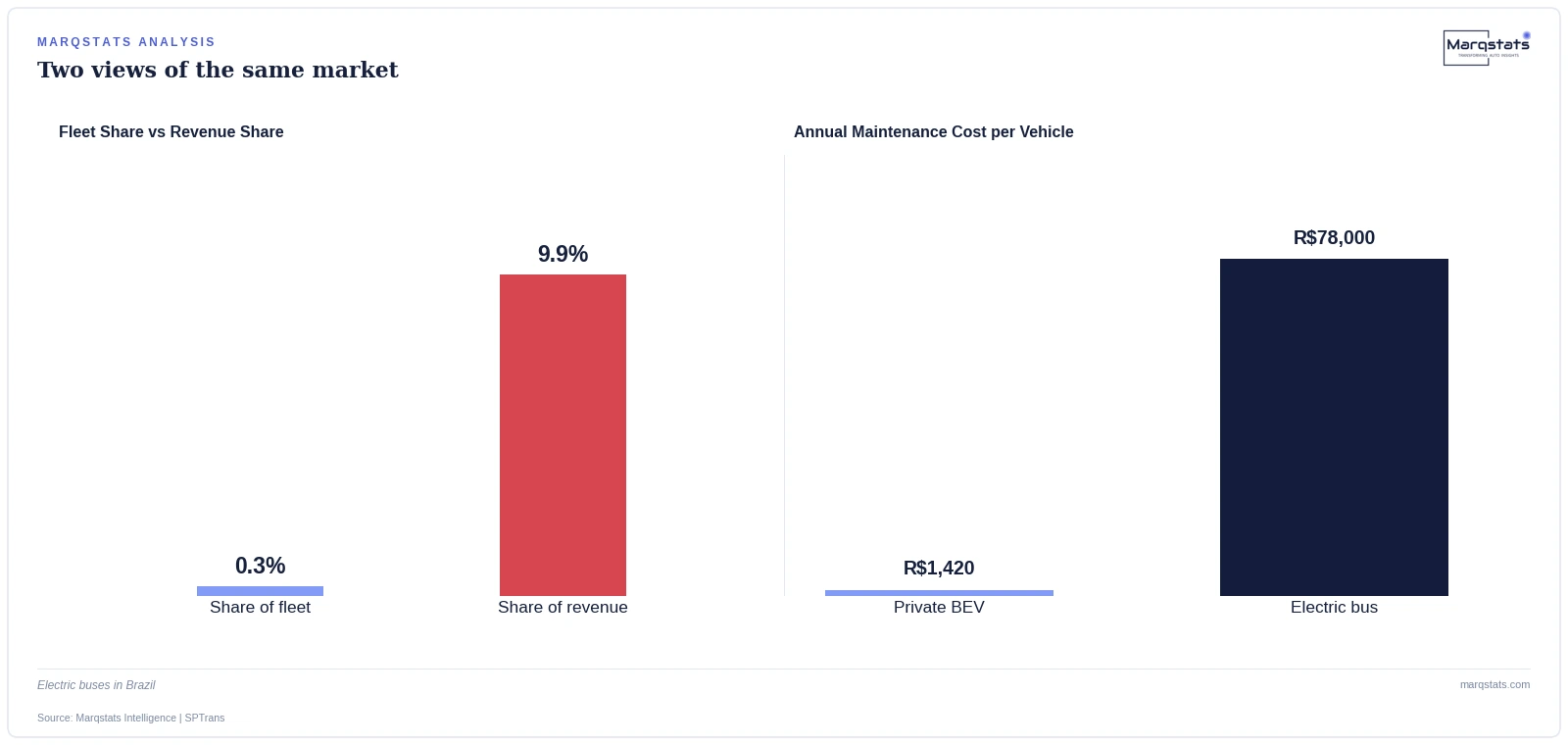
A single electric bus costs R$ 78,000 annually to maintain — roughly 33 times a typical private BEV's annual spend of R$ 1,420. Multiply a handful of buses by that gap, and their outsized revenue share stops looking surprising and instead starts looking like straightforward arithmetic.
Why the Cost Runs So High
High-mileage transit duty cycles across Brazil's largest cities demand frequent pneumatic brake servicing, chassis reinforcements, HVAC compressor overhauls, cooling fan replacements, and continuous structural battery thermal monitoring nationwide — a genuinely different maintenance profile than a private passenger vehicle covering routine commuting mileage ever generates.
Where This Concentration Actually Lives
São Paulo's SPTrans system anchors this category directly, operating the largest municipal battery-electric bus fleet in South America and expanding past 700 units by September 2024. That concentration is exactly why depot-level, dedicated 24/7 high-voltage service contracts have become a distinct commercial category of their own, separate from general passenger-vehicle service entirely.

A Named Comparison: Why This Differs From Passenger Vehicle Economics
A private BEV owner might visit a workshop once or twice a year. A municipal transit authority running hundreds of electric buses needs continuous, on-site depot support every day — a fundamentally different commercial relationship than routine dealership service, closer to an industrial maintenance contract than a typical car-owner interaction.
Why This Pattern Likely Repeats as the Fleet Grows
There's little reason to expect this concentration to fade as Brazil's broader EV fleet expands over the coming years. Heavy-duty transit vehicles will keep generating maintenance demand proportional to their mileage and duty cycle, not their unit count, meaning the same disproportionate revenue weighting should persist even as passenger vehicle adoption continues growing around it.
What This Means for Workshops and Fleet Service Providers
The practical implication: a workshop or service provider evaluating where to concentrate commercial investment nationwide should weight electric bus and heavy commercial fleet contracts far more heavily than their small unit-count share of the overall fleet would suggest at first glance, treating heavy-duty and municipal transit contracts as a distinct, higher-priority commercial category from routine passenger vehicle servicing.