A $10.1 billion deal to sell Castrol is still pending. Here's exactly what's actually confirmed.
In December 2025, bp plc announced an agreement to sell a 65% controlling interest in its Castrol lubricants business to investment firm Stonepeak Partners LP. It's a genuinely large transaction, and one that's easy to describe imprecisely if you're not tracking the specific regulatory status. Here's what's actually confirmed, and what still isn't.
What the deal actually involves
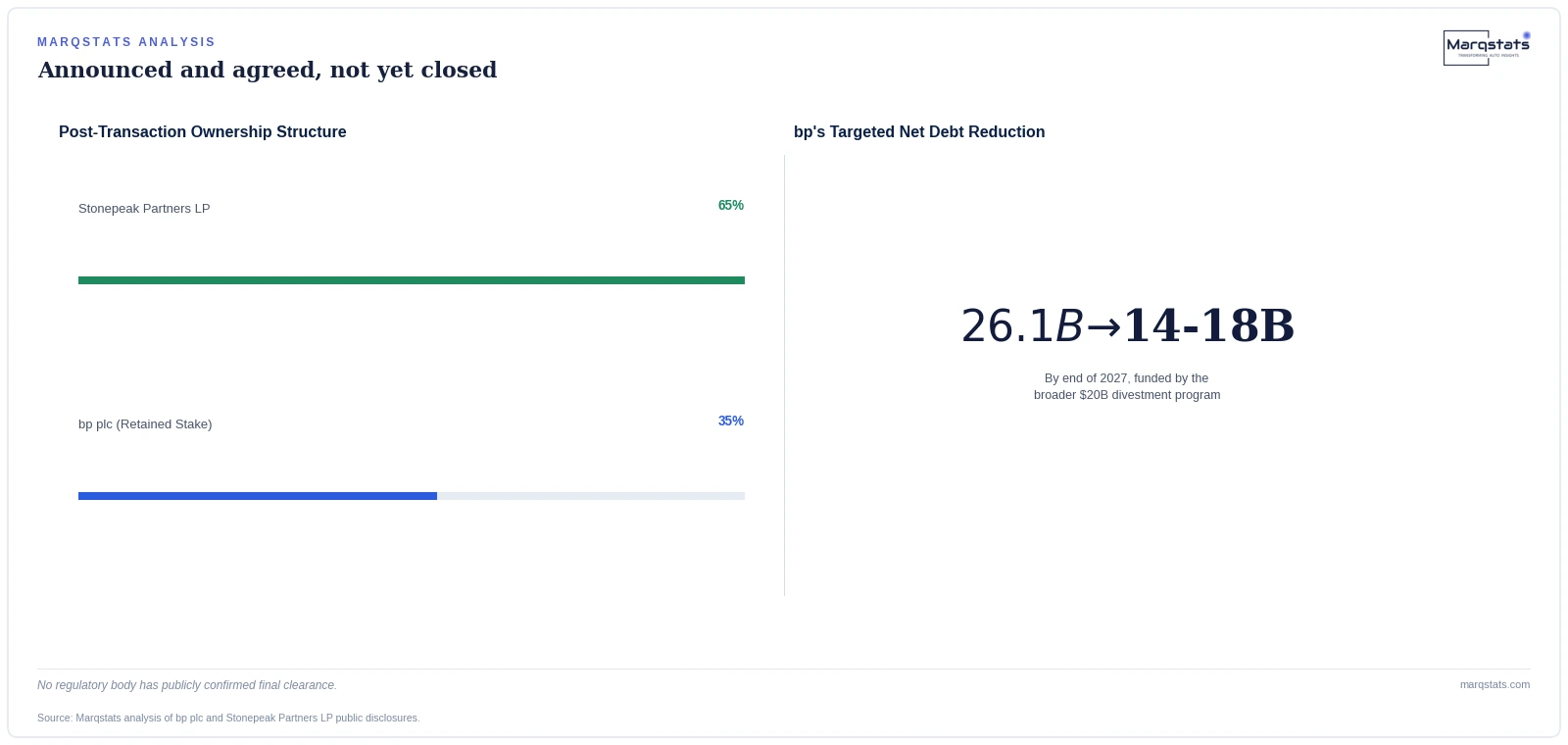
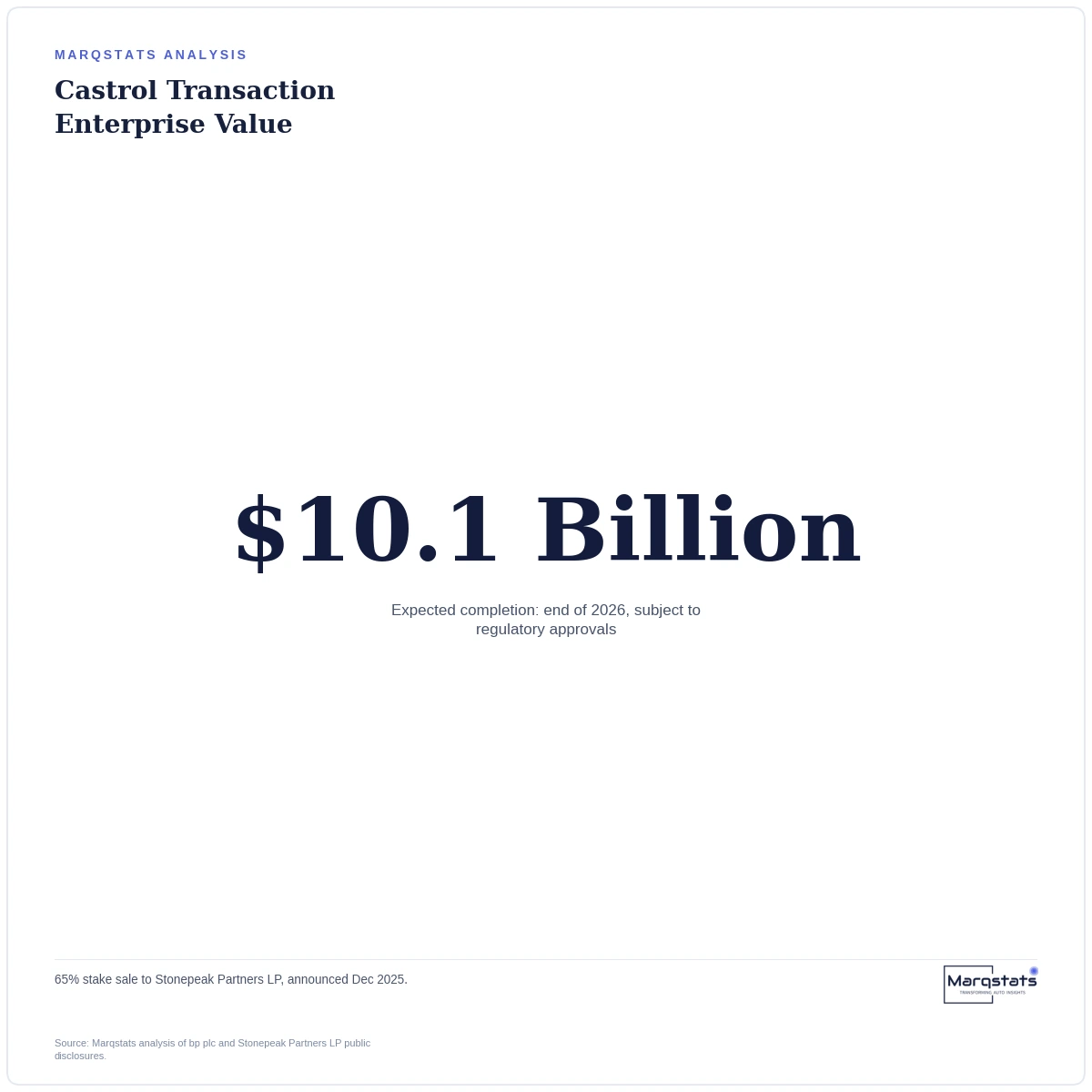
Under the terms announced, Stonepeak will acquire 65% of Castrol Limited, while bp retains a 35% minority interest through a newly formed joint venture. The transaction values Castrol at approximately $10.1 billion on an enterprise basis, with bp expecting total net proceeds of roughly $6.0 billion, including about $0.8 billion tied to accelerated dividend prepayments on its retained stake. bp has stated it will direct proceeds toward reducing net debt, part of a broader $20 billion divestment program aimed at bringing net debt down from $26.1 billion to a target range of $14 to $18 billion by the end of 2027.
Announced and agreed isn't the same as closed and cleared. The distinction matters here.
— Marqstats Analyst Team
What's still pending, specifically
Every public disclosure about this transaction, consistently, describes it as expected to close by the end of 2026, subject to customary regulatory approvals. That's meaningfully different from a completed transaction. Deals of this scale, involving a business with operations across dozens of jurisdictions, typically require clearance from multiple competition and antitrust authorities before they can formally close, and that clearance process can take months and occasionally surfaces conditions or required divestitures that change the deal's final shape.
As of this analysis, no regulatory body has publicly confirmed final clearance of the transaction. The deal remains in the announced-and-pending category, not the completed category, and market participants and industry commentary should reflect that distinction accurately rather than treating the December 2025 announcement as equivalent to a finalized sale.
Why getting this distinction right actually matters
This isn't merely a pedantic point about deal terminology. Castrol operates a genuinely global lubricants business, and its ownership structure has real operational implications for supply agreements, brand licensing arrangements, and strategic direction, including its stated ambitions in electric vehicle thermal fluids and now data center cooling chemistry. A business partner, competitor, or investor making decisions based on an assumption that Stonepeak already controls Castrol, when the transaction is still pending regulatory approval, could be operating on outdated or premature information with real commercial consequences.
What bp's continued involvement actually looks like
It's also worth being precise about what bp's role looks like even once this transaction does close. bp isn't fully exiting Castrol - it retains a 35% minority interest in the new joint venture structure, with an option to sell that remaining stake after a two-year lock-up period. bp has framed this retained stake as providing continued exposure to Castrol's growth trajectory, citing nine consecutive quarters of year-on-year earnings growth at the business. That's a meaningfully different outcome than a complete divestiture, and it's part of the full picture beyond the headline 65% stake sale figure.
The counter-argument: does the distinction between 'agreed' and 'closed' really matter for most practical purposes?
A fair objection is that once a major transaction has been publicly announced with specific, detailed terms, agreed to by both parties, and is broadly expected to close on a defined timeline, treating it as effectively decided, even before formal regulatory clearance, might be a reasonable practical shortcut for most commercial and analytical purposes. This is a defensible pragmatic view in many cases, and large announced transactions do close as agreed more often than not. What makes the precision worth maintaining here specifically is that regulatory review processes for transactions of this scale can occasionally introduce genuine changes, required divestitures in specific markets, timeline delays, or in rarer cases, deal restructuring, meaning treating an announced deal as fully final risks being wrong about details that could still change before the transaction actually closes.
What this means for industry participants and investors
- Business partners and competitors evaluating Castrol's strategic direction should track the transaction's actual regulatory clearance status directly, rather than assuming the December 2025 announcement represents a completed sale.
- Investors and analysts should monitor for formal regulatory clearance announcements from relevant competition authorities before treating Stonepeak's ownership of Castrol as finalized in any financial modeling.
- Industry commentators and market researchers should verify deal-status language carefully when characterizing large pending transactions, distinguishing announced agreements from completed closings.
Why bp is selling a business that's actually performing well
It's worth addressing a question the deal itself raises: why sell a lubricants business that bp itself describes as having delivered nine consecutive quarters of year-on-year earnings growth, and that analysts have characterized as highly cash generative with low volatility and low capital intensity? The answer, based on bp's own public statements, centers on portfolio simplification and balance sheet strengthening rather than any weakness in Castrol's underlying performance. bp has framed this sale as part of a broader $20 billion divestment program specifically aimed at reducing net debt and sharpening focus on its core oil and gas business, following a strategic review that the company said attracted broad investor interest in the lubricants unit.
Some financial analysts have publicly questioned this rationale. Analysts at RBC noted skepticism about the decision, beyond the headline valuation multiple, given the business's cash-generative profile, suggesting the sale prioritizes near-term debt reduction and accelerated dividend income over medium-term cash flow retention. That's a legitimate point of debate in financial markets, separate from the factual question of the deal's completion status, but it helps explain why a well-performing business would be sold in the first place.
What else is included in the transaction beyond the headline figures
The deal also includes a notable third party: the Canada Pension Plan Investment Board is contributing up to $1.05 billion for an indirect stake in Castrol as part of the broader transaction structure, alongside Stonepeak's primary acquisition role. This detail matters for understanding the full ownership picture that would emerge once the transaction closes, since it means Castrol's post-transaction capital structure involves more than the simple two-party bp-Stonepeak framing that headline coverage typically uses.
The full market picture
Marqstats' complete global automotive lubricants aftermarket analysis, including the full competitive landscape and corporate developments log, is available in the linked report below.
Related reportGlobal Automotive Lubricants Aftermarket Size, Share & Forecast 2026 – 2030