Two Regulatory Timelines Moving in Opposite Directions
It's easy to read a technical inspection reform and a used-car sales trend as two unrelated stories. Lined up on the same calendar, they reveal something genuinely distinctive about where an entire new service industry actually came from.
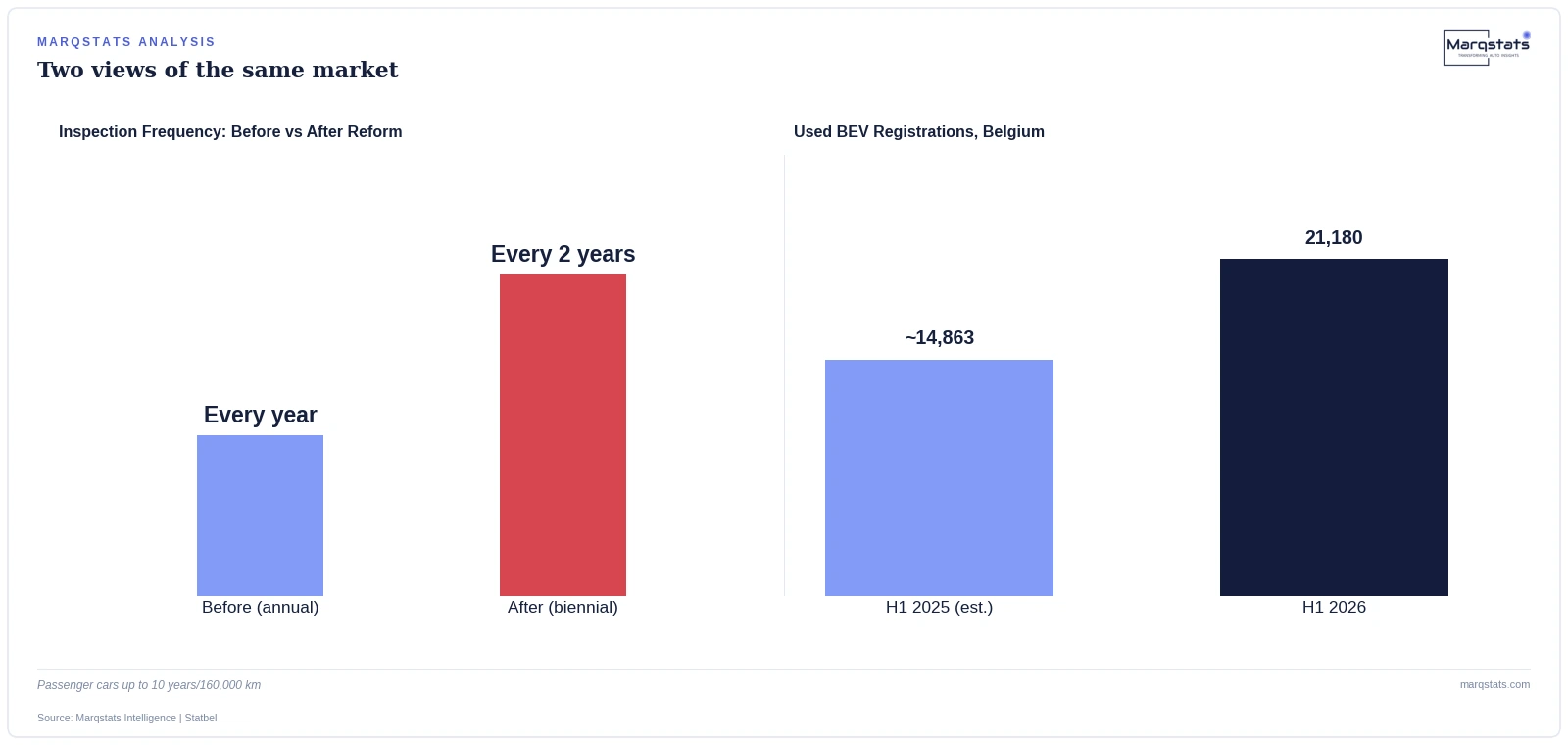
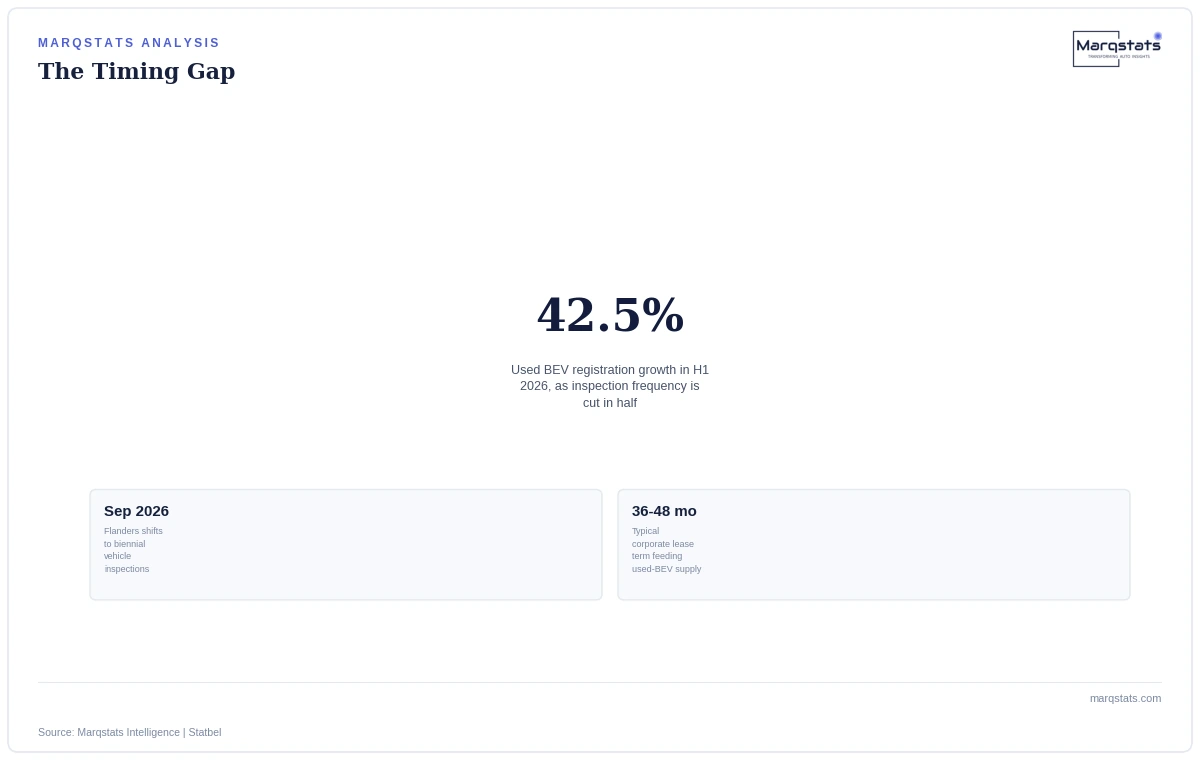
Starting September 1, 2026, Flanders shifts passenger vehicle roadworthiness testing from mandatory annual inspections to a biennial cycle for vehicles up to 10 years old or under 160,000 kilometers. That's a real, deliberate reduction in how often the state checks a car over.
The Numbers Behind the Timing
These specific figures trace directly to the underlying research's own registration and regulatory data, not a rough estimate.
At almost exactly the same moment the inspection reform takes effect, Belgium's used BEV market is accelerating fast: registrations rose 42.5% year-on-year in the first half of 2026 alone, reaching 21,180 units and 5.9% of the total used car market. The driver is straightforward -- corporate lease contracts typically terminate at 36 to 48 months, and that clock is now running out on the first large wave of Belgian corporate BEV adoption.
Why Fewer Checks and More Resales Is a Genuine Problem
The mismatch isn't abstract -- it lands directly on the exact vehicles that need scrutiny the most.
Fewer mandatory inspection visits are now coinciding with a surge in exactly the vehicle population that most needs independent verification before changing hands: aging, out-of-warranty, previously fleet-managed BEVs whose battery health is genuinely uncertain to a private buyer. A biennial inspection cycle means more time can pass between the moment a used EV enters the resale market and the next mandatory state check on its condition.
A Named Comparison: The Industry That Filled the Gap
That gap didn't stay unfilled for long, and it's worth naming exactly who moved into it.
Specialist independent diagnostic providers such as EV Batterij Controle now connect directly to a vehicle's onboard diagnostic port and battery management system to generate certified capacity reports -- documentation used specifically for Car-Pass mileage transfers and residual-value verification in second-hand sales. This is a private-sector service category that exists specifically because state oversight frequency dropped right as resale volume and battery-condition uncertainty both climbed at once.
Why This Pattern Should Persist Through the Rest of the Decade
Nothing about the underlying drivers on either side of this gap looks temporary.
The lease-return cycle generating used BEV supply is structural, not a one-time event -- corporate fleets will keep cycling vehicles out at 36-to-48-month intervals for as long as company car tax deductibility keeps favoring zero-emission vehicles. And the biennial inspection interval is now the standing rule, not a temporary pandemic-era adjustment. Both sides of this gap are durable, meaning the independent battery diagnostic category built to bridge them should keep growing rather than fade.
What This Means for Buyers, Sellers and Workshops
The practical takeaway: used-BEV buyers and sellers in Belgium should treat an independent battery State of Health report as a standard part of any resale transaction specifically, rather than assuming the statutory inspection cycle alone provides adequate verification given the extended interval now in effect.