The End of a Genuinely Frictionless Era
It's the kind of policy detail easy to overlook amid bigger EV adoption headlines, but it marks a genuine turning point in how owners actually relate to their running costs.
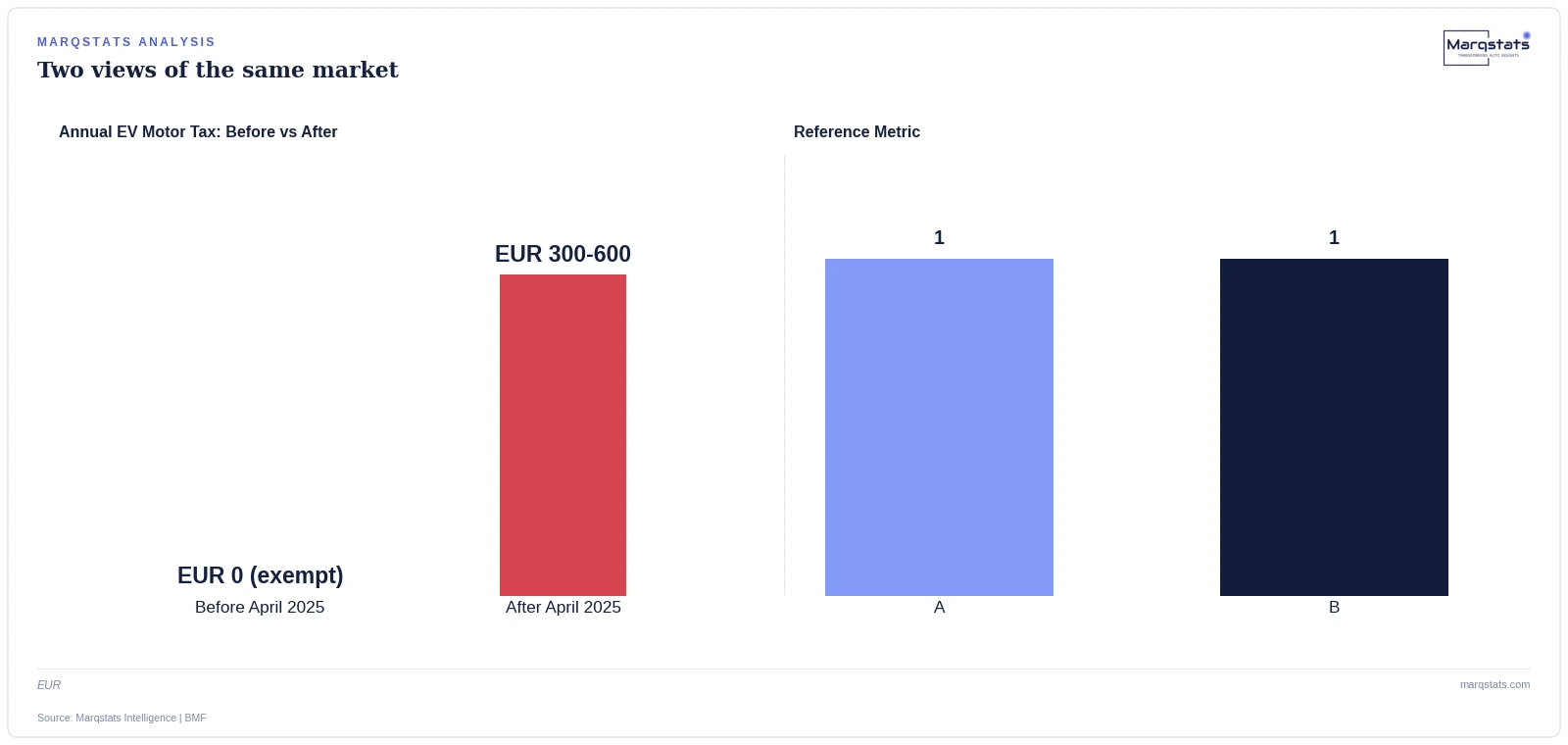
For years, owning an electric car in Austria meant a straightforward financial pitch: no fuel costs, no annual motor tax, minimal maintenance. That last part, the frictionless part specifically, ended on April 1, 2025.
What Actually Changed
The shift isn't small either -- for many owners, this represents the first recurring EV-specific cost line they've had to budget for since purchase.
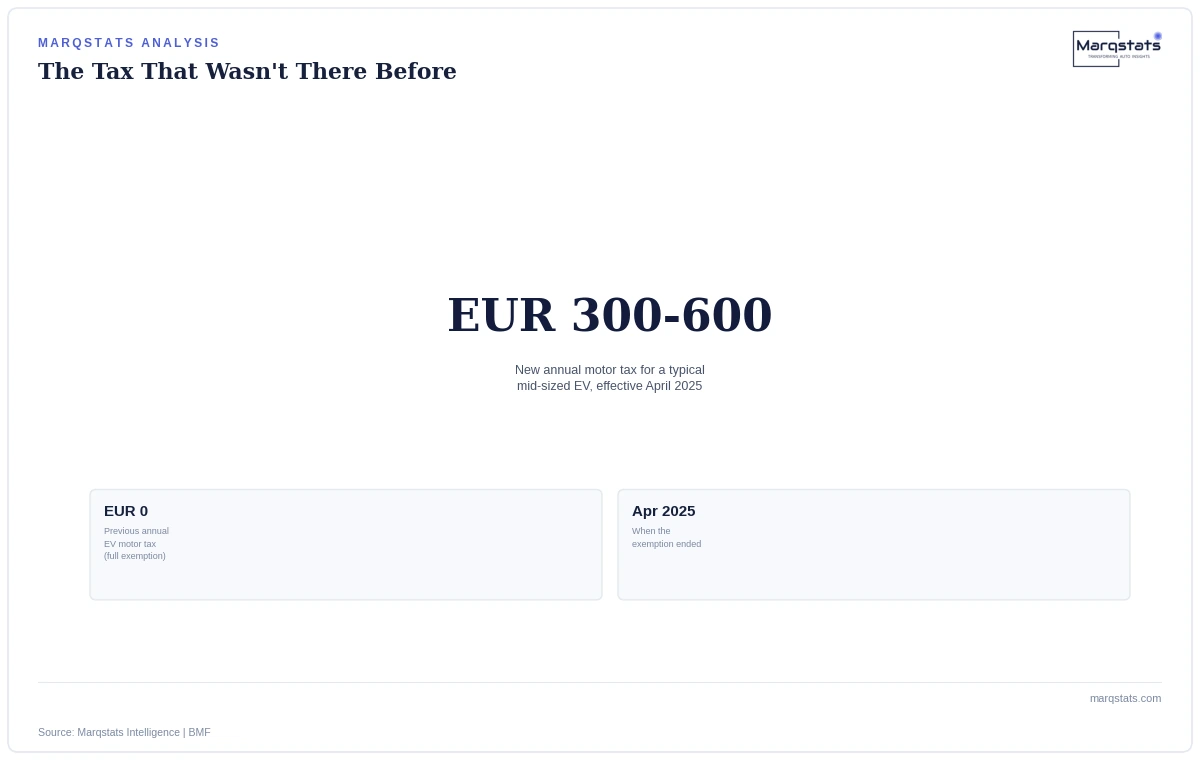
The Federal Ministry of Finance replaced the historical full tax exemption for pure electric passenger cars with a progressive structure based on curb weight and continuous motor output. For a common mid-sized EV, that translates to an annual running tax between EUR 300.00 and EUR 600.00 — a bill that simply didn't exist before.
Why a Tax Bill Is Reshaping Workshop Behavior
Here's the part that makes this genuinely interesting for the aftermarket specifically: the motor tax itself is a completely separate line item from any workshop invoice. It has nothing to do with maintenance pricing. And yet the underlying research documents a measurable shift in how owners approach every other cost decision — labor rate comparisons, aftermarket parts choices, whether to defer a preventative service.
A Named Comparison: Why This Differs From a Simple Price Increase
The distinction is worth holding onto when thinking through workshop strategy.
A workshop raising its own labor rates would produce a predictable, contained reaction — customers compare prices, some switch providers, demand adjusts. This is different: it's a policy change entirely outside the workshop's control that's nonetheless changing customer psychology toward every workshop transaction. Owners who previously treated EV running costs as essentially solved are now scrutinizing costs they might have waved through a year earlier.
Why This Shift Is Likely Permanent
There's no realistic path back to the previous exemption structure. Austrian fiscal policy rarely reverses a revenue-generating tax once implemented, and the weight-and-output calculation is now embedded in the same statutory framework governing combustion vehicle taxation, meaning EV owners should plan around sustained cost-consciousness rather than a temporary adjustment period.
What This Means for Workshops Going Forward
The practical takeaway: workshops should expect continued downward pressure on discretionary service upsells and greater price sensitivity on routine maintenance specifically, and should consider transparent, itemized pricing as a genuine differentiator now that EV owners are comparison-shopping the way ICE owners always have.