Two Reforms, One Good Intention
Australia built two pieces of regulatory infrastructure specifically to give independent workshops a fair shot at servicing EVs. AS 5732:2022 sets the safety standard for high-voltage repair work. The Motor Vehicle Information Scheme (MVIS), administered by AASRA, gives certified independent technicians the same OEM diagnostic data access franchised dealers already have.
Both reforms genuinely work as designed. Neither one, on its own, explains why a two-speed aftermarket is emerging anyway.
The Cost Nobody Waives
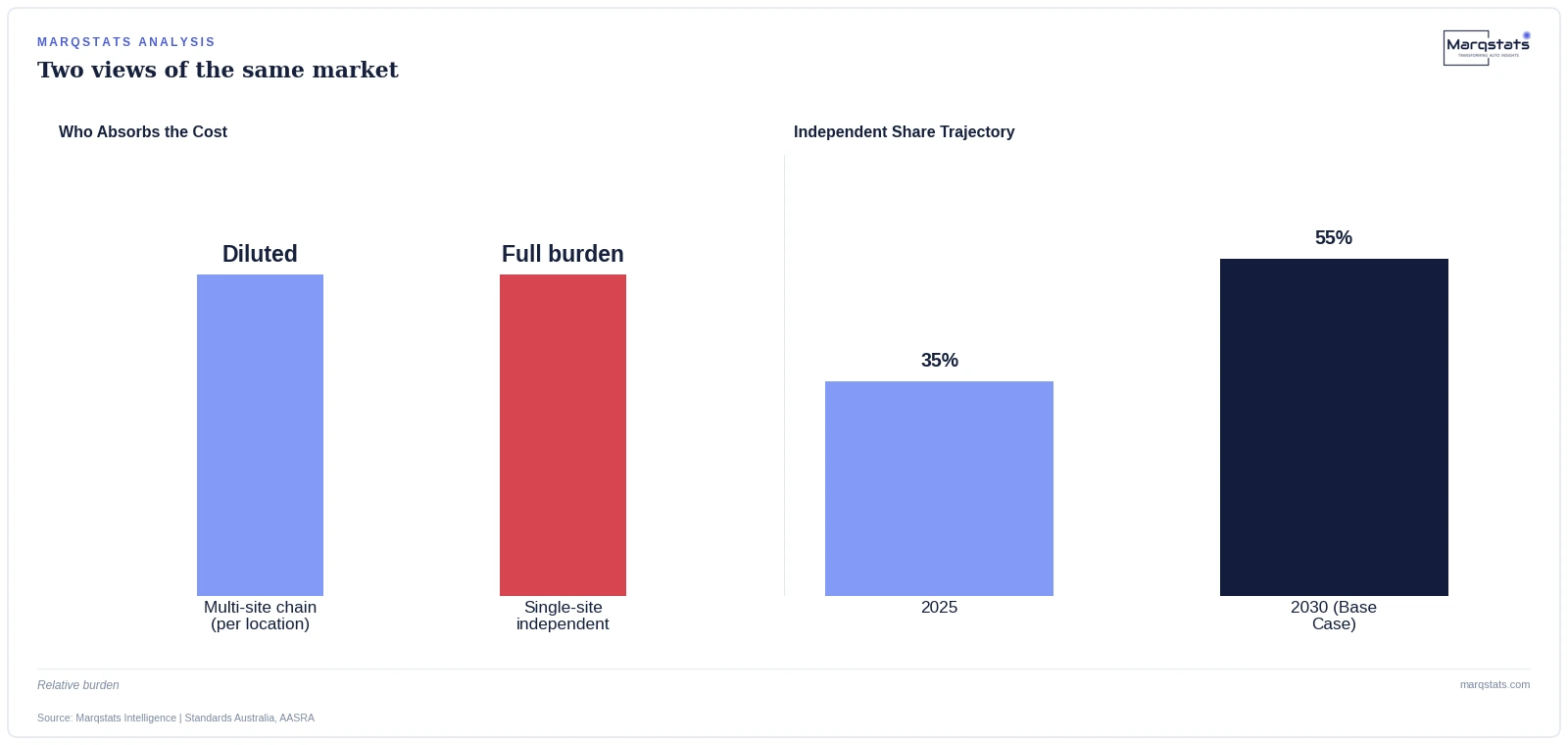
Meeting AS 5732:2022's requirements — insulated tools, Class 0 PPE, barrier-isolated bays — costs a workshop AUD 15,000 to AUD 35,000 upfront. That's before a single AURETH102-certified technician is trained or a single high-voltage repair is performed.
Who Can Actually Absorb That Number
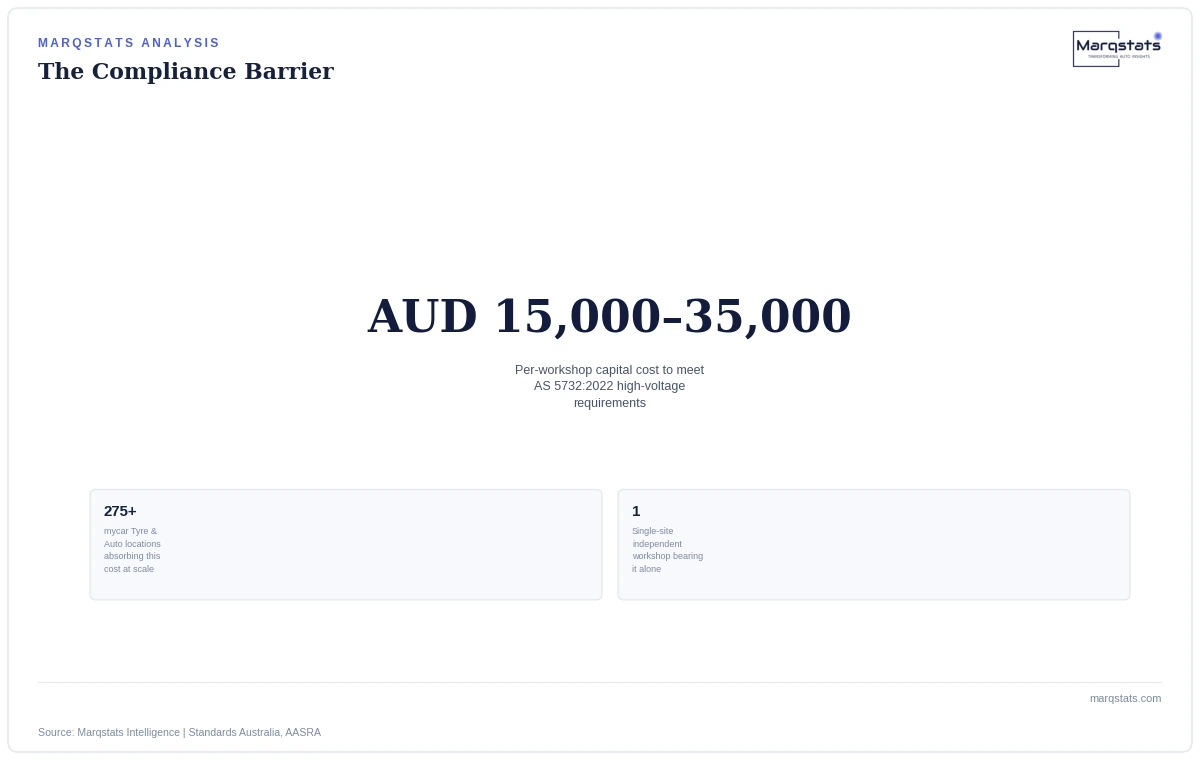
For a multi-site operator like mycar Tyre & Auto, with 275-plus locations, that capital cost spreads across a genuinely large network — a rounding error relative to overall operating expenditure. For a single-site independent garage, it's a direct, immediate hit to working capital, with no guarantee that enough local EV volume exists yet to pay it back quickly.
Why This Produces Consolidation, Not Just Delay
The underlying research is explicit about where this leads: the compliance gap is "accelerating private equity and corporate consolidation within the Australian automotive services sector." A regulatory framework built to level the playing field between independents and dealers is, in practice, tilting the playing field within the independent sector itself — toward operators large enough to absorb the entry cost, and away from the single-site garages MVIS was arguably designed to protect most directly.
A Named Comparison: How BYD's Partnership Model Fits In
BYD's own market-entry strategy in Australia illustrates the same dynamic from a different angle: rather than building proprietary dealer infrastructure from scratch, BYD partnered directly with mycar — an operator that already had the scale to absorb compliance costs across its network. That's a genuinely efficient move for BYD. It also means the OEM partnership itself reinforces, rather than counteracts, the consolidation pressure already building beneath it.
The Scale This Represents
This isn't a marginal effect on a handful of workshops. Australia's independent aftermarket spans thousands of individual businesses, the overwhelming majority operating from a single site. If the compliance-cost barrier genuinely concentrates high-voltage servicing capability among only the largest chains, a meaningful share of the country's existing independent workshop capacity could find itself structurally locked out of the fastest-growing segment of its own industry.
What This Means for Anyone Entering Australian EV Repair
The practical takeaway for a prospective independent entrant: treat the AS 5732:2022 capital outlay as a scale decision, not just a compliance checkbox. Entering as a genuinely single-site operation into high-voltage servicing carries real financial risk that multi-site operators, by design, don't face to the same degree.