The Largest Downstream Deal in Argentina in a Decade
It's the kind of transaction that gets described in superlatives, and in this case the superlative actually holds up against the numbers.
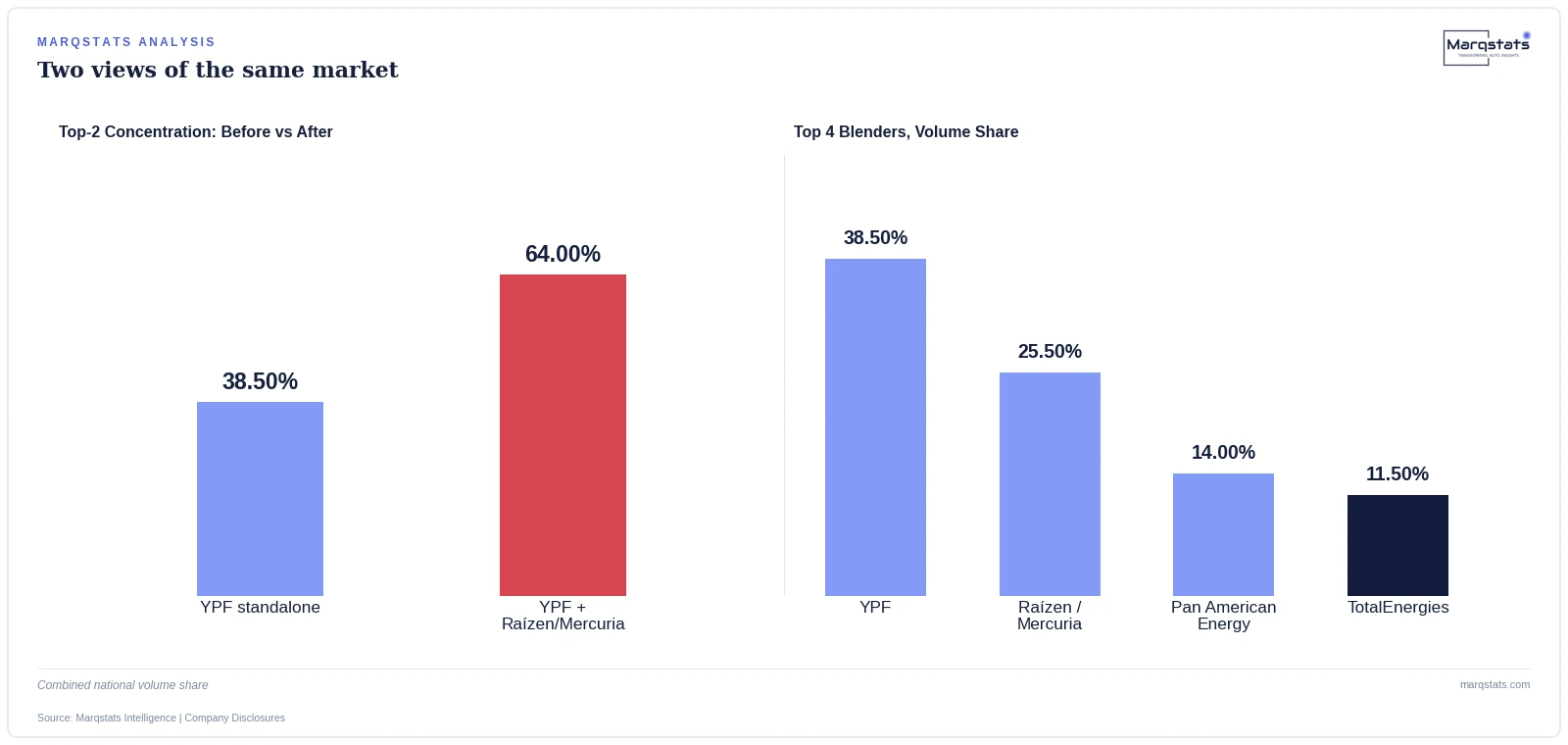
In September 2026, Swiss commodity merchant Mercuria Energy Group completed a USD 1,420 million acquisition of Raízen Argentina's entire downstream business -- the Dock Sud refinery, the Buenos Aires lubricant blending plant, and 894 service stations. The underlying research describing this deal calls it the largest downstream corporate reorganization in Argentina in over a decade, and the asset list makes clear why.
What Actually Changed Hands
These specific figures trace directly to the underlying research's own competitive registry, not a rough estimate.
Raízen held the second-largest position in Argentina's lubricants market with a 25.50% volume share, operating under an exclusive trademark license for the Shell brand. Mercuria's purchase transfers control of the refinery, the blending plant, and the entire 894-station retail network to the new owner -- while the Shell brand license itself continues uninterrupted, meaning the stations keep their signage even as the ownership behind them changes entirely.
Why This Deal Is More Than a Change of Logo on a Balance Sheet
The strategic logic here goes well beyond simply owning more service stations -- it's about what Mercuria already controlled before this purchase.
Mercuria brings upstream crude equity in the Vaca Muerta shale formation through Phoenix Global Resources. Combining that upstream position with the Dock Sud refinery and the Shell-licensed retail network creates something Argentina's lubricants market hasn't had before: a single owner spanning shale crude production all the way through to the forecourt pump. That's a genuinely integrated supply chain, not just an expanded distribution footprint.
A Named Comparison: Why This Directly Challenges YPF
The combined scale here is worth stating plainly, since it changes the competitive map more than either company's standalone position did.
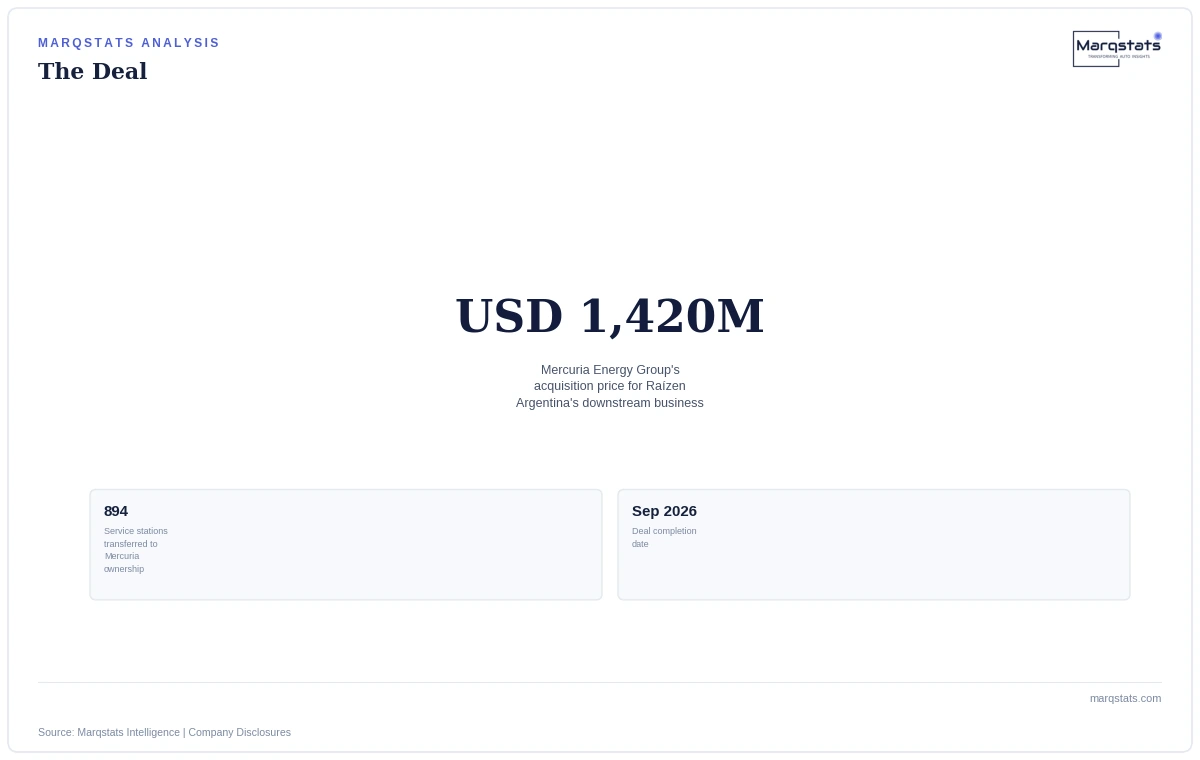
State-controlled YPF holds market leadership with a 38.50% volume share. Raízen, now under Mercuria, held 25.50% standalone. Combined, the top two players now represent 64.00% of national lubricant volume -- and for the first time, YPF faces a competitor with genuinely comparable integrated infrastructure, rather than a collection of smaller independent players each holding a single-digit share.
Why This Should Matter Beyond the Transaction Itself
A deal of this size rarely stays contained to the balance sheet -- it tends to reshape how competitors around it behave.
Consolidation at this scale typically accelerates competitive responses elsewhere in the market: expect Pan American Energy and TotalEnergies to defend their respective 14.00% and 11.50% positions more aggressively, and expect independent blenders to feel increased pressure to find distribution partnerships rather than compete standalone against two integrated majors controlling nearly two-thirds of national volume.
What This Means for Suppliers and Independent Workshops
The practical takeaway: additive suppliers, independent lubricentro operators and smaller blenders should treat this acquisition as a signal to reassess distribution and partnership strategy specifically, given how directly a 64.00% combined top-two concentration changes the leverage dynamics across the entire supply chain.