Tata Motors tracked fuel efficiency. Then it turned that data into a parts business.
Most fleet telematics stories stop at the obvious value: track a vehicle, know where it is, maybe flag when it needs maintenance. Tata Motors' Fleet Edge platform did all of that too, but it kept going, connecting diagnostic data directly to a parts marketplace, and the result is a genuinely instructive example of how far telemetry can actually reach into a company's revenue.
The foundation: a platform built to scale
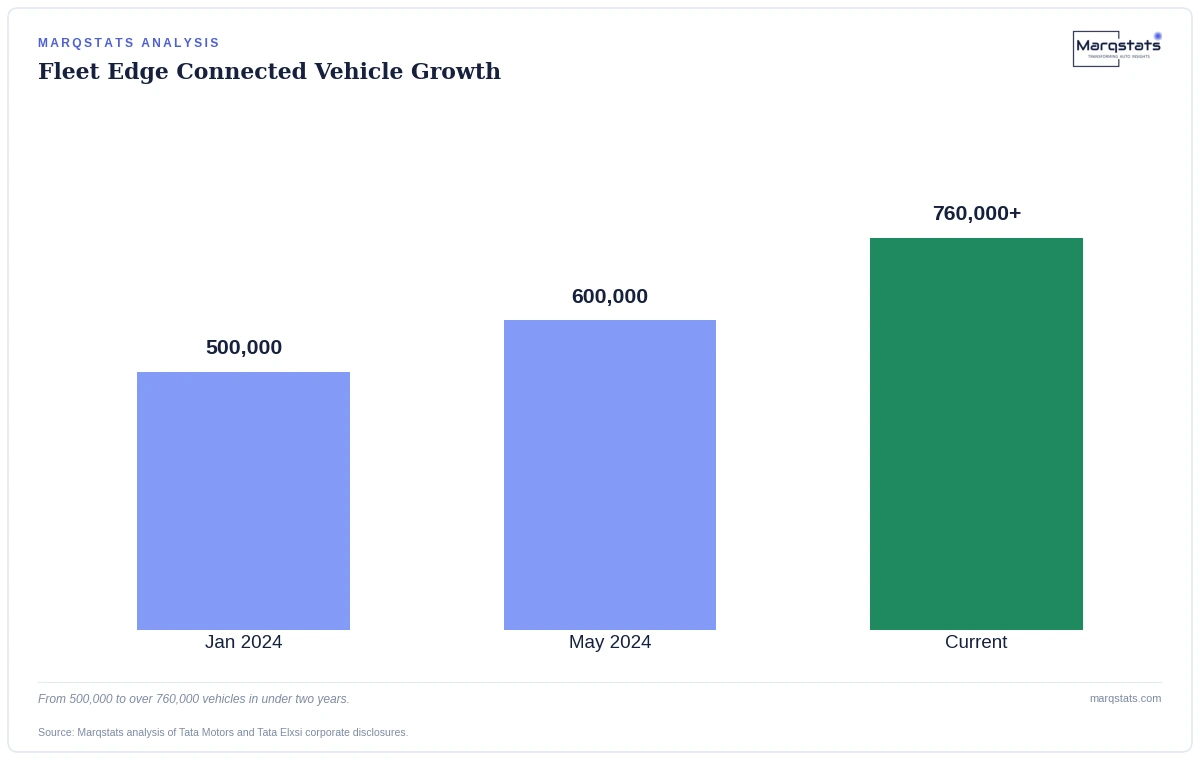
Fleet Edge runs on Tether, a cloud-native connected vehicle platform built by Tata Elxsi that serves as the backend across Tata Motors' commercial, passenger and electric vehicle lines. The scale is genuinely large: from 500,000 active vehicles in January 2024, the platform passed 600,000 by May of the same year and has since grown past 760,000, making it one of the largest commercial vehicle telematics deployments globally. Every vehicle on the platform carries 100% AIS-140 compliant hardware with a 4G SIM, factory-integrated across Tata's medium and heavy trucks, buses, and commercial electric vehicles.
Step one: turning raw driving data into fuel savings
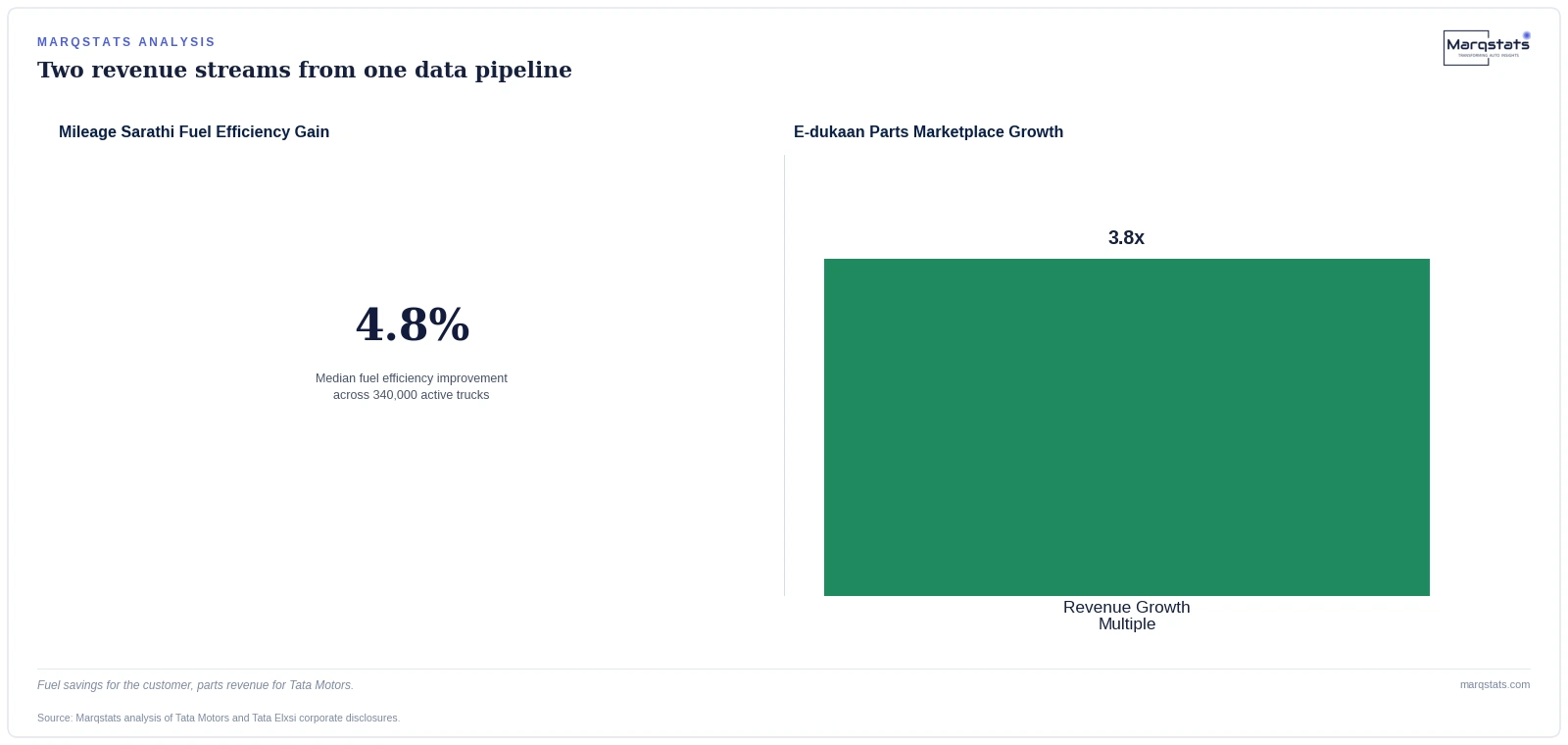
The first layer of value is a machine learning engine called Mileage Sarathi, which analyzes fuel consumption, torque profiles and gear-shift patterns across the connected fleet. Rather than just reporting fuel use after the fact, the system identifies specific driving behaviors, harsh acceleration, inefficient gear selection, excessive idling, that waste fuel, and feeds that back to fleet operators and drivers. Across 340,000 active trucks, this analysis has delivered a median 4.8% improvement in fuel efficiency - a meaningful number for commercial operators where fuel is typically the largest single operating cost.
The telemetry didn't just describe the problem. It got fed back into the truck's own driving behavior.
— Marqstats Analyst Team
Step two: turning diagnostic alerts into parts sales
Here's where Fleet Edge goes further than a typical fuel-efficiency dashboard. The same diagnostic telemetry that tracks fuel use also generates real-time prognostic failure alerts, flagging components likely to need service or replacement before they actually fail. Tata Motors connected those alerts directly to its E-dukaan digital parts marketplace, so a flagged component doesn't just generate a maintenance notification, it prompts preemptive parts ordering and automated service scheduling across the dealer network.
The commercial result of that connection is a 3.8 times revenue increase on the E-dukaan platform. This is the part of the story that distinguishes Fleet Edge from a typical telematics product: the data pipeline doesn't end at giving the fleet operator useful information. It closes the loop back to Tata Motors' own aftermarket parts business, creating a genuine revenue channel that a standalone diagnostic dashboard would never generate on its own.
Why this matters beyond one company's platform
Fleet Edge illustrates a pattern that the broader commercial telematics category across Asia-Pacific has struggled to fully replicate: connecting operational data not just to efficiency gains for the customer, but to a direct, measurable revenue stream for the platform operator. Many fleet telematics products stop at delivering insight to the fleet operator - useful, but monetized only through the subscription fee itself. Tata Motors built a second, distinct revenue layer on top of the same underlying data.
The counter-argument: is this replicable, or specific to Tata's unique position?
A fair objection is that Tata Motors occupies an unusually advantageous position to pull this off - it manufactures the vehicles, controls the dealer network, and owns the parts marketplace all under one corporate roof, meaning it can close this loop in a way that an independent telematics vendor without manufacturing or dealership control simply cannot. This is a legitimate structural advantage specific to vertically integrated OEMs rather than a technique any telematics company could adopt. What is more broadly replicable is the underlying principle: connecting diagnostic telemetry to a specific, monetizable downstream action, whether that's parts ordering, service scheduling, or insurance pricing, rather than stopping at dashboard reporting. The exact commercial mechanism Tata used may require its particular corporate structure, but the general strategy of extending telemetry value beyond pure monitoring is not.
What this means for fleet operators and telematics vendors
- Fleet operators evaluating telematics platforms should ask specifically whether diagnostic alerts connect to any actionable downstream process, not just whether the platform reports data accurately.
- OEMs with integrated manufacturing, dealer and parts operations should evaluate whether their own telematics investments are capturing comparable downstream revenue opportunities.
- Independent telematics vendors without OEM-level vertical integration should identify comparable downstream partnerships, such as insurance or third-party parts networks, to replicate the underlying monetization principle.
The full market picture
Marqstats' complete Asia-Pacific automotive data management market analysis, including the full commercial fleet telematics landscape, is available in the linked report below.
Related reportAsia-Pacific Automotive Data Management Market Size, Share & Forecast 2025 – 2029