Only 18% of Europeans Think Connected Car Features Actually Matter
European automakers have spent billions building connected-car software. European consumers, for the most part, have shrugged. European Commission research found just 18% of consumers rate connected services as essential when choosing a vehicle — and the gap between awareness and actual use is even starker than that headline number suggests.
The Awareness-to-Usage Collapse
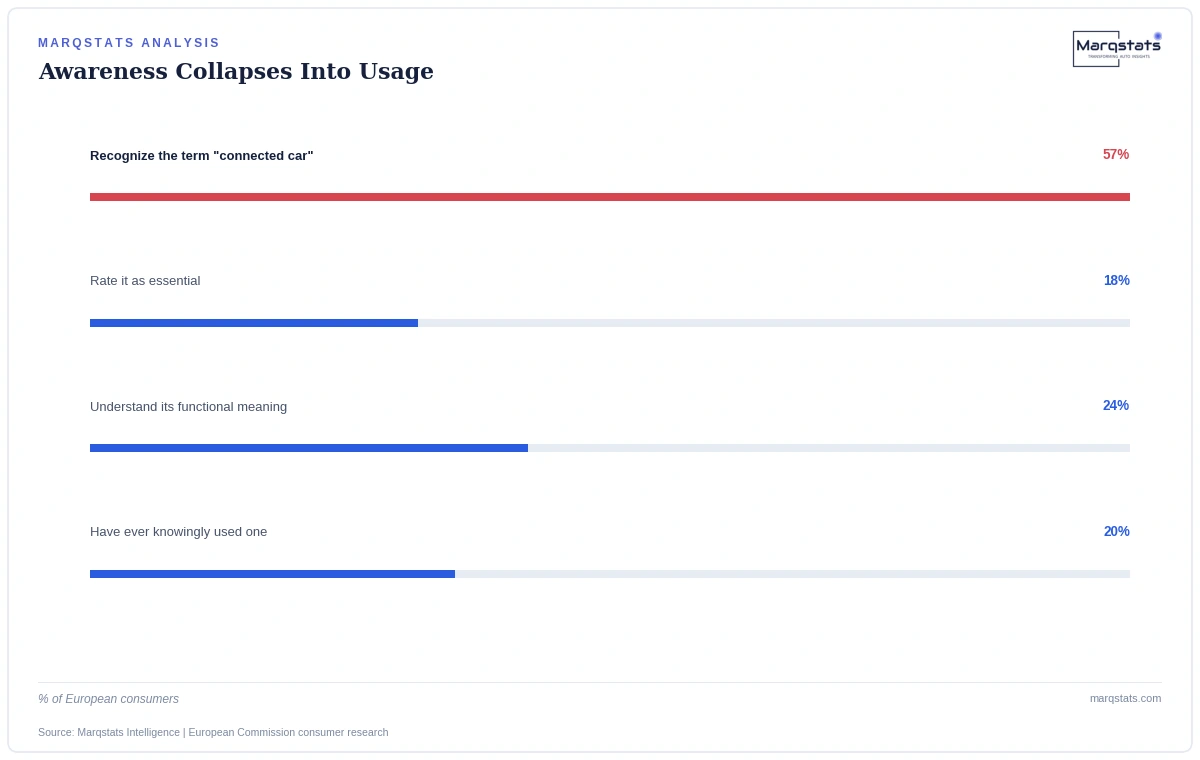
57% of European consumers recognize the term "connected car." That number collapses fast from there: only 24% can actually explain what it functionally means, and nearly 80% report never knowingly using a connected-car application at all. Recognition of the phrase, in other words, vastly outpaces any genuine engagement with what it describes.
The Gap Between Knowing the Term and Understanding It
That 57%-to-24% collapse — more than half of Europeans recognize the phrase connected car as a phrase, but fewer than a quarter can actually explain what it does — is arguably the more revealing number in this dataset. It suggests the marketing and media coverage around connected vehicles has succeeded at building brand-level awareness of the category, while completely failing to build genuine consumer understanding of what the category actually offers, let alone why anyone should pay for it.
What Happened When OEMs Tried to Charge for Basics
The clearest evidence of consumer resistance came when automakers tried monetizing physical functions consumers already assumed were included — heated seats, adaptive cruise control, smartphone integration — behind recurring monthly paywalls. The backlash was immediate and reputationally damaging enough that European OEMs have broadly pulled back from that specific approach, shifting monetization instead toward B2B fleet applications, usage-based insurance, and enterprise data licensing that doesn't require winning over an indifferent retail buyer at all.
Why This Doesn't Actually Kill the Business Case
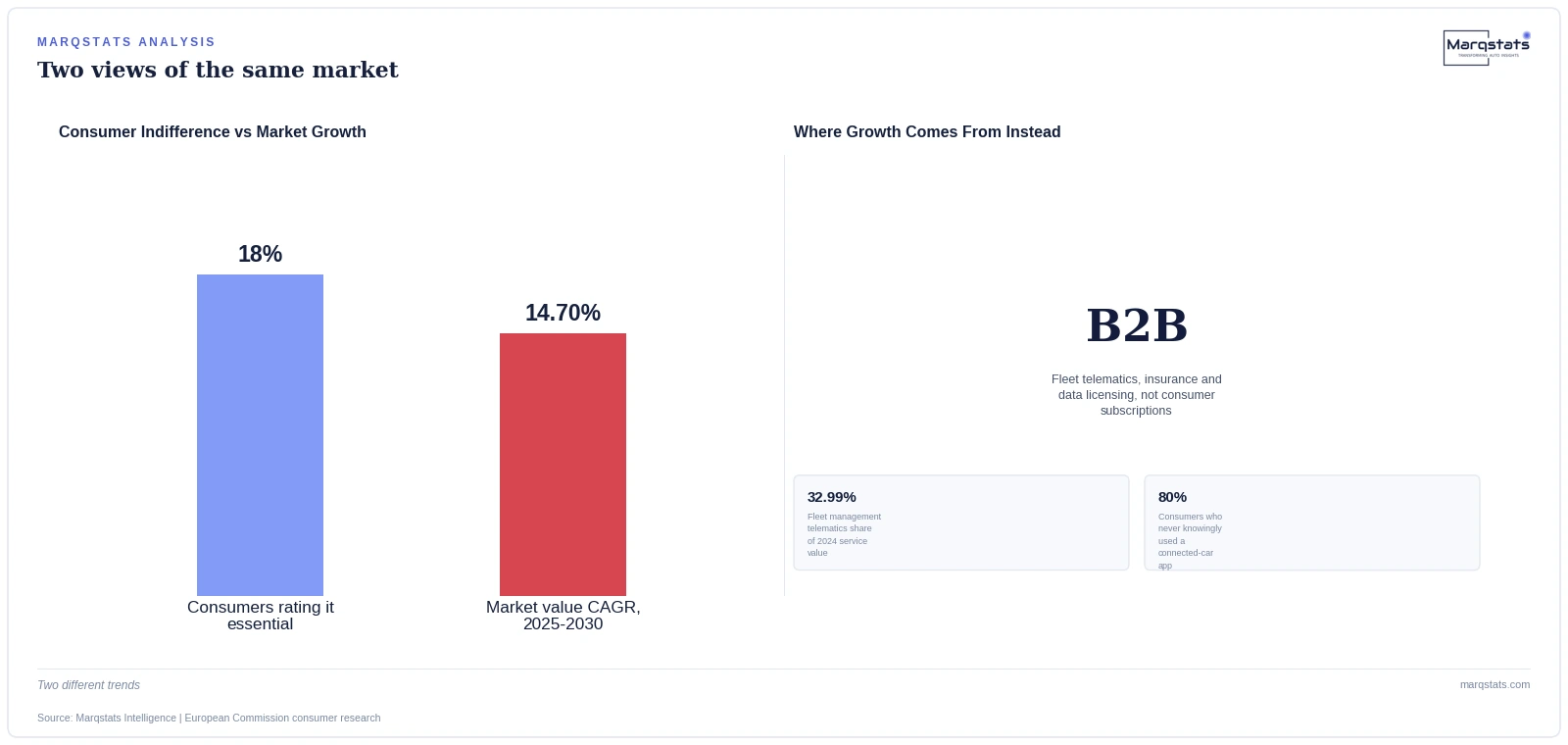
Here's the twist this data point doesn't immediately suggest: Europe's connected car market value is still forecast to grow at 14.70% annually through 2030, despite this documented consumer indifference. That's only possible because the growth isn't actually depending on consumers changing their minds — it's coming from commercial fleet telematics, usage-based insurance and data-as-a-service licensing, exactly the channels Stellantis's Mobilisights unit has already proven can generate real revenue independent of retail subscription uptake.
Why This Isn't Necessarily a Permanent State
None of this means European consumer sentiment is fixed forever. Awareness-to-usage gaps this wide often close over time as a technology category matures and genuinely useful applications become more visible — the equivalent survey run a decade from now, once Level 3 automated driving features and mature usage-based insurance products are more commonplace, could plausibly show very different numbers. But betting a near-term business case on that shift happening quickly, rather than building around the B2B channels already proven to work today, would be reading this data far more optimistically than the numbers currently support.
What the Data Says About Which Features Might Break Through
Not every connected feature faces the same resistance. Features tied to genuine safety or security — automated crash notification, stolen-vehicle recovery — face far less consumer pushback than features tied to convenience or entertainment, since the value proposition for the former requires no education at all: a driver understands why automated crash notification matters without needing to be sold on the concept, in a way that a premium navigation subscription simply doesn't.
The Practical Lesson for Anyone Building in This Space
If you're building a connected-car product for the European market, this data says something specific: don't build your business case around consumer subscription enthusiasm that the evidence says doesn't exist. Build it around the B2B, insurance and data-licensing channels this market has already shown can grow briskly without ever needing an indifferent retail consumer to care.