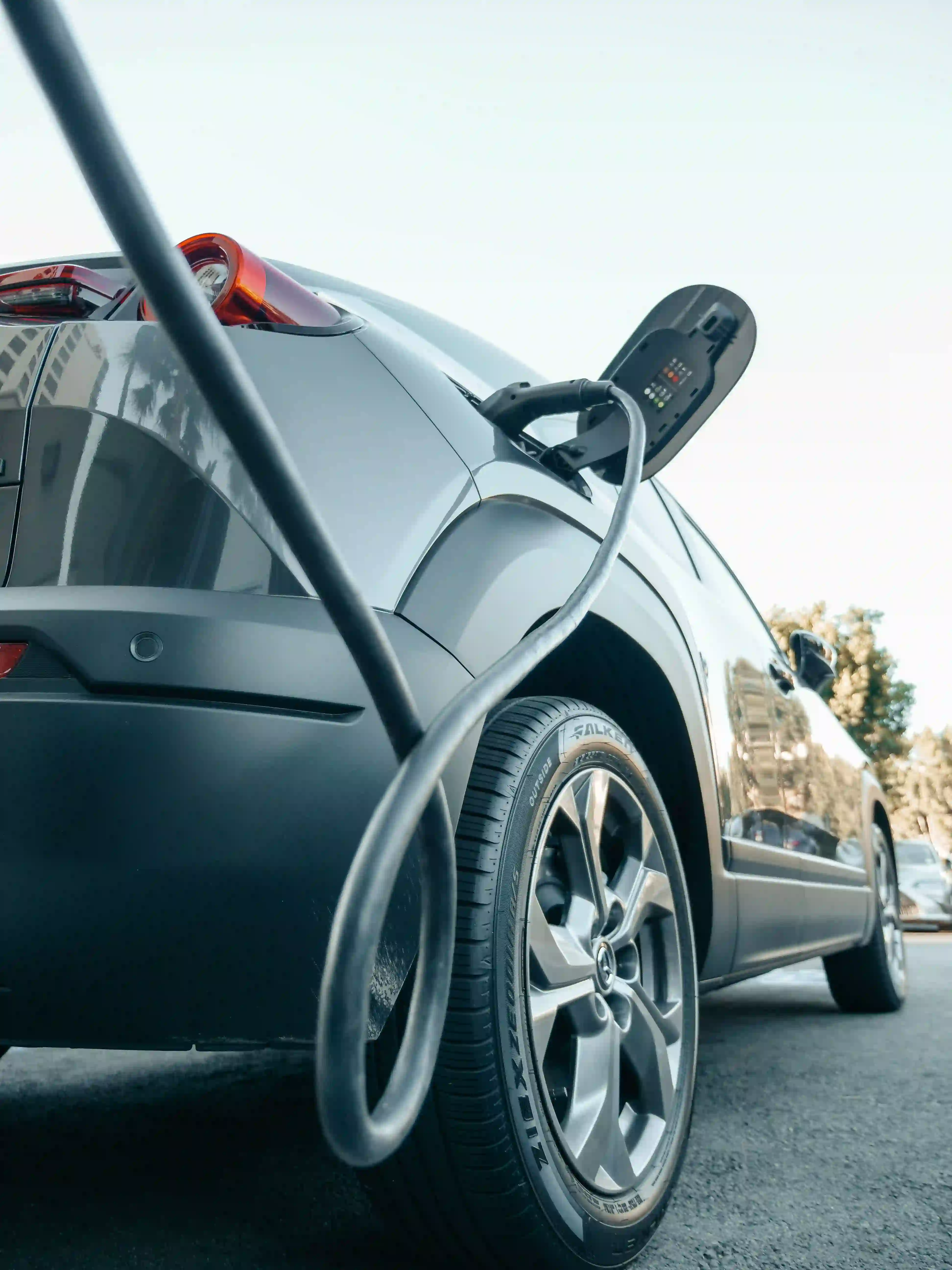
Japan Just Finished a 3G Shutdown You Probably Didn't Notice
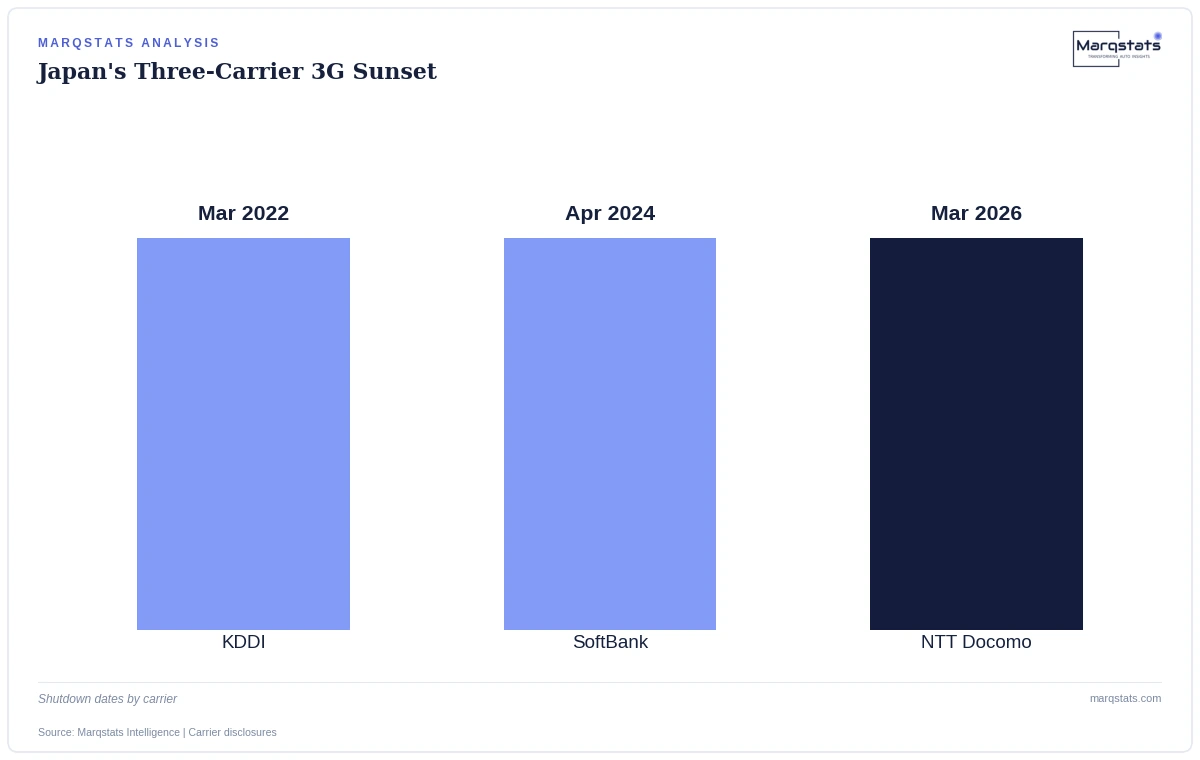
On 31 March 2026, NTT Docomo switched off its FOMA network, exactly on the date it had announced years in advance, closing out a transition Japan had been openly telegraphing since well before the shutdown itself. With that, Japan became one of the first major markets in the world to complete a full national 3G sunset across every carrier — KDDI in March 2022, SoftBank in April 2024, and now NTT Docomo. For millions of older connected vehicles, that shutdown was the final word on whether their factory telematics would ever work again.
What Actually Happened on Shutdown Day
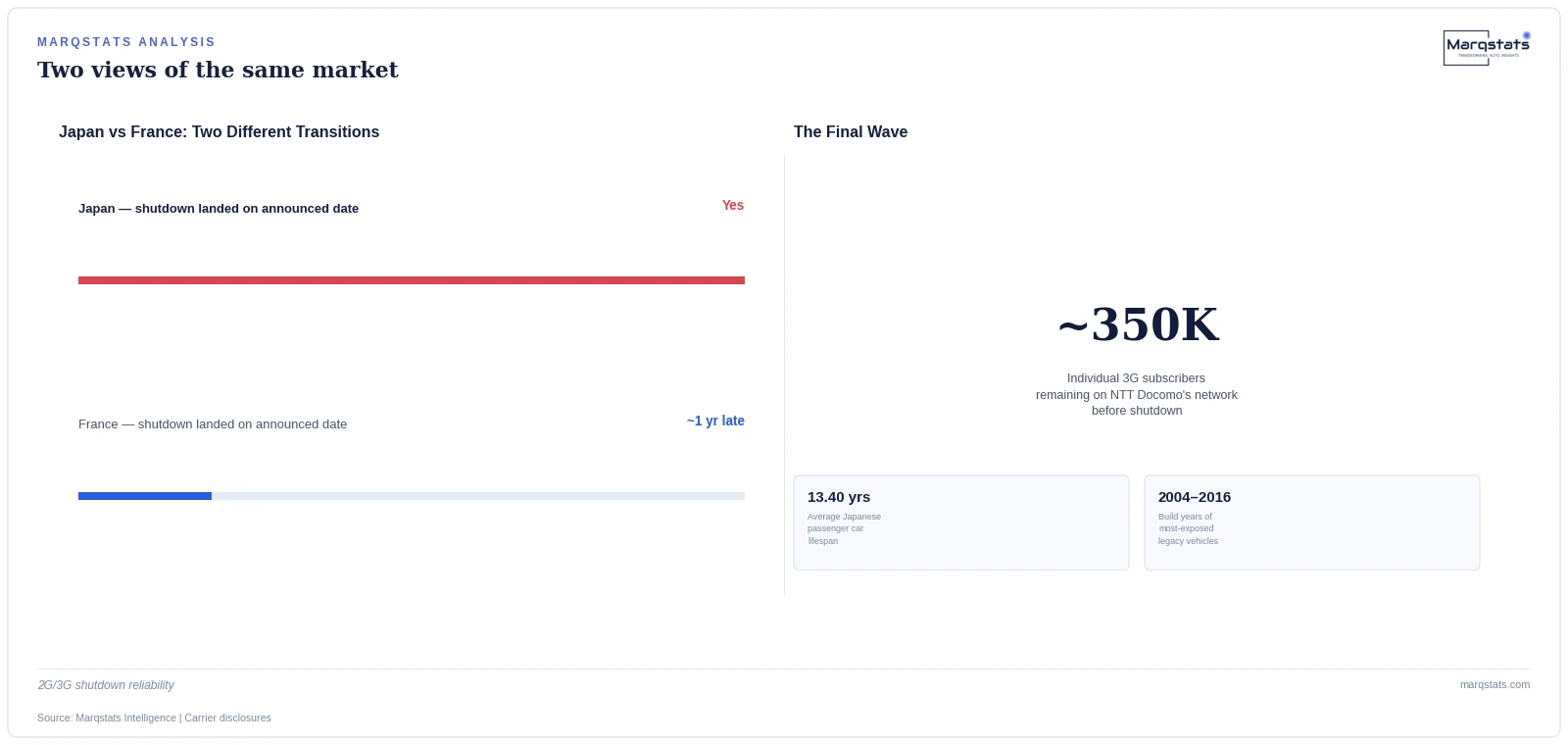
Roughly 350,000 individual 3G subscribers still remained on NTT Docomo's network in the weeks before the shutdown, according to Japanese wire-service reporting from mid-March 2026. Some of those connections were old flip phones. Others were vehicles — specifically, cars built with integrated, non-modular telematics units that had no path to a 4G or 5G upgrade. Early-generation Nissan CARWINGS, first-generation Honda Internavi and older Toyota G-BOOK systems, concentrated among vehicles originally manufactured between 2004 and 2016, lost emergency eCall, remote tracking and probe-based navigation permanently that day.
NTT Docomo itself acknowledged the age skew directly, noting that older users accounted for a disproportionate share of the remaining 3G base — a population that overlaps meaningfully with owners of older, fully-paid-off vehicles least likely to have already upgraded to newer, on 4G-native replacement models.
Why This Shutdown Went Differently Than Europe's
The contrast with what is currently unfolding in Europe is instructive, and worth spelling out before getting into the France comparison specifically and what it reveals. Cellular network sunsets are, in principle, entirely within a carrier's own control — there is no external regulator forcing the exact date, only the carrier's own commercial judgment about spectrum value versus customer disruption. That makes the gap between announced and actual shutdown dates a genuinely useful signal of how seriously a given telecoms market takes its own public commitments.
Compare this to what is happening in France right now, where Orange's own 2G shutdown began roughly a year later than its originally announced timeline and is still rolling out region by region through the end of 2026. Japan's carriers, by contrast, held their dates. KDDI's 2022 shutdown, SoftBank's 2024 shutdown, and NTT Docomo's 2026 shutdown each landed on or very close to their original public announcements, spaced roughly two years apart in a coordinated, predictable sequence rather than a scramble.
That predictability gave Japanese automakers and vehicle owners something France's 2G transition has not yet offered: a firm, reliable planning horizon. OEMs knew years in advance exactly when each generation of legacy hardware would stop working, and some — including select Lexus models from 2012 to 2016 — engineered 4G retrofit modules specifically to bridge the gap, even though owners had to bear the parts and labor cost themselves.
What Happens to a Car When Its Network Disappears
The practical effect is total and permanent for affected vehicles. A 3G-only DCM doesn't degrade gracefully — it simply stops transmitting the day the network goes dark. Emergency eCall through HELPNET, remote vehicle tracking, and probe-based traffic navigation all depend on that connection existing, and none of them fail safely. An owner who never received a retrofit notice, or whose model was never offered one, is left with a car that drives exactly as well as it did the day before, but can no longer call for help automatically if something goes wrong.
That distinction matters specifically because the driver has no way to know it happened unless they actively test the feature, since the rest of the car keeps functioning normally. A dashboard warning light does not typically illuminate for a lost cellular connection the way it would for a mechanical fault, leaving the gap invisible until the exact moment it would have mattered most.
The Counter-Case: Did Anyone Actually Notice?
For most Japanese vehicle owners, the honest answer is no — and that is itself telling. Japan's average passenger car lifespan is 13.40 years, meaning a meaningful share of the vehicles most exposed to this shutdown were already approaching the end of their practical ownership window regardless of connectivity. The shutdown's real impact fell disproportionately on a shrinking population of older vehicles still in active use, not on the mainstream fleet — which is part of why a genuinely significant national infrastructure milestone passed with so little public attention outside specialist telecoms and automotive press circles.
What This Means for Insurers and Roadside Assistance in Japan
Insurers and roadside-assistance providers with policies covering vehicles from the 2004-to-2016 build window should treat automated eCall coverage on those specific vehicles as fully discontinued now, not merely degraded. A claims process, a marketing brochure, or a policy document that still references automatic crash notification as a covered feature on a pre-2016 vehicle with integrated 3G-only hardware is describing a capability that stopped existing for good on 31 March 2026, and should be corrected before it creates a liability gap between what a policyholder expects and what the vehicle can actually deliver in an emergency.
A Named Comparison: How Lexus Handled the Gap
Not every automaker left affected owners with nothing. Toyota's Lexus division engineered 4G LTE DCM retrofit modules for select 2012-to-2016 model-year vehicles specifically to bridge the cellular transition, an unusually proactive move given that no regulation required it. Owners still had to cover parts and dealer labor costs themselves, which limited uptake, but the retrofit programme's existence demonstrates that the industry saw this obsolescence event coming years in advance and had the technical capability to respond — the question was always going to be which automakers judged the retrofit investment worthwhile for which model lines, not whether the technology to bridge the gap existed.
What This Means for a Sizing or Sourcing Model
Anyone modeling Japan's connected-vehicle fleet should now treat 3G-related attrition as a closed, fully realized historical variable rather than a forward risk requiring a probability weighting. The full fleet and market sizing this piece draws on is set out in the Marqstats analysis linked below.
Related reportJapan Connected Car Market Size, Share & Forecast 2026 – 2030