
A Law That Actually Passed
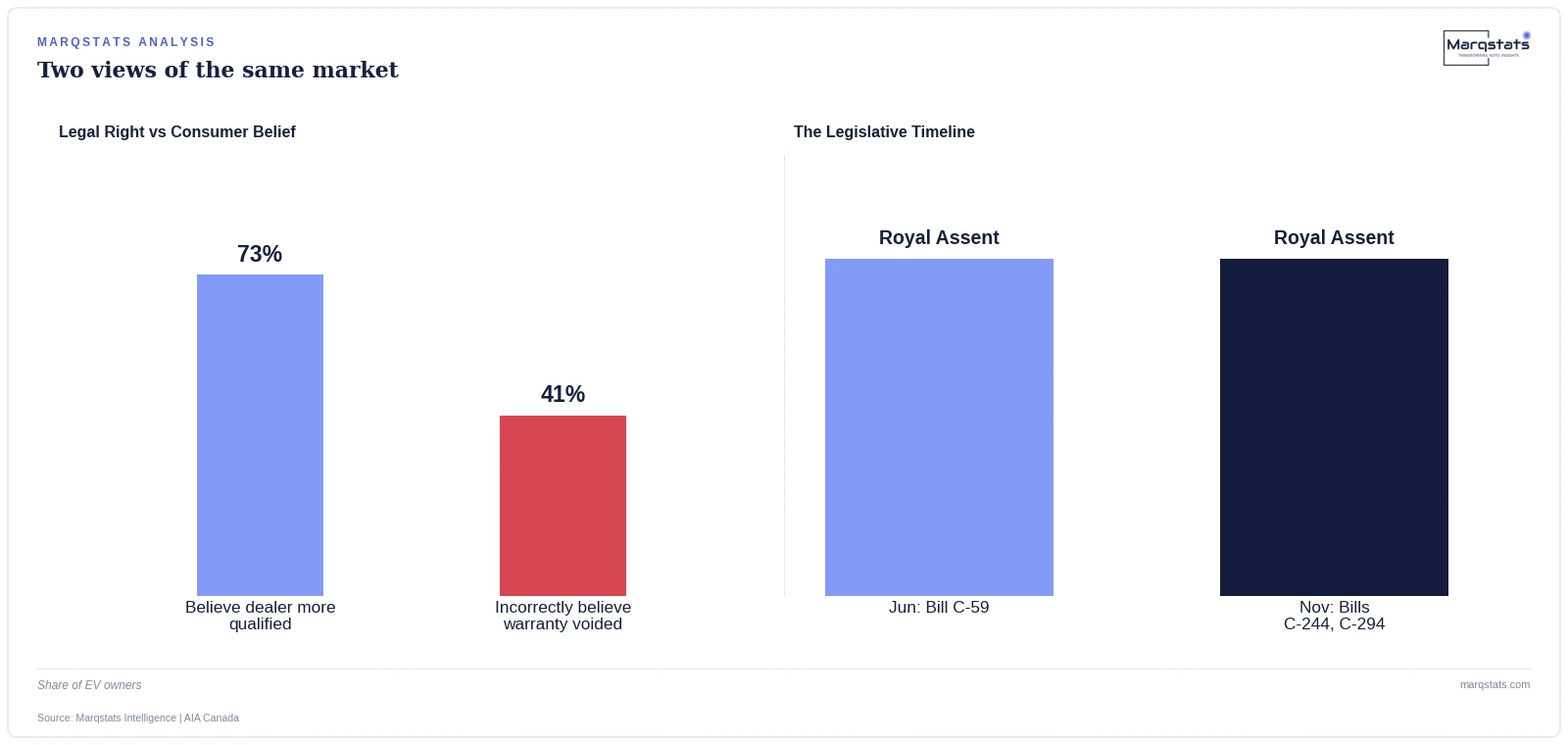
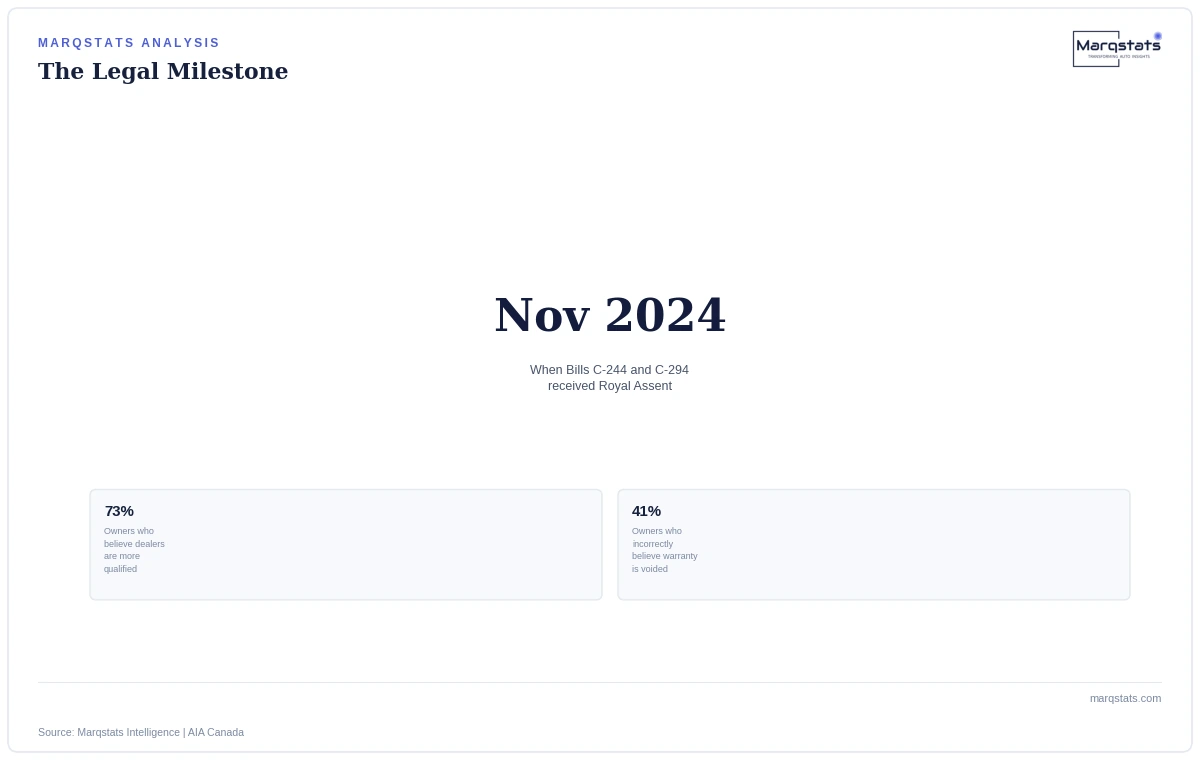
In brief: right-to-repair legislation for vehicles remains a live, unresolved fight in many markets — proposed, debated, sometimes passed at a state or provincial level, rarely settled nationally. Canada's own situation is genuinely further along. On November 7, 2024, Bills C-244 and C-294 received Royal Assent, adding Section 41.121 to the Copyright Act.
What the Law Actually Does
The new statutory language makes it lawful for independent repair businesses and vehicle owners to circumvent manufacturer Technological Protection Measures — digital locks — solely for the purpose of diagnosis, maintenance and repair. A companion law, Bill C-59, went further still in June 2024, expanding Competition Act Section 75 so the Competition Tribunal can order manufacturers to supply independent shops with diagnostic tools and technical software on commercial terms.
The Gap Between Legal Right and Practical Behavior
Canada gave independent shops a legal key. Most owners still think the door is locked.
— Marqstats Analyst Team
AIA Canada's own consumer benchmark research shows why the law alone won't shift behavior quickly. Seventy-three percent of Canadian EV owners believe dealership technicians possess superior technical qualifications for servicing electric drivetrains. More strikingly, 41% incorrectly believe that using an independent repair facility for routine maintenance voids their factory powertrain or battery warranty — a belief the new legislation does nothing to directly correct, since it addresses manufacturers' legal obligations, not what individual owners understand about their own rights.
Why This Gap Matters Commercially
For independent workshops, this is a genuinely two-part problem, not one. Having statutory diagnostic access rights solves the technical and legal barrier. It does nothing about the consumer education barrier — and a shop that invests in high-voltage certification without also addressing the warranty misconception directly may find fewer customers walking through the door than the legal change alone would suggest.
A Named Comparison: Legislation Versus Adoption Lag
This pattern — a genuine legal change outpacing consumer awareness of it — shows up in other repair-rights contexts too, but Canada's EV case is unusually well documented, thanks to AIA Canada's own direct consumer research. That specificity is useful: it turns a generic "awareness takes time" assumption into an actual, measurable 41% figure worth tracking over subsequent survey waves.
Why Correcting This Perception Is a Genuine Commercial Opportunity
The upside here cuts in favor of whoever moves first. A shop or trade association that actively and specifically corrects the warranty-void misconception -- through clear signage, direct customer communication, or public education campaigns -- has a real opportunity to capture share from competitors still relying on the law alone to do that work for them.
What This Means for Independent Shops and Trade Groups
The practical takeaway: independent repair businesses and trade associations should treat consumer warranty-misconception correction as a genuine, separate marketing and education priority — not an assumption that legal change alone will redirect service volume.