Brazil Just Fixed a Tax Rule That Was Quietly Strangling Telematics
For years, a flat telecom fee designed for smartphone users made Brazilian telematics connections a bad business to be in. A new law just changed that, and it explains a lot about why Brazilian automakers are suddenly more comfortable offering free telematics for longer.
The Fee That Didn't Fit
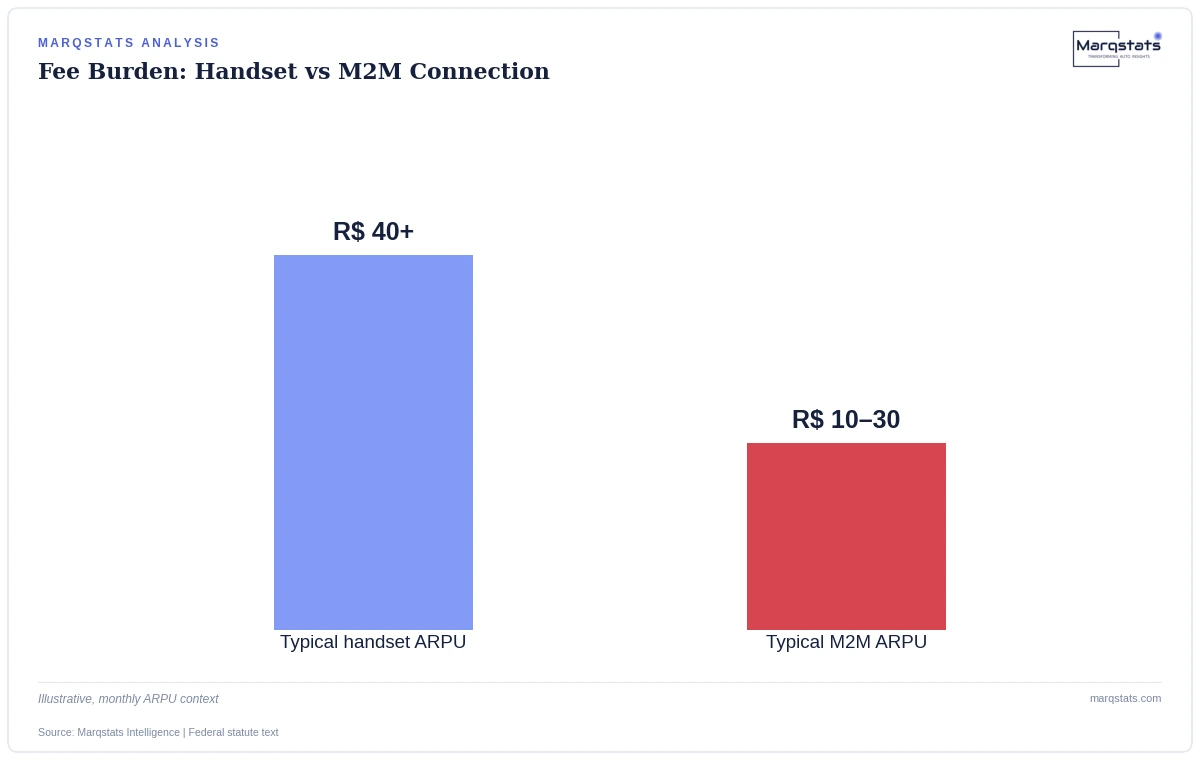
Brazil's Telecommunications Inspection Fund historically charged a flat R$ 26.83 installation fee on every SIM activation, plus an annual R$ 13.41 operation fee, alongside contributions to public broadcasting and domestic cinema funds. Those fees work fine for a phone plan generating R$ 40 or more in monthly revenue. They're a genuinely different story for a low-bandwidth vehicle telemetry connection generating just R$ 10 to R$ 30 a month — the flat fee alone could eat a meaningful share of a connection's entire annual revenue.
What Just Changed
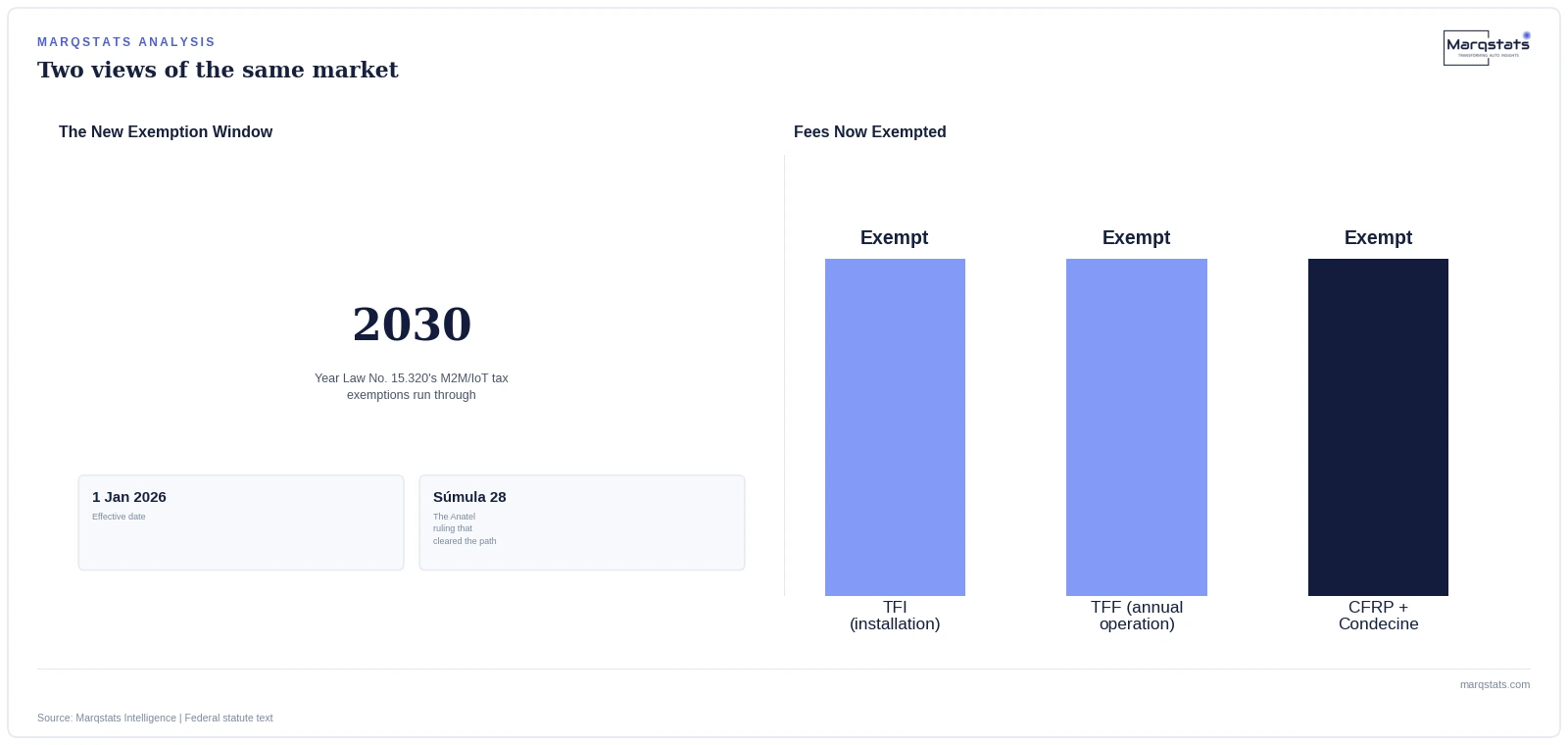
Federal Law No. 15.320, sanctioned 29 December 2025 and effective 1 January 2026, extends comprehensive tax exemptions through 31 December 2030 for all M2M and IoT telecommunications stations — covering the installation fee, the annual operation fee, and the broadcasting and cinema contributions alike. It followed Anatel's own Súmula No. 28, which formally resolved the administrative question of whether IoT access points could be exempted at all.
A Concrete Illustration of the Old Math
Picture a fleet operator running a thousand tracked trucks at the low end of the ARPU range, R$ 10 monthly per connection. The old flat installation fee alone, spread across a single year of service, could represent a meaningful double-digit percentage of that connection's entire annual revenue before any actual network usage cost was even factored in — a genuinely different economic reality than a phone plan generating four times that monthly revenue against the identical flat fee.
Who Actually Paid the Old Fee
Under the previous structure, the fee burden landed most heavily on exactly the connections least able to absorb it: low-bandwidth commercial fleet trackers and basic OEM safety modules generating minimal monthly revenue, not high-value consumer infotainment plans. That's a genuinely regressive outcome for a market Brazil was simultaneously trying to grow through Programa MOVER's own embedded-connectivity incentives — one arm of government policy was pushing automakers toward more connected vehicles while a separate fee structure was quietly taxing the least profitable connections hardest.
Why Five Years, Specifically
A five-year horizon isn't an arbitrary number — it's roughly the length of a typical vehicle ownership and financing cycle in Brazil, long enough that an automaker committing to complimentary safety telematics today can reasonably plan the underlying connectivity cost across a vehicle's most active years on the road without a mid-cycle tax surprise.
Why This Took So Long to Fix
The underlying tension — fees designed for handsets applied to machine connections — isn't unique to Brazil, and isn't a new problem either; temporary fiscal relief had already been enacted twice before under Law No. 14.108 and Law No. 14.173, only to expire and leave the underlying structural mismatch unresolved each time. Law No. 15.320's five-year horizon and its grounding in a formal Anatel administrative ruling (Súmula No. 28) give this fix meaningfully more durability than the stopgap measures that preceded it.
What This Actually Unlocks
With the tax overhang removed, automakers can sustain long-term complimentary safety features — automated crash response, remote diagnostics, stolen-vehicle tracking — without incurring recurring fiscal liability on connections that might otherwise sit dormant after an owner declines to renew a paid tier. That's a meaningfully different calculation than the one automakers were making under the old fee structure, where every dormant connection was still quietly costing money in flat regulatory fees.