BMW Spent €6,000 on Self-Driving Tech Germans Didn't Want. Here's What It Bought Instead.
In December 2023, BMW launched Personal Pilot L3, a SAE Level 3 conditionally automated driving system on the 7 Series, priced at €6,000. By February 2026, BMW paused it entirely. In between, the German automated-driving industry got a genuinely useful, expensive lesson in what customers will and won't pay for.
What €6,000 Actually Bought
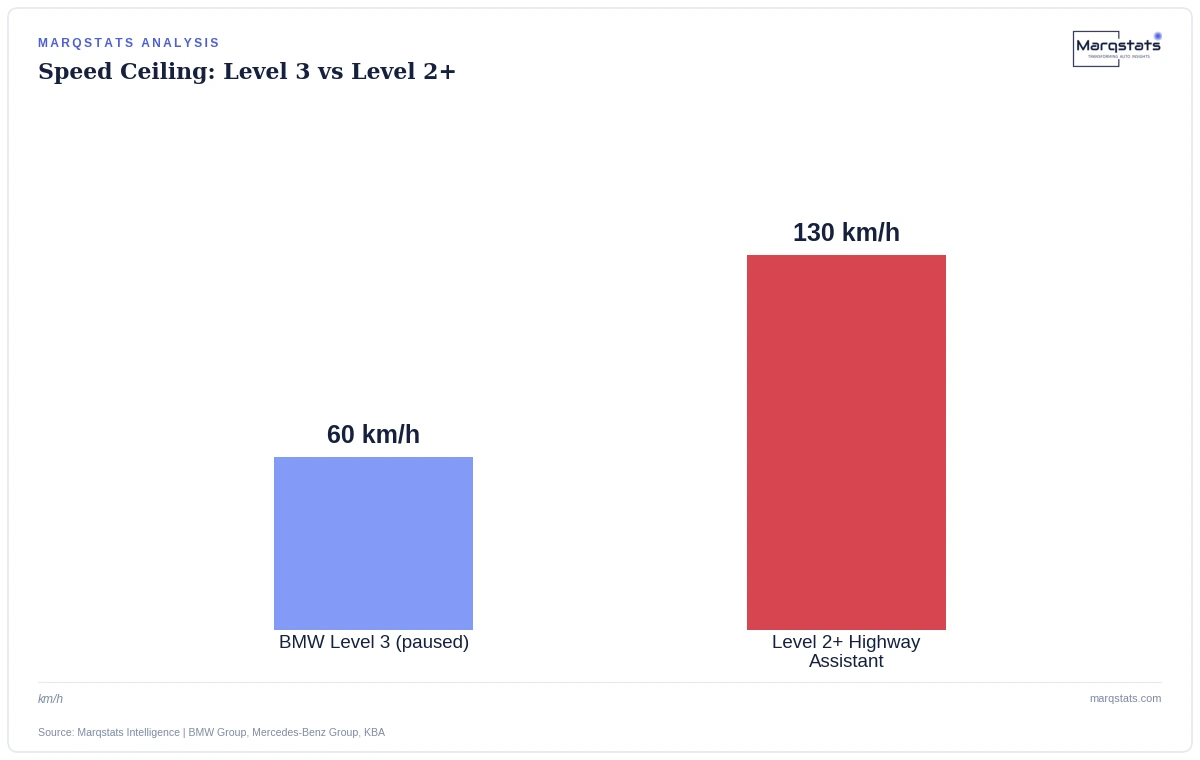
Personal Pilot L3 wasn't a minor feature — it included 3D LiDAR sensors alongside radar and camera suites, enabling genuinely hands-off, eyes-off driving at speeds up to 60 km/h, including at night. Legally, once engaged, civil liability for the vehicle's actions transferred entirely to BMW. That's a real technological and legal achievement most automakers still can't offer at any price.
Why Customers Said No Anyway
The problem wasn't the technology — it was the trade-off. Level 3 capped out at 60 km/h, well below normal Autobahn cruising speed, while carrying a price roughly three to five times a comparable Level 2+ package. Meanwhile, Level 2+ hands-off systems operate up to 130 km/h, covering the actual speed range German drivers use most, while keeping legal liability with the driver rather than the manufacturer — a genuinely lower-cost, higher-utility alternative sitting right next to the expensive Level 3 option on the order form.
A Named Comparison: How Germany's Level 3 Story Differs From the Rest of Europe
Germany occupies a genuinely unique position here: it was the first country to establish a formal statutory framework for SAE Level 3 driving at all, and Mercedes-Benz secured the world's first internationally valid Level 3 type-approval back in December 2021. That regulatory head start makes BMW's own retreat more notable, not less — this isn't a case of German regulation blocking Level 3 adoption, since the legal framework has existed and worked for years. The economics simply didn't clear the bar the regulation itself had already cleared.
The Liability Question Nobody Talks About Enough
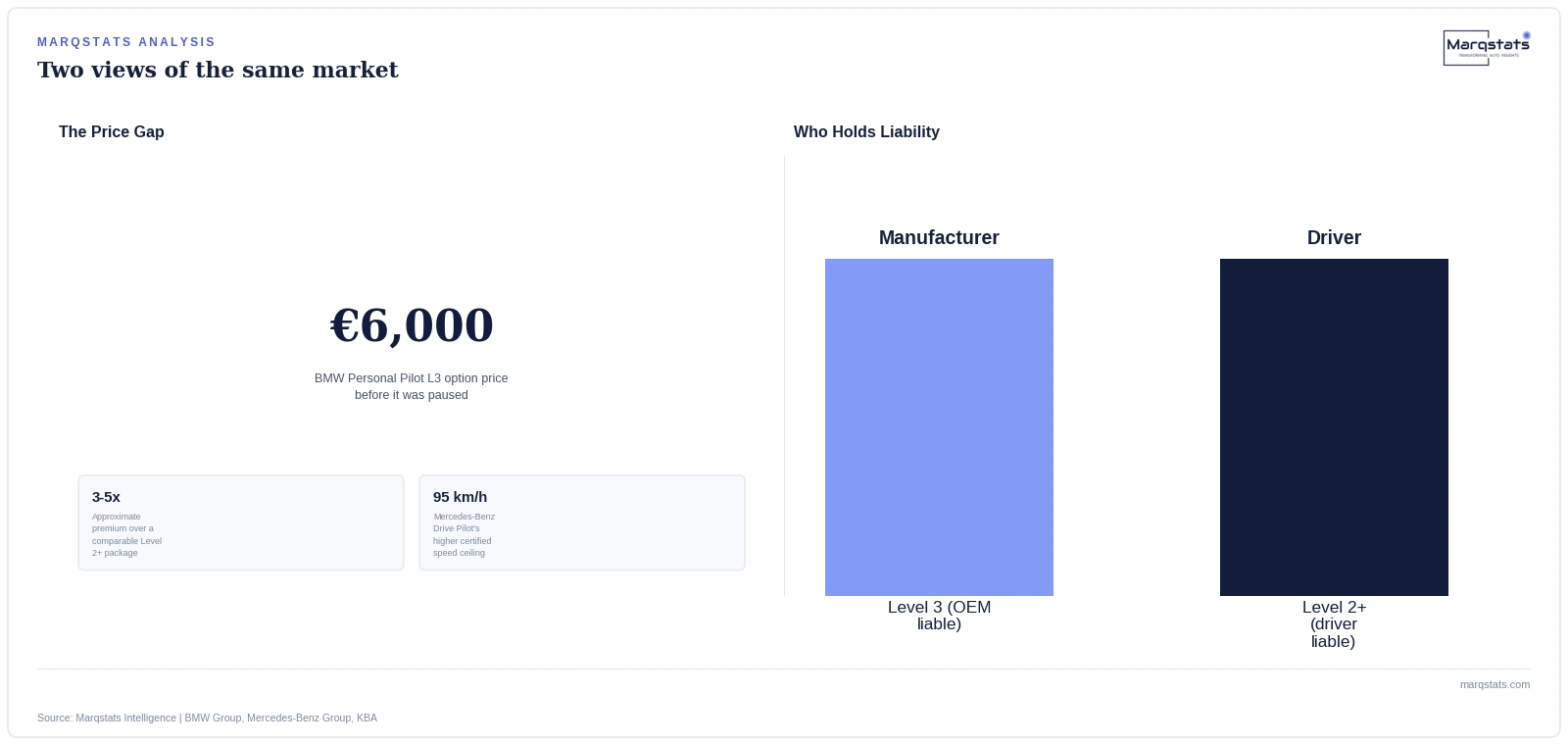
There's a version of this story where BMW's real problem wasn't consumer price sensitivity at all — it was that BMW itself, not just the customer, had to weigh whether taking on direct civil liability for every Level 3 engagement was worth the revenue from a niche luxury option. Continuous regulatory fleet surveillance requirements add ongoing compliance cost on top of that liability exposure, for a feature capped at low speeds few drivers actually wanted to pay a premium for.
Why Speed Ceiling Turned Out to Matter More Than Automation Level
The deeper lesson here may be that German buyers don't actually care much about the abstract distinction between Level 2+ and Level 3 automation as a marketing category — what they care about is whether a system works at the speeds they actually drive. Autobahn cruising regularly exceeds Level 3's 60 km/h ceiling by a wide margin, making the feature genuinely unusable for a large share of typical German highway driving, regardless of how sophisticated the underlying technology actually is.
It's a lesson with real implications beyond just automated driving: any premium feature priced well above its Level 2+ equivalent needs to deliver proportionally more usable value across the conditions drivers actually encounter, not simply more sophisticated underlying technology restricted to a narrower operating envelope than customers actually use.
What This Means for the Rest of the Industry
BMW's retreat is a real data point other automakers are watching closely. Mercedes-Benz still offers its own Level 3 Drive Pilot system, now certified up to 95 km/h — a meaningfully higher speed ceiling than BMW's original 60 km/h that may partially address the utility gap that helped sink BMW's own version. Whether a higher speed ceiling alone is enough to change the underlying economics remains an open question the market hasn't yet answered.